Largest study to date on the genetics of blood proteins highlights new disease mechanisms and drug repurposing opportunities
Machine learning combined with genetic analysis is expected to enable a more targeted use of active substances in precision medicine

Advertisement


Involving a collaboration with 118 investigators contributing from 89 institutions, scientists from the and Berlin Institute of Health at Charité (BIH) and the Precision Healthcare University Research Institute (Queen Mary University of London) have led the world’s largest study on the genetic regulation of >1,000 blood proteins which holds the potential to transform our understanding of different diseases and their treatment opportunities.
Proteins are often described as the “building blocks of life”. Our genetic code’s main purpose is to produce instructions for making proteins, which play a vital role in every part of human health, ranging from building tissues to their role in metabolism or to fight infections. Large-scale genetic studies have been conducted for various diseases in the past two decades, with hundreds of thousands of participants involved. Although these studies revealed fundamental insights, their translation into tangible changes on how we treat patients have been limited so far due to various reasons.
The recent analysis of over 1,000 proteins in human blood provides a fundamental and dynamic insight into human health. The researchers identified more than 4,000 regions in the genome that control when, where and in what quantities these proteins are produced. They linked these findings to the genetic causes of diseases to facilitate a better understanding of human physiology. This knowledge may help to develop more targeted and effective therapies in the future.
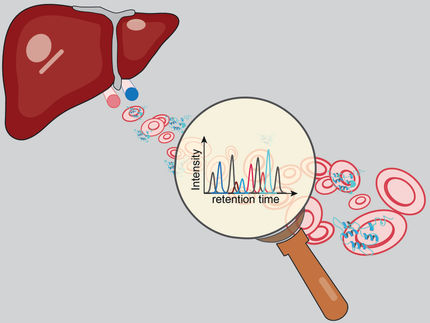
In this study, published in Cell, scientists brought together data from over 78,000 participants collected through a collaboration across 38 cohorts from different countries, the largest study of its kind. The proteomic data from the local BeLOVE cohort (Berlin Long-term Observation of Vascular Events), together with many other international studies, contributed to the statistical power and, consequently, to the success of the genetic meta-analysis.
Dr Mine Koprulu, a lead author of the study, said: “We are at a point where scalable measurements are possible at almost all layers of biology. This gives us an opportunity to gain a molecular view into diverse diseases, with the potential to significantly accelerate rate of discovery for new drug targets or drug reproposing opportunities”.
For example, the authors provided several lines of evidence and biomedical data to highlight that TYK2 inhibitors, which are currently used for psoriasis, can potentially be repurposed for the treatment of rheumatoid arthritis.
Prof Claudia Langenberg, senior study lead and Director of the Precision Healthcare Institute at QMUL and Chair of Computational Medicine at the BIH said: “Our study is a powerful demonstration of how human molecular data can deliver new opportunities for precision medicine when generated at scale and integrated with clinical knowledge. This work would have not been possible without the dedication and collaboration of so many scientists around the world, and of course the many study participants who generously dedicated their time to research to benefit others.”
Prof Maik Pietzner, senior co-lead and Professor of Health Data Modeling at the BIH said: “There are two achievements I am particularly excited about as they open new avenues to close important gaps in research. Firstly, combining our genetic work with machine learning enabled us to better understand how human biology works, and secondly, provided evidence to help getting the right drug to the right patient.”
Original publication


Other news from the department science














Most read news








More news from our other portals

















See the theme worlds for related content
Topic world Protein analytics
Protein analytics provides a deep insight into these complex macromolecules, their structure, function and interactions. It is essential for discovering and developing biopharmaceuticals, understanding disease mechanisms, and identifying therapeutic targets. Techniques such as mass spectrometry, Western blot and immunoassays allow researchers to characterize proteins at the molecular level, determine their concentration and identify possible modifications.

Topic world Protein analytics
Protein analytics provides a deep insight into these complex macromolecules, their structure, function and interactions. It is essential for discovering and developing biopharmaceuticals, understanding disease mechanisms, and identifying therapeutic targets. Techniques such as mass spectrometry, Western blot and immunoassays allow researchers to characterize proteins at the molecular level, determine their concentration and identify possible modifications.