New treatment approach against sepsis discovered
Advertisement


A research team at the Mainz University Medical Center has discovered a previously unknown mechanism by which the immune system fights bacterial infections: A specific protein, the so-called ion channel PACC1, is crucial for immune cells to be able to effectively kill bacteria. If the protein is missing, this leads to increased inflammatory reactions. The animal model also showed increased mortality in sepsis triggered by bacteria. In the long term, the results published in the journal Proceedings of the National Academy of Sciences could help to develop new therapies against bacterial sepsis.
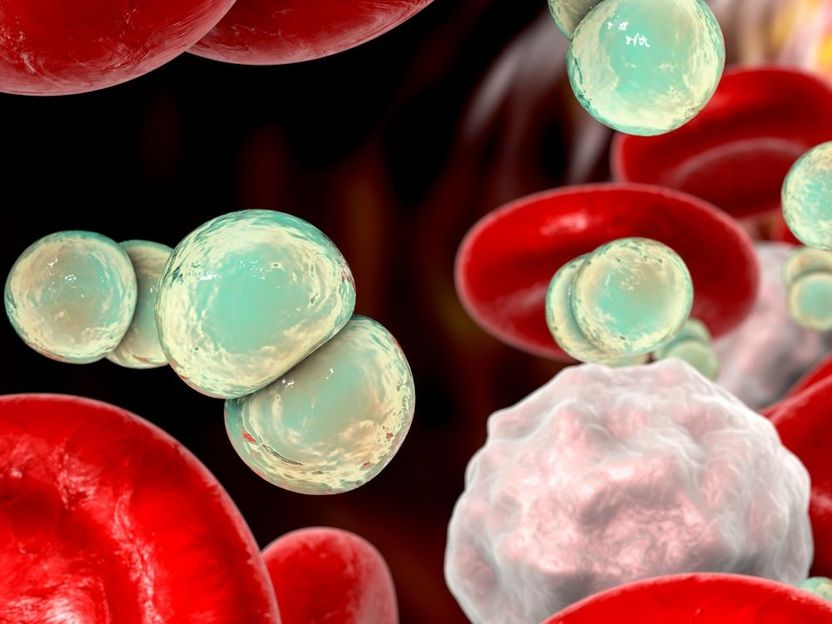
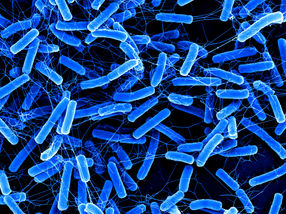
The research results could help in the development of new therapies against bacterial sepsis.
Copyright: UM/Canva
Sepsis, also known as blood poisoning, is the third most common cause of death in Germany. It occurs when the immune system can no longer contain an infection locally and, as a result, the body's faulty defense reactions cause life-threatening damage to tissues and organs. Despite modern intensive care treatment options, around 20-50 percent of patients with sepsis die as a result.
The immune system fights bacterial pathogens that can trigger sepsis with the help of phagolysosomes. These are "digestive spaces" of the immune cells: specialized cell compartments in which bacteria are broken down. An acidic environment is required to break down the bacteria. This is regulated by protein complexes in the surface of the cell compartments, so-called ion channels. The exact mechanism of action of ion channels in the immune defense was largely unexplained until now.
In the study "Proton-Activated Chloride Channel 1 (PACC1) is essential for innate host defense against bacterial sepsis", a research team led by Prof. Dr. Markus Bosmann, research group leader at the Center for Thrombosis and Hemostasis (CTH) of the Mainz University Medical Center, has now shown that the ion channel PACC1 (Proton-activated Chloride Channel 1) plays a central protective role in life-threatening bacterial infections. The scientists were able to show that the immune cells are no longer able to fight the bacteria sufficiently if PACC1 is missing.
The researchers found that the digestive spaces were not sufficiently acidic without the ion channel and that the bacteria were therefore broken down more poorly. This led to an intensified and misdirected inflammatory reaction. In addition, mortality from bacterial sepsis increased significantly in the animal model. "These effects were not seen in a pure inflammatory reaction without live bacteria," emphasizes Professor Bosmann. "This underlines the specific importance of PACC1 for bacterial defense. It is surprising that a single chloride channel assumes such a central protective function in the immune system."
The results provide important clues as to how disturbances in bacterial defense can contribute to the development of serious infections such as sepsis. At the same time, they open up potential new approaches for clinical application in the long term, particularly in view of increasing antibiotic resistance, which limits the treatment options for bacterial sepsis. For example, a targeted increase in PACC1 activity could serve as an active principle for the development of novel therapies against bacterial sepsis in the future. The study was published in the journal Proceedings of the National Academy of Sciences (PNAS).
Note: This article has been translated using a computer system without human intervention. LUMITOS offers these automatic translations to present a wider range of current news. Since this article has been translated with automatic translation, it is possible that it contains errors in vocabulary, syntax or grammar. The original article in German can be found here.
Original publication
Lucien P. Garo, Kevin Brueck, Sarah Walachowski, Archana Jayaraman, Marcel Strueve, Shuang Xu, Hulbert Yang, Matthew Helmkamp, Seung Hoan Choi, Christoph Reinhardt, Markus Bosmann; "Proton-activated chloride channel 1 is essential for innate host defense against bacterial sepsis"; Proceedings of the National Academy of Sciences, Volume 123, 2026-4-6



Other news from the department science