Genetically modified marmosets as a model for human deafness
A new primate model provides significant opportunities for future gene therapies
Advertisement


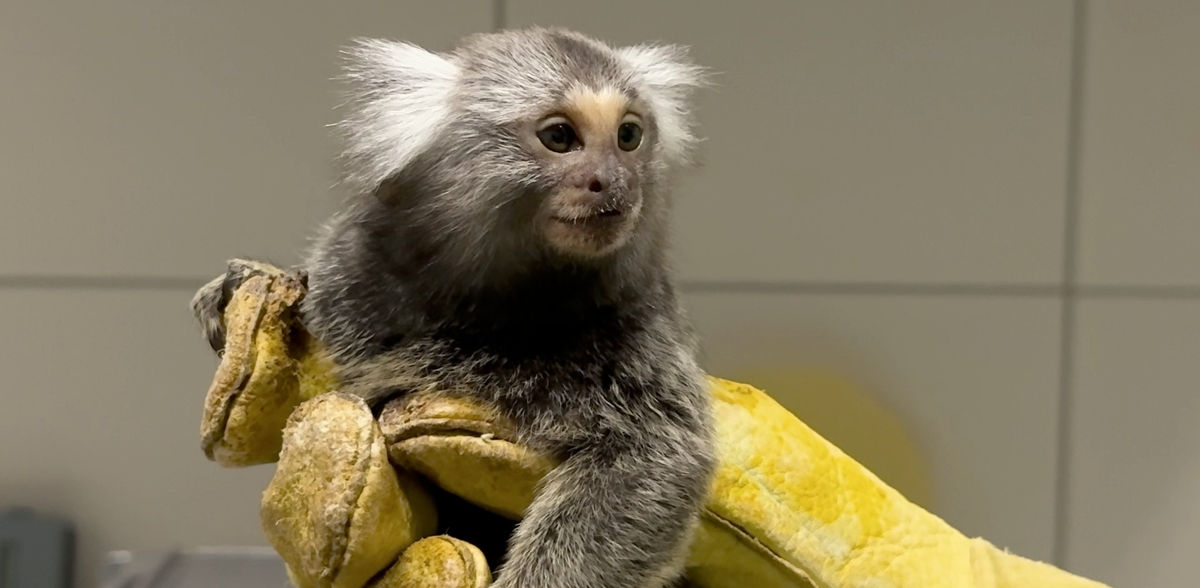
Why are some people unable to hear from birth, even though their inner ear appears intact? One possible cause lies in the so-called OTOF gene. It plays a central role in transmitting sound signals from the hair cells to the auditory nerve. Without this function, acoustic information does not reach the brain. Researchers from the German Primate Center – Leibniz Institute for Primate Research, the University Medical Center Göttingen, and the Max Planck Institute for Multidisciplinary Sciences have now, for the first time, generated marmosets in which this gene has been knocked out precisely. The animals are healthy and develop normally, but are deaf from birth. This provides the first primate model that realistically replicates key characteristics of human deafness (Nature Communications).
Hearing loss is one of the most common congenital sensory disorders in humans. A major cause is a defect in the OTOF gene. This gene ensures that the protein otoferlin is produced in the inner ear. This protein is necessary for sound signals to travel from the hair cells to the auditory nerve. Without it, the ear still functions externally, but the signals do not reach the brain.
Genetically modified marmosets The Göttingen research team used the CRISPR/Cas9 gene-editing tool to modify precisely the OTOF gene in fertilized marmoset eggs, rendering it non-functional in the resulting offspring. The genetically modified embryos were then implanted into a surrogate mother. The animals that were born developed normally, but they were deaf from birth. Hearing tests using electrophysiological methods, similar to an EEG, confirmed deafness, as is also observed in patients with an OTOF gene defect. The absence of otoferlin protein in the inner hair cells further confirmed the genetic knockout.

A crucial step toward new therapies “With the OTOF-knockout marmosets, we now have, for the first time, a primate model that realistically replicates human OTOF-related hearing loss,” says Tobias Moser, Director of the Institute of Auditory Neuroscience at the University Medical Center Göttingen. “This gives us a crucial tool for developing new therapies in a more targeted and safer manner, while also considering their long-term effects.”
The new model bridges an important gap between mouse models, cell culture systems, and clinical application. It enables studies under conditions that more closely resemble human hearing development and physiology than previous models. This is particularly significant for the further development of novel inner ear therapies.
Complex research in interdisciplinary collaboration “Creating genetically precisely modified primates is extraordinarily challenging from a reproductive and molecular biology perspectives. The fact that we succeeded in doing this for OTOF in marmosets demonstrates what is possible when reproductive biology, genome editing, and biomedical and veterinary research collaborate closely,” says Rüdiger Behr, head of the Stem Cell Biology and Regeneration Platform at the German Primate Center. This project was made possible through close interdisciplinary collaboration between scientists at the German Primate Center, the University Medical Center Göttingen, and the Max Planck Institute for Multidisciplinary Sciences.
Prospects for the medicine of the future The new model provides an important foundation for further developing gene therapies and other innovative approaches to treating hearing disorders. The goal is to better understand their safety, efficacy, and long-term stability. Furthermore, the precise genetic modification of marmosets opens up new possibilities for developing additional disease models and advancing therapies for previously incurable diseases.
“This model represents a major step forward for translational research,” says Marcus Jeschke, professor at the German Primate Center and at the University Medical Center Göttingen. “It offers the opportunity to test and optimize OTOF gene therapies and optogenetic cochlear implants under conditions that are significantly closer to human hearing than previous models.”
Original publication
Tobias Kahland, Dimitri Leonid Lindenwald, Marcus Jeschke, Kathrin Kusch, Olena Tkachenko Eikel, Mara Uhl, Nancy Rüger, Charis Drummer, Bettina Wolf, Fritz Benseler, Nils Brose, Rüdiger Behr, Tobias Moser; "Generation of marmoset monkeys with a non-mosaic disruption of the OTOF gene as a model of human deafness"; Nature Communications, Volume 17, 2026-3-28



Other news from the department science















Most read news









More news from our other portals



















See the theme worlds for related content
Topic world Gene therapy
Genetic diseases once considered untreatable are now at the center of innovative therapeutic approaches. Research and development of gene therapies in biotech and pharma aim to directly correct or replace defective or missing genes to combat disease at the molecular level. This revolutionary approach promises not only to treat symptoms, but to eliminate the cause of the disease itself.

Topic world Gene therapy
Genetic diseases once considered untreatable are now at the center of innovative therapeutic approaches. Research and development of gene therapies in biotech and pharma aim to directly correct or replace defective or missing genes to combat disease at the molecular level. This revolutionary approach promises not only to treat symptoms, but to eliminate the cause of the disease itself.