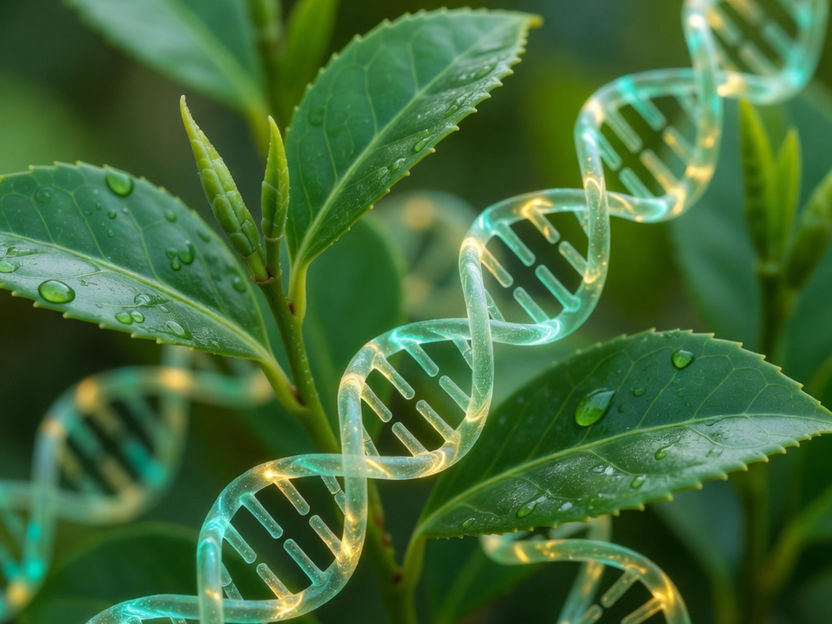
Disastrous interplay: protein uncovered that makes cancer grow faster
Basic research can contribute to new therapeutic strategies against cancer
Advertisement


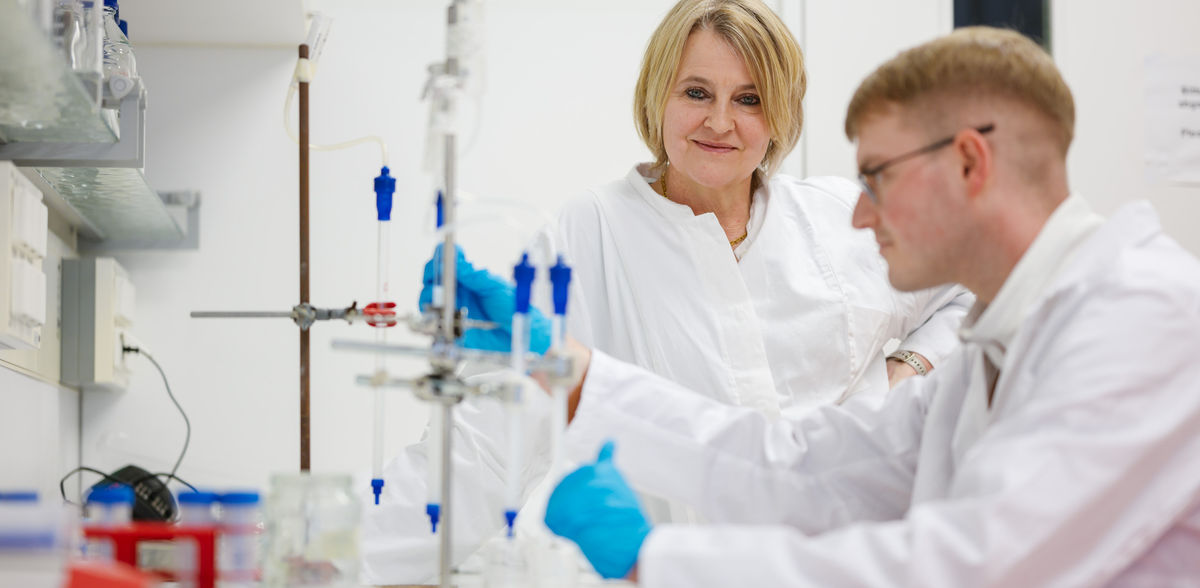
The protein IMP2 plays a key role in tumor growth. The research team led by Professor Alexandra K. Kiemer from Saarland University discovered that if macrophages, the scavenger cells of the immune system, produce this protein in the immediate vicinity of cancer cells, the tumor grows faster under laboratory conditions. The team suspects that the protein makes it easier for the macrophages to penetrate the tumor and support its growth.
Cancer cells that divide quickly and grow aggressively need to be nourished and need helpers in the body. However, this is precisely what makes them dependent on their environment - and therefore vulnerable. If you can track down such supporters, you can try to thwart their aid in the long term. The Saarbrücken-based pharmacist Alexandra Kiemer and her team are looking for such weak points. They are focusing on the tumor cells themselves, but are also searching their environment to find out which processes support the cancer. One promising candidate is the protein IMP2.
Kiemer and her research group have been on the trail of this protein for a long time. They are uncovering more and more of a disastrous interaction in the body: "In earlier work, we were able to show that cancer cells recruit macrophages with the help of IMP2 and turn them into defectors," says Alexandra Kiemer. Macrophages, the scavenger cells of the immune system, are actually there as part of the body's own mobile task force to fight cancer cells. If they are reversed, they help to promote the tumor instead.

"We were able to show that macrophages that promote the tumor produce more IMP2 themselves. As the role of IMP2 has practically only ever been investigated in cancer cells, we found this observation exciting," explains Kiemer. Until now, what IMP2 does in the microenvironment around the tumor, particularly in the macrophages, was largely unknown. In the current study, the research team therefore focused specifically on the macrophages: The researchers wanted to know what happens when the IMP2 protein is missing in the macrophages.
They therefore investigated the growth of cancer cells, on the one hand when macrophages in the tumor environment produced IMP2 and on the other hand when they did not produce IMP2. Their result: if the macrophages did not produce IMP2 there, the tumors grew more slowly. "The tumor growth could be slowed down simply because IMP2 was missing in the macrophages. So the IMP2 in the immune cells must be directly involved in this," concludes the Professor of Pharmaceutical Biology.
The question is: What exactly does IMP2 do in the cells of the tumor environment? "We suspect that IMP2 makes it easier for the macrophages to migrate into the tumor," says the pharmacist. If IMP2 is present in the macrophages, the phagocytes actually move faster in the cell culture model. The outer envelope of cells, the cell membrane, consists of fat molecules. These can be more solid or more liquid - like butter and oil. "If the fat molecules of the cell membrane are more liquid like oil instead of solid like butter, it becomes more mobile," explains Alexandra Kiemer. She suspects that IMP2 is heavily involved in this.
Basic research can contribute to new therapeutic strategies against cancer
To this end, the team investigated the composition of the fat molecules of the phagocytes. "If IMP2 is present, the lipid metabolism of the macrophages is massively altered. In this case, the cell membranes are similar to liquid oil. This could explain why these macrophages can move more easily," explains Kiemer. At first glance, one might think that such more mobile macrophages are good for the body and help it. "However, in the microenvironment around the tumor, phagocytes can take on properties that benefit the cancer. If such cells are active in the tumor, this can promote its growth," she says.
A better understanding of the role of the IMP2 protein can help to exploit the weak points of cancer. In the future, this could lead to new therapeutic strategies to slow down or at best halt the growth of tumors.
In a study published at the same time by Saarland University and Saarland University Hospital in Homburg, IMP2 was also examined in other cell types (International Journal of Cancer). There, too, the protein influences fundamental processes such as cell metabolism and the mobility of cells in the interaction between tumor cells and immune cells.
Note: This article has been translated using a computer system without human intervention. LUMITOS offers these automatic translations to present a wider range of current news. Since this article has been translated with automatic translation, it is possible that it contains errors in vocabulary, syntax or grammar. The original article in German can be found here.
Original publication
Hanna S. Schymik, Selina Wrublewsky, Marcus Höring, Gerhard Liebisch, Simon Both, Gilles Gasparoni, Caroline Bickelmann, Hanah Robertson, Charlotte Dahlem, Jörn Walter, Volkhard Helms, Matthias W. Laschke, Emmanuel Ampofo, Jessica Hoppstädter, Alexandra K. Kiemer; "IGF2BP2 Deficiency in Macrophages Impairs Migration, Reprograms Metabolism, and Limits Tumor Progression"; International Journal of Biological Sciences, Volume 22
Selina Gies, Maike Pohlers, Tanja Tänzer, Emmanuel Ampofo, Matthias W. Laschke, Moritz Schäfer, Yoo‐Jin Kim, Rainer Maria Bohle, Erich‐Franz Solomayer, Konrad Wagner, Martin Empting, Alexandra K. Kiemer, Barbara Walch‐Rückheim; "Th17 cells favor migration and invasiveness of cervical cancer cells under hypoxia in an IGF2BP2-dependent manner"; International Journal of Cancer, 2026-1-24


Other news from the department science












Most read news








More news from our other portals













Last viewed contents
Evonik to double its L-lysine capacities in the U.S. - First additional quantities expected in November 2011
MagForce Nanotechnologies AG Announces Management Team Expansion