Artificial insemination: combination of bacteria could predict success
Common tests lack a basis
Advertisement


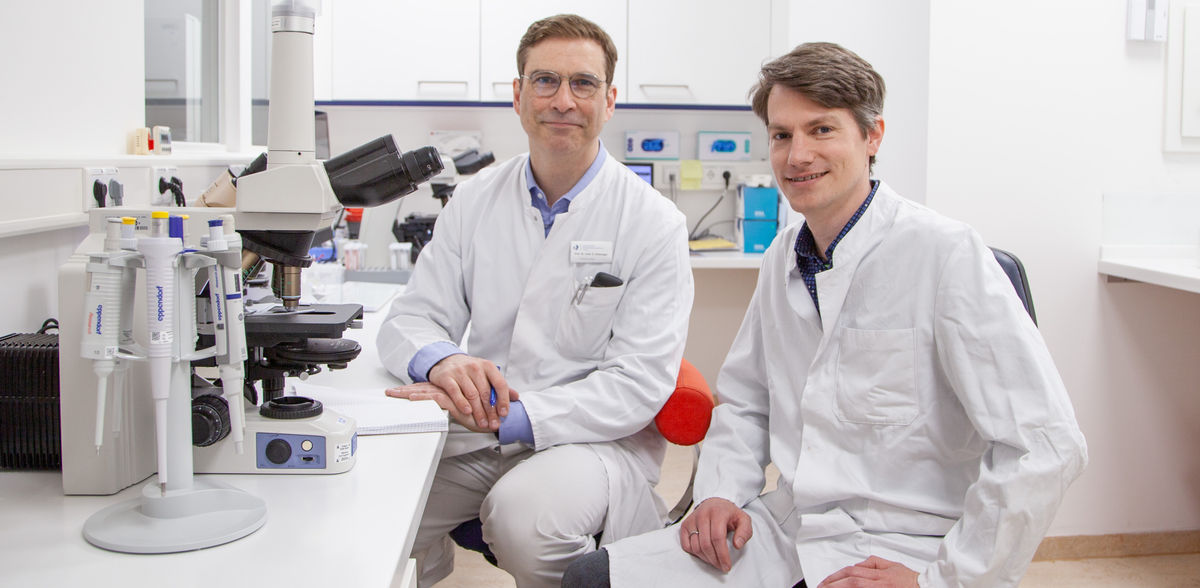
Common tests that are supposed to predict the success of artificial insemination are often wrong. This can be deduced from a new study by the University Medical Center Schleswig-Holstein (UKSH), the University of Lübeck and the German Center for Infection Research (DZIF).
Previous prognosis models examine the bacterial colonization of the vagina and divide it into rough patterns. However, according to the study, this classification, on which commercial microbiome tests are also based, is not reliable.
Instead, the research team identified two specific bacteria that had a negative impact on treatment success: Lactobacillus iners and Ureaplasma parvum. In patients in whom both bacteria were detected simultaneously and in high concentrations, the chances of successful implantation of the embryo and a live birth fell dramatically.
Criticism of commercial offers
"Our data speak against the assumption that the mere classification of the vaginal microbiome into the previously proposed bacterial patterns allows a clinically relevant prediction of pregnancy rates," says Prof. Georg Griesinger, Head of the University Fertility Center at the UKSH, Lübeck Campus, and head of the study. "Couples should therefore not rely on the predictive power of analyses that are only based on these simplistic categories."
"The specific bacterial signature that we have found could be a much more precise starting point for diagnostics in the future than the previous models," explains Dr. Mariia Lupatsii, co-first author of the study. "If models are marketed without clinical validation, we risk making the wrong therapeutic decisions."
"Our work shows that we need to move away from generalized patterns and towards the analysis of specific microbial interactions," says the other first author Dr. Simon Graspeuntner. "The identification of clinically validated bacterial colonizations could help to reduce the number of necessary treatment cycles in the future and protect couples from false expectations."
The unfulfilled desire to have children affects many couples: according to estimates, 15 to 20 percent of all couples of fertile age in Germany are affected by this in the course of their lives.
The study published in the journal Human Reproduction Open examined 266 patients. It was found that neither the classification into bacterial patterns - the so-called "community state types" - nor the diversity of bacterial species (alpha diversity) correlated statistically with the occurrence of a pregnancy or a live birth.
Note: This article has been translated using a computer system without human intervention. LUMITOS offers these automatic translations to present a wider range of current news. Since this article has been translated with automatic translation, it is possible that it contains errors in vocabulary, syntax or grammar. The original article in German can be found here.
Original publication
Simon Graspeuntner, Mariia Lupatsii, Noemi Hamala, Antonia Masuch, Marion Depenbusch, Iris Pfeffer, Askan Schultze-Mosgau, Tanja K Eggersmann, Jan Rupp, Georg Griesinger. Vaginal microbial community state types fail to predict IVF outcomes, whereas Ureaplasma parvum and Lactobacillus iners are negative predictors of implantation, clinical pregnancy and live birth. Human Reproduction Open, 2026


Other news from the department science










Most read news









More news from our other portals
















See the theme worlds for related content
Topic world Diagnostics
Diagnostics is at the heart of modern medicine and forms a crucial interface between research and patient care in the biotech and pharmaceutical industries. It not only enables early detection and monitoring of disease, but also plays a central role in individualized medicine by enabling targeted therapies based on an individual's genetic and molecular signature.

Topic world Diagnostics
Diagnostics is at the heart of modern medicine and forms a crucial interface between research and patient care in the biotech and pharmaceutical industries. It not only enables early detection and monitoring of disease, but also plays a central role in individualized medicine by enabling targeted therapies based on an individual's genetic and molecular signature.