A new approach to weaken dangerous pathogens
Evolutionary research opens up new prospects for antibiotic therapy

Advertisement


Antibiotic-resistant pathogens pose one of the greatest threats to public health today. Due to the misuse and overuse of antibacterial agents in recent decades, numerous pathogens have now become resistant to antibiotics, including many last-resort antibiotics used to treat particularly severe cases. The cause of this global health crisis lies in drastically rising rates of antimicrobial resistance (AMR) in bacterial pathogens – put simply, more and more bacteria are becoming resistant to treatment, whilst the range of reliably effective antibiotics continues to shrink. In the near future, therefore, we face the threat of a post-antibiotic era in which even supposedly harmless infections may no longer be treatable. Experts estimate that by the middle of the century, there could be around 50 million AMR-related deaths worldwide each year.
Health organisations and researchers are therefore working on various strategies to tackle the increasingly serious AMR crisis, including optimising the use of existing antibiotics and developing new drugs. At Kiel University, scientists are investigating the fundamental mechanisms of resistance evolution – that is, the genetic and non-genetic adaptations of a pathogen to drug exposure. Their aim is to combine existing antibiotics effectively, preserve their efficacy and inhibit the evolution of resistance.
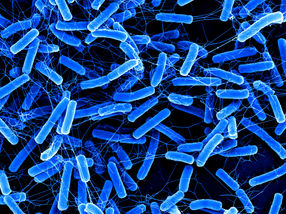
In a recent study, researchers led by Professor Hinrich Schulenburg from the Evolutionary Ecology and Genetics group at Kiel University used the human pathogen Pseudomonas aeruginosa as a model to investigate how harmful bacteria can be weakened by administering first one antibiotic, thereby significantly enhancing the effectiveness of a second antibiotic. They were able to demonstrate that pre-treatment with a beta-lactam antibiotic makes the bacterial cells particularly sensitive to a subsequently administered aminoglycoside antibiotic. This effect, termed negative hysteresis, is based on the induction of so-called membrane stress in the bacterial cell wall, which, through the improved penetration of the second drug, not only ensures the reliable killing of the bacteria but also inhibits their adaptation to the treatment and thus the evolution of resistance. The Kiel researchers recently published their new findings, in collaboration with international colleagues, in the journal Nature Communications.
Pseudomonas infections are becoming increasingly problematic
The Gram-negative bacterium P. aeruginosa is an opportunistic pathogen in humans. It causes acute and chronic infections, particularly in hospitalised and immunocompromised patients, often in cases of cystic fibrosis or chronic obstructive pulmonary disease. A particular problem is, on the one hand, the bacterium’s widespread resistance to many antibiotics and, on the other, its ability to adapt rapidly to treatment with newly administered drugs. As a result, an increasing number of P. aeruginosa strains are classified as multi-drug-resistant bacteria that have become insensitive to three or more different antibiotics. “The World Health Organisation (WHO) therefore classifies P. aeruginosa as a high-priority pathogen for which new treatment options are urgently needed. In our research group, we have been working for years on the mechanisms of resistance evolution in this particular pathogen and wish to further investigate potential treatment approaches based in particular on the principle of negative hysteresis,” says Dr Florian Buchholz, first author of the study and a member of Schulenburg’s research group.
Treatment approaches based on negative hysteresis show great potential
Buchholz and colleagues carried out their research as part of the DFG-funded Research Training Group (RTG) TransEvo at Kiel University and has now demonstrated that a beta-lactam antibiotic administered first triggers a physiological change in the bacteria, causing the cell walls to become more permeable to the second antibiotic. Until now, it was unclear how exactly this non-genetic change is mediated and how reliably it can be triggered in different strains of the bacterium. “Our investigations showed that negative hysteresis represents a general weak spot of P. aeruginosa, which can be triggered even by low doses of the sensitising antibiotic. This causes damage to the cell envelope, thereby enhancing the effect of the second active substance,” explains Dr Roderich Roemhild, shared senior author of the study and former member of the Schulenburg group, now based at the ISTA in Austria. Furthermore, the experiments also demonstrated a particular robustness of the phenomenon across the entire diversity of P. aeruginosa; the effect was therefore present regardless of the genetic differences between the bacterial strains.
Evolutionary research in Kiel opens up new prospects for antibiotic therapy
The new findings from researchers in Schulenburg’s group thus confirm the potential of negative hysteresis: in principle, a significantly improved response against even critical bacterial pathogens can be achieved through the appropriate sequential administration of certain classes of antibiotics. “Overall, we were able to demonstrate that the ‘right’ sequence of drugs promotes killing of pathogens, limits their ability to adapt and thereby reduces the evolution of resistance in P. aeruginosa,” summarises Schulenburg, spokesperson for the Kiel Evolution Center (KEC) as part of the Kiel University’s Kiel Life Science (KLS) priority research area. With these and other research findings, the scientists aim to lay the groundwork for developing new strategies based on evolutionary concepts for the sustainable treatment of bacterial infections and the prevention of resistance.
To this end, they can draw on a broad interdisciplinary network in translational evolutionary research under the umbrella of the KEC in the Kiel region: For example, thanks to close cooperation with the Max Planck Institute for Evolutionary Biology in Plön, the recently established Leibniz ScienceCampus “AMR-PLAS” for antibiotic resistance research, and the RTG TransEvo, a nationally unique evolutionary biology hotspot has emerged here. “Through exchanges with these partner institutions, a particularly dynamic scientific environment has developed in recent years, providing important impetus for our ongoing research into resistance evolution. The present study is an example of a particularly fruitful collaboration with international and local colleagues from Klosterneuburg in Austria, Uppsala in Sweden, as well as Lübeck, Großhansdorf, Borstel, Hamburg and, of course, Kiel, all of whom contributed to the research. Building on these networks, we hope to be able to provide fundamental building blocks for tackling the global antimicrobial resistance crisis in the coming years,” says Schulenburg.
Original publication



Other news from the department science