The Kitchen Sponge: A Microcosm—Bacterial Contamination Isn't Always Visible, Smellable, or Palpable
Pathogens also multiply there and can spread from that location
Advertisement


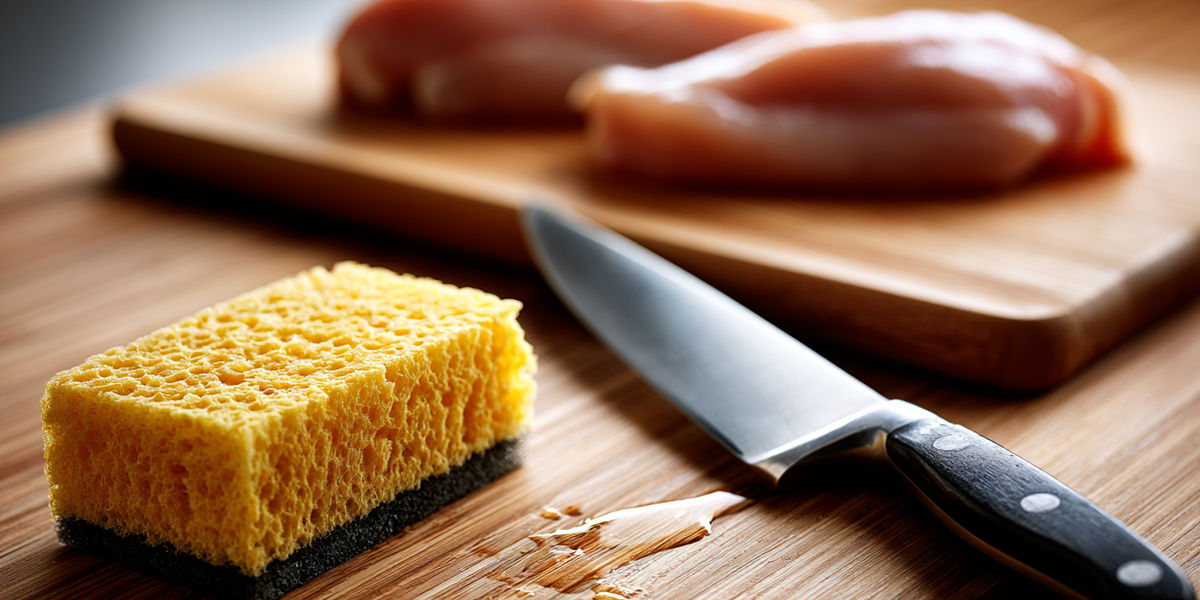
Conventional kitchen sponges (“dish sponges”) are not only teeming with numerous types of “common germs,” but pathogenic bacteria such as Salmonella or Escherichia colican also be detected in them. These bacteria can colonize the sponges, multiply, and be transferred from there to other surfaces in the kitchen, as shown by a new study conducted by the Federal Institute for Risk Assessment (BfR). It is noteworthy that the sponges showed no outward signs of bacterial colonization: They exhibited no noticeable changes in odor and did not appear visibly dirty or greasy. This makes it all the more important to replace sponges at regular intervals to prevent infections in the home, the researchers emphasize. “Quite a few foodborne infections originate in private households, and they are not always overcome with just a day or two of feeling unwell,” says BfR President Andreas Hensel. “Such infections can be particularly dangerous for vulnerable groups such as the elderly or sick, as well as young children.” The study was published in the journal *Journal of Food Protection*.
According to data from the World Health Organization (WHO), an estimated 600 million cases of foodborne illness occur worldwide each year. Outbreaks involving multiple cases that originate in commercial kitchens or catering facilities are particularly well-documented. However, experts note that home kitchens are also frequently a source of infection—for example, when preparing contaminated food such as chicken, and germs are spread throughout the kitchen due to poor hygiene.
Once in the kitchen, sponges serve as an ideal reservoir for bacterial pathogens due to their porous surface and the moisture present. Food particles trapped in the sponges act as “food” and provide the nutrients necessary for bacterial growth. This explains why kitchen sponges are typically colonized by numerous types of germs soon after they are first used. It is also known that, compared to other reservoirs such as the sink or cutting boards, the bacterial count in sponges is generally higher.
In the current study, the researchers demonstrated that pathogenic bacteria can also colonize sponges. To do this, they applied solutions containing Escherichia coli and Salmonella—major causes of foodborne infections—in varying concentrations to the sponges. In addition, some sponges were moistened with a solution containing Staphylococcus aureus. These bacteria can produce toxins that can cause food poisoning. The results showed that all bacteria tested multiplied significantly within a few days, starting from relatively low concentrations, and were able to survive even after drying out for several days. In further experiments, the researchers demonstrated that even light pressure is sufficient to transfer the bacteria from the sponges to a surface. Ultimately, bacteria can transfer to food through direct contact and—if the food is consumed without being properly heated—cause a foodborne illness; even very low bacterial counts can sometimes be sufficient to do so.
Many consumers decide when to replace their sponges based on appearance or smell. However, this is a very unreliable indicator, as the researchers did not observe any noticeable changes in their test sponges even when bacterial counts were high. How often sponges should be replaced depends, among other things, on how they are used. For example, if a sponge has been used to clean surfaces that have come into contact with raw meat, it should be discarded afterward. Alternatively, the bacterial load can be reduced by treating the sponge for at least two minutes with water heated to over 70°C. Kitchen sponges should be replaced more frequently, especially in environments where people with weakened immune systems—such as the sick, children, or the elderly—live. Brushes or microfiber cloths can also be used as alternatives to kitchen sponges; according to earlier studies, they have lower bacterial counts. They dry faster and can also be cleaned in the dishwasher or washing machine. To effectively reduce bacterial contamination, programs with temperatures of at least 60°C should be used.
Note: This article has been translated using a computer system without human intervention. LUMITOS offers these automatic translations to present a wider range of current news. Since this article has been translated with automatic translation, it is possible that it contains errors in vocabulary, syntax or grammar. The original article in German can be found here.
Original publication


Other news from the department science