Accordian-inspired pump unlocks new era for lab-on-a-chip technology
A first-of-its-kind device replicates human blood flow waveforms in the lab, opening doors for vascular disease study, drug discovery and space travel safety

Advertisement


For more than 25 years, lab-on-a-chip technology has allowed researchers to model human organs and blood vessels by using real human cells in artificial microscopic environments. These micro-physiological systems (MPS) may replicate human cells and mimic organs or even full organ systems under numerous conditions. They have become key to studying everything from heart disease to the effectiveness of new drugs.
However, they have been held back by one major limitation: an inability to accurately re-create the blood flow waveforms arising from the human heart.
“We have been struggling over decades to actually find a stable perfusion system,” said Dr. Abhishek Jain , associate professor of biomedical engineering and Barbara and Ralph Cox ’53 Faculty Fellow at Texas A&M University. “The human blood flow arising from the heartbeat is made of multiple pulses, multiple wavelengths, and it happens over a very short period of time: you need a change in flow within 50 milliseconds. That cannot be delivered by the pump equipment currently available.”
The waveform of blood flow — and cells’ reaction to it — is at the heart of numerous health problems. When the wave pattern of blood flow changes due to disease, age or even zero gravity, the endothelial cells that line every blood vessel in the body begin to exhibit pathological cell behaviors, eventually leading to life-threatening diseases.
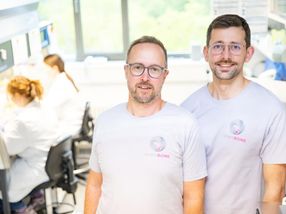
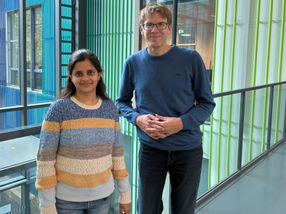
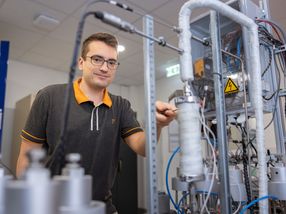
Now, Jain and Dr. Ankit Kumar, who just earned his Ph.D. in biomedical engineering at Texas A&M, have developed the HemaDyne, a first-of-its-kind pump capable of perfectly replicating blood flow under any kind of condition and in any part of the body. Their work has been published in Nature Communications .
“What this pump does is allow you to take any blood flow waveform recorded in a clinic from any patient or blood vessel, then re-create that blood flow waveform in the lab, where it can be observed,” Kumar said. “Using that, you can see how the endothelial cells behave under those conditions. You can investigate the very beginning of vascular diseases and how they form so that they can be solved using therapeutics early on.
“You can even take cells from human patients and put them inside the chips so that you can test different drugs to see what would best resolve these flow- associated disorders early on and prevent them from progressing into major life-changing disorders decades down the line.”
The inspiration for this device was a student playing an accordion at Texas A&M’s College Station campus. While both Jain and Kumar had grown up regularly seeing harmoniums — accordion instruments often played in Bollywood musicals — it was not until they saw the unknown student playing one outside a campus engineering building that the physics of the instrument suddenly clicked.
“We noticed that the accordion instrument has these bellows in the middle that can expand and contract. It’s this geometry which allows you to create air pressure without too much effort,” Jain said. “There are pumps that use air pressure flow, but none of them have taken advantage of this physics or geometry, which allows the musician to create waveforms really fast. We hypothesized, what if we used that air pressure change principle to create flow instead?”
Kumar and Jain began investigating the potential applications of accordion folds in the lab. While accordion instruments are expensive, the same geometry is utilized in plastic “accordion bottle” glue dispensers — available for less than $1 a bottle. Equipped with the exact scientific principles they were looking for, the researchers set about turning the glue dispenser into a system capable of generating pressure waveforms, just like musical harmonies. The answer turned out to be 3D printers.
“There is a large open-source community for 3D printing, so I borrowed the firmware from 3D printers,” Kumar said. “It’s a language called G-code. I was able to use that language to take blood flow waveform measurements from a patient — convert that into G-code — and then produce these waveforms in the lab, allowing us to study complex vascular diseases.”
Unlocking the origins of vascular diseases is only one small part of the device’s potential. The ability to accurately model the conditions of any measurable disease using human cells in a small, easily portable device could drive everything from new drug discovery to space travel.
“You can continue to run these systems for months. You can send them to space and bring them back. You can model chronic disease,” Jain said. “It has opened the doors for new technologies to come. Five years down the line, having MPS systems connected to this pump technology could make them robust and standardized to a point that would allow good-faith clinical trials where the chances of success will be significantly higher than what they are now. That means better drugs, better knowledge of human diseases, better knowledge of what happens to astronauts’ health when they go to space and come back, and better knowledge of aging and cancer.”
The research was conducted with support from NASA, which considers the technology a promising component of safe human travel to Mars.
“We are really blessed that we have the funding from NASA and its partners to be able to do this kind of high-impact work with our graduate and undergraduate biomedical engineering students,” Jain said. “This is an example of how instrumentation engineering can enable biology. This device will power new biological discoveries.”
The device is being patented with the help of the Texas A&M Innovation office.
Original publication


Other news from the department science