Stopping stomach cancer before it starts
How the disease-causing process following a Helicobacter Infection can be halted
Advertisement


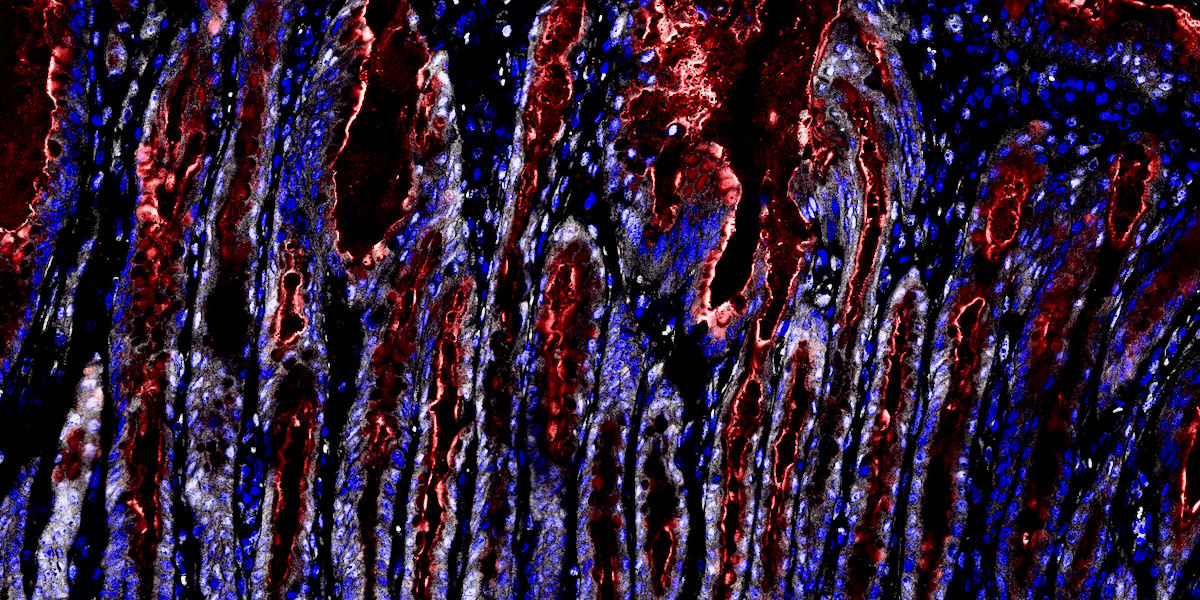
Stomach cancer ranks as one of the deadliest forms of cancer. Unlike many other types of cancer, however, one of its main causes is well known: chronic infections with the bacterium Helicobacter pylori. A team headed by Charité – Universitätsmedizin Berlin has now, for the first time, revealed how such an infection reprograms the stomach lining at the cellular level, thereby paving the way for subsequent cancer. The findings, published in the scientific journal Nature Communications, lay the foundation for preventing the onset of cancer even before a tumor develops. After all, in the best-case scenario, diseases don’t break out in the first place – a goal the researchers are pursuing in collaboration with the ImmunoPreCept Cluster of Excellence.
Disease almost never develops overnight. If illnesses are detected in later stages, however, they often prove difficult to treat - and the same holds true for stomach cancer. Years before the condition sets in, the stomach lining gradually begins to change. The most frequent trigger: The common stomach bacterium Helicobacter pylori, which is primarily transmitted within families. If parents or grandparents have had stomach cancer caused by a Helicobacter infection, their descendants are also at high risks of developing the disease.
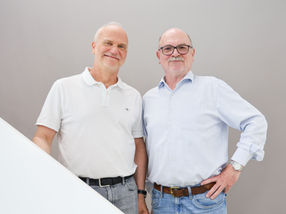
The goal of the research team led by Prof. Michael Sigal and Dr. Manqiang Lin at the Department of Hepatology and Gastroenterology at Charité is to intervene in a timely manner in such cases. "We encounter precisely these kinds of people at the clinic, and they are often very anxious. If we understand what happens in the stomach tissue even before cancer develops, we might be able to intervene," explains Michael Sigal, professor of translational gastrointestinal oncology. He is a member of the recently launched Berlin Cluster of Excellence ImmunoPreCept, which is dedicated to identifying disease-causing processes and halting them before it is too late. In this context, researchers from the cluster and other institutions have joined forces to, among other things, determine what occurs in the gastric mucosa at the cellular and molecular levels when it is exposed to a Helicobacter pylori infection over extended periods of time.
The fact that the stomach bacterium promotes the development of cancer has long been known. But what types of cells are involved? In what order do they relay signals? And which of these signals is the most important one? "We knew from previous studies that the bacterium disturbs the balance of growth signals in the stomach lining." What we were missing was the link between the inflammation that had been triggered and the tissue remodeling. This is because the mucous membrane does not behave the way one would actually expect. It grows rapidly, though without the classic stem cells multiplying in the process. "So, there must be another program at work that has been overlooked until now," concludes Michael Sigal.
A sequence of events like in a sophisticated game of chess
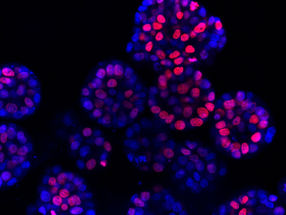
Consequently, the researchers harnessed single-cell sequencing to analyze tens of thousands of cells from the diseased stomach lining individually and determined, for each cell type, which genes are turned on and off during an infection. In order to identify the cause and effect, they opted for animal models in which specific genes in certain cells were selectively inactivated. Tiny, laboratory-grown miniature versions of the gastric mucosa, known as organoids, and assembloids – combinations of mucosal and connective tissue cells developed specifically for this purpose – were used in the subsequent course of the investigations to simulate communication between the different cell types and to selectively interrupt this communication. In this way, the researchers were able to observe which cells in the tissue are actually located adjacent to one another and exchange signals. They then used publicly available datasets to verify whether these findings also apply to human tissue.
The research team encountered an amazing program that runs like a perfect game of chess. Each step paves the way for the next, and the chain culminates in precancerous lesions and cancer, as Giulia Beccaceci, first author and early- career researcher in Michael Sigal’s research group, explains: "The infected stomach lining doesn't just grow faster, but actually transitions into a fundamentally different state. A process is gradually activated that normally occurs only during embryonic development and wound healing." This is the precise reason why the tissue undergoes such lasting changes.
The process sets in when the stomach bacterium overcomes the stomach's natural defense system. A signal fails to be transmitted that normally ensures the controlled renewal of the surface cells of the mucous membrane and their tolerance of bacteria. Consequently, the immune system is alerted; immune cells migrate to the site and produce pro-inflammatory mediators, primarily interleukin-1β. This, in turn, does not affect the mucous membrane itself, but rather the underlying connective tissue. From there, the decisive signal is finally transmitted: A tissue hormone that normally helps heal injuries switches the mucous membrane into repair mode. As a result, the cells grow uncontrollably and divide more frequently. “So connective tissue isn’t just a bystander, but the actual switch,” as Giulia Beccaceci concludes.
The progression to the disease can be halted
Now that the progression from a Helicobacter pylori infection through chronic gastritis and on to precancerous lesions and cancer is understood for the first time, the question remains: How can diseases be effectively prevented? “Persons with an increased risk—for example, due to a family history of stomach cancer, symptoms, or a known infection—should be tested for the stomach bacterium and, if the test is positive, treated with antibiotics,” says Michael Sigal. "This is simple and has been proven to reduce the risk of stomach cancer. This is due to the fact that it removes the persistent irritation from the tissue that keeps the disease-causing chain of changes in motion."
The gastric mucosa, however, does not fully return to normal after antibiotic treatment in all affected individuals. In some cases, the tissue has already been permanently reprogrammed, and the risk of cancer development remains. “In order to reliably identify these individuals, we are currently developing markers that can detect, in mucosal tissue samples, whether the tissue is on its way to becoming precancerous,” explains Dr. Sigal. "In addition, we now understand the individual steps in the chain and, as a result, the potential targets for drugs." Consequently, this triangular communication via connective tissue could be disrupted by making these cells unresponsive to the inflammatory mediator interleukin-1β. "That would prevent tissue changes and abnormal mucosal growth."
The researchers are encouraged by findings from earlier population studies, which showed that regular use of common anti-inflammatory drugs was associated with a lower risk of gastrointestinal tumors. These drugs also block a component of the now-discovered pathway: the enzyme COX-2. According to this, the principle works, and the new findings help to identify ways to interrupt the chain in an even more targeted manner and with fewer side effects.
Molecular Prevention: Help Before People Get Sick
Today, cancer prevention mainly means early detection, in other words, finding existing tumors at the earliest possible juncture. For Michael Sigal and his team, prevention sets in much earlier – namely exactly when cancer has not yet developed, but the tissue is already on its way to becoming cancerous. In order to better care for people at elevated risk and to conduct scientific research on their tissue samples, the team is currently establishing a Cancer Prevention Clinic at Charité. Together with researchers from the ImmunoPreCept Cluster of Excellence, the goal will be to gain an ever-better understanding of the stage when cancer has not yet developed.
"While we now know that cancer can be prevented if interventions are taken early enough, it remains to be seen, however, whether a tissue that has already been reprogrammed can return to its normal state," as Michael Sigal states. This is a crucial question that researchers are already working on. The knowledge gathered is intended to result in a prevention strategy that will help identify persons at increased risk for stomach cancer, quantify the condition of their tissue, and specifically halt or reverse the transition to the disease. In this context, the Cancer Prevention Clinic is the point of contact for patients.
Original publication


Other news from the department science