Producing Stem Cells on a Large Scale
Universities and partners develop an innovative method for culturing stem cells in a bioreactor
Advertisement


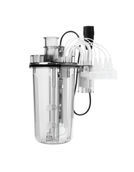
Medical research can yield vital insights. It is all the better when specific reactions in human or animal body cells can be studied on a large scale, thereby accelerating progress. A team of researchers from the University of Applied Sciences Emden/Leer and other partners is addressing this: The “INDUZELL” project is investigating a process that would allow cells grown in the laboratory to be produced on an industrial scale.
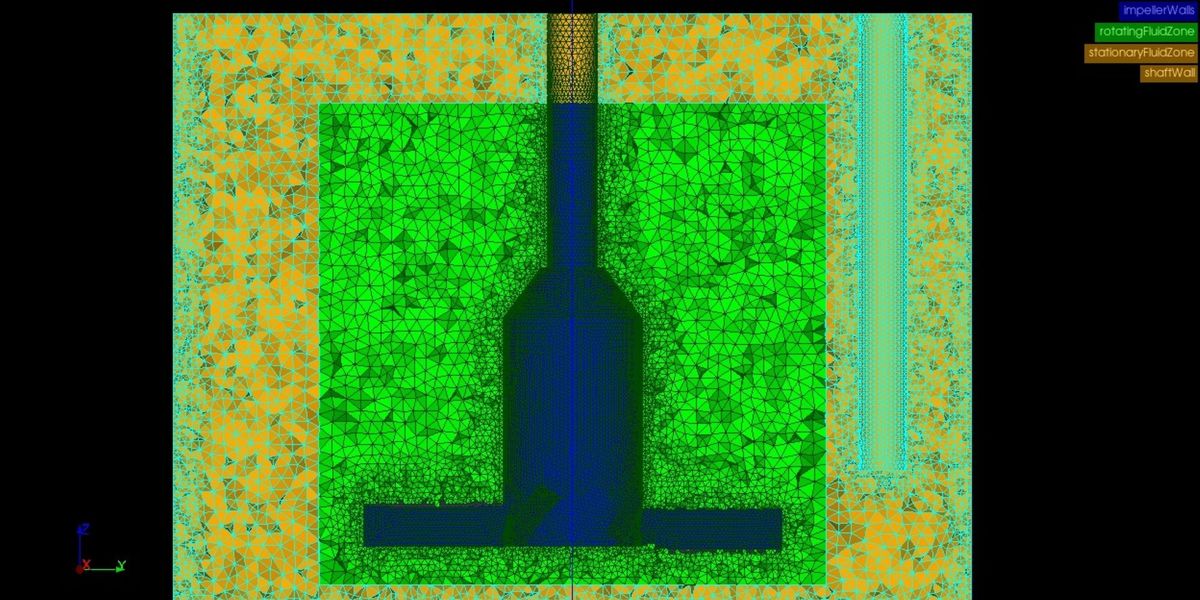
Currently, stem cells are still cultured in individual petri dishes in the laboratory. Cultivation and proliferation could be much more efficient in a large bioreactor—but there is currently a lack of robust data to guarantee the reliable production of intact stem cells. “Our goal is to develop a hybrid process model for optimizing stem cell cultivation in bioreactors that combines classical approaches from reaction engineering with data-driven methods,” explains Prof. Dr.-Ing. Jens Hüppmeier, who, on behalf of the University of Applied Sciences Emden/Leer, is working on a key aspect of the project together with research assistant Mohammad Farhan. Farhan is currently developing a mathematical model that can be fed data, which in turn will be provided by Hannover Medical School (MHH) during experiments in a small reactor model. Farhan and Hüppmeier will then develop a simulation designed to ultimately provide reliable insights into the optimal production conditions in the large bioreactor.
By integrating microscopy data—which researchers at Leibniz University Hannover are working on—with artificial intelligence for image analysis, which is being developed at the University of Applied Sciences and Arts Hannover, the project also aims to significantly improve process evaluation and enable more precise, real-time process monitoring. The step-by-step upscaling from laboratory-scale to 10-liter bioreactors in collaboration with MHH ensures that the results are also applicable on an industrial scale.
According to Hüppmeier, the results are expected to enrich not only research in regenerative medicine but also sustainable cell-based food production. Through resource-efficient process optimization and the promotion of innovative biotechnological applications, the project also makes a significant contribution to sustainability.
The INDUZELL project is funded by the State of Lower Saxony and the European Regional Development Fund (ERDF) with approximately 220,000 euros. In addition to the University of Applied Sciences Emden/Leer, the project involves the University of Applied Sciences Hannover, Hannover Medical School, Leibniz University Hannover, as well as the companies Cultimate Foods, Sartorius Stedim Biotech, and Histomography.
Note: This article has been translated using a computer system without human intervention. LUMITOS offers these automatic translations to present a wider range of current news. Since this article has been translated with automatic translation, it is possible that it contains errors in vocabulary, syntax or grammar. The original article in German can be found here.


Other news from the department science







These products might interest you



Most read news








More news from our other portals




















Something is happening in the life science industry ...
This is what true pioneering spirit looks like: Plenty of innovative start-ups are bringing fresh ideas, lifeblood and entrepreneurial spirit to change tomorrow's world for the better. Immerse yourself in the world of these young companies and take the opportunity to get in touch with the founders.