Lavasamycins – New Natural Products from Bacteria in the DSMZ Collection
Newly characterized Streptomyces strain yields previously unknown natural products
Advertisement


In a close collaboration, researchers from the Leibniz Institute DSMZ-German Collection of Microorganisms and cell cultures and the Helmholtz Centre for Infection Research (HZI) have discovered two previously unknown natural products. Lavasamycin A and B are produced by the bacterium Streptomyces barkulensis subsp. lavasanensis, which was isolated from a soil sample collected in Lavasan, Iran, and characterized as a new subspecies at the DSMZ. The findings have been published in the renowned journal Journal of Natural Products.
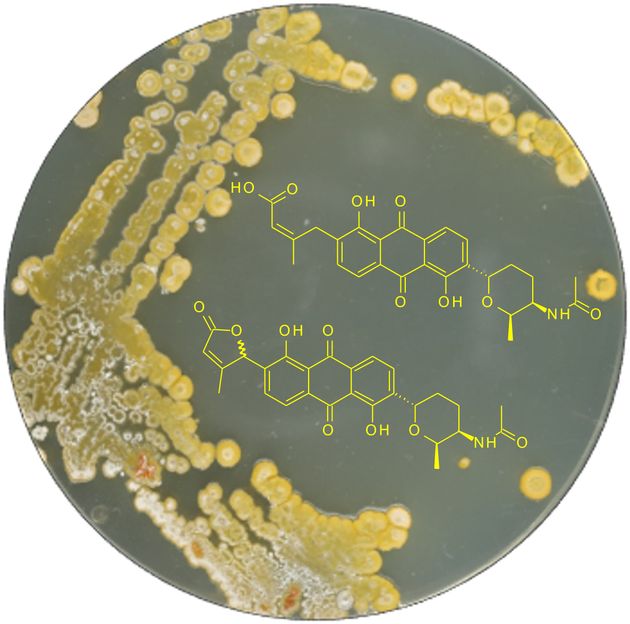
Streptomyces barkulensis subsp. lavasanensis
DSMZ
New bacterial strains as a source of antibiotics
Bacteria of the genus Streptomyces produce an enormous variety of natural compounds, including antibiotics. Phylogenetically closely related bacterial strains often produce similar secondary metabolites. Therefore, investigating strains that differ in their phylogenetic relationships from known producers can be a useful strategy in the search for new natural products. The DSMZ’s microbial resource collection provides an important foundation for this research: it preserves characterized microorganisms that have not yet been comprehensively investigated for their potential to produce natural products, including antibiotics.
Discovery of two lavasamycins
The researchers isolated two previously unknown natural products from the newly characterized strain Streptomyces barkulensis subsp. lavasanensis, naming them lavasamycin A and B. Both belong to the class of anthraquinone derivatives and contain an unusual sugar moiety. Lavasamycin B also features a rare structural element known as a butenolide unit. In laboratory tests, lavasamycin A inhibited the growth of the Gram-positive bacterium Bacillus subtilis, whereas no such activity was observed for lavasamycin B under the conditions tested. The structural features and differing biological activities of the two compounds make them interesting additions to the diversity of microbial natural products and provide a basis for further investigations into their biosynthesis and properties.
Characterization of the biosynthetic gene cluster
In addition to the chemical analysis, the team investigated the genetic basis of lavasamycin production. The researchers experimentally confirmed the biosynthetic gene cluster responsible for producing the compounds, a type II polyketide synthase cluster, and demonstrated that a repressor inhibits their production. Inactivating this regulator led to a substantial increase in lavasamycin production. These findings provide insights into the regulatory mechanisms underlying lavasamycin biosynthesis and demonstrate how production levels can be influenced through targeted genetic modifications.
Collaboration advancing natural product research
“The combination of taxonomic characterization, natural product chemistry and targeted genetic investigations enables us to discover new natural products, including antibiotics, and to better understand their biosynthesis. Our study also highlights the potential of previously underexplored Streptomyces strains for natural product research,” says Prof. Dr. Yvonne Mast, Interim Scientific Director of the Leibniz Institute DSMZ and Head of the Department Bioresources for Bioeconomy and Health Research.
Original publication


Other news from the department science










Most read news









More news from our other portals

















Last viewed contents

Recipharm reaches new heights with headquarters move to Switzerland
Zurich Blue, a nano-pigment inspired by an ancient prototype
