Metabolic markers are expected to help detect colorectal cancer risk earlier
Researchers are studying early, potentially reversible changes in the intestinal mucosa
Advertisement


Detecting colorectal cancer earlier and preventing it whenever possible: That is the goal of the new collaborative project NAD-MAGIC. Colorectal cancer usually develops over many years, long before a tumor becomes visible. How chronic inflammatory and aging processes alter the tissue in a way that promotes the development of precancerous lesions is still not fully understood. That is why NAD-MAGIC is searching for early metabolic changes in the intestinal mucosa that could precede the development of cancer.
The Federal Ministry of Research, Technology, and Space (BMFTR) is funding the project with 1,949,784 euros over 36 months. NAD-MAGIC is coordinated at the University Medical Center Schleswig-Holstein (UKSH), Kiel Campus.
The focus is on the vital metabolic molecule NAD⁺, short for nicotinamide adenine dinucleotide. Cells require it, among other things, for their energy supply and to repair damage to their genetic material. The research consortium’s central hypothesis is that chronic inflammatory processes—which occur particularly in the context of aging—could disrupt NAD⁺ metabolism in the long term. As a result, cells in the intestinal mucosa would increasingly lose the ability to reliably repair damage to their DNA. Even before cancer develops, measurable metabolic states could emerge that make the cells particularly vulnerable and promote the subsequent development of tumors.
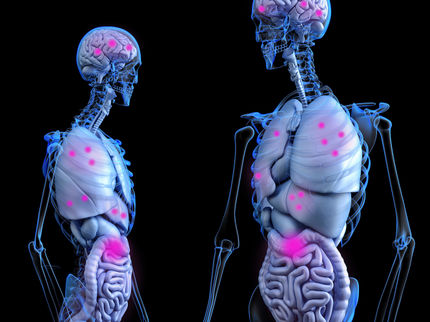
“We want to focus on the period when no tumor is yet present, but a dangerous development may already be emerging in the cells,” says Prof. Dr. Konrad Aden, coordinator of NAD-MAGIC, senior physician at the Department of Internal Medicine I at the UKSH, and research group leader at the Institute for Clinical Molecular Biology at the UKSH and Christian-Albrechts-University of Kiel. “If we can identify such early metabolic states, understand their causes, and specifically influence them, this will, in the long term, open up the possibility not only of diagnosing colorectal cancer earlier but also of preventing its development as much as possible.”
A New Perspective on the Development of Cancer
NAD-MAGIC is pursuing a paradigm shift: While genetic changes have primarily been considered the starting point for cancer development up to now, the project is systematically investigating for the first time whether changes in cellular metabolism occur even earlier. The focus thus shifts from treating existing tumors to early, potentially reversible stages of the disease.
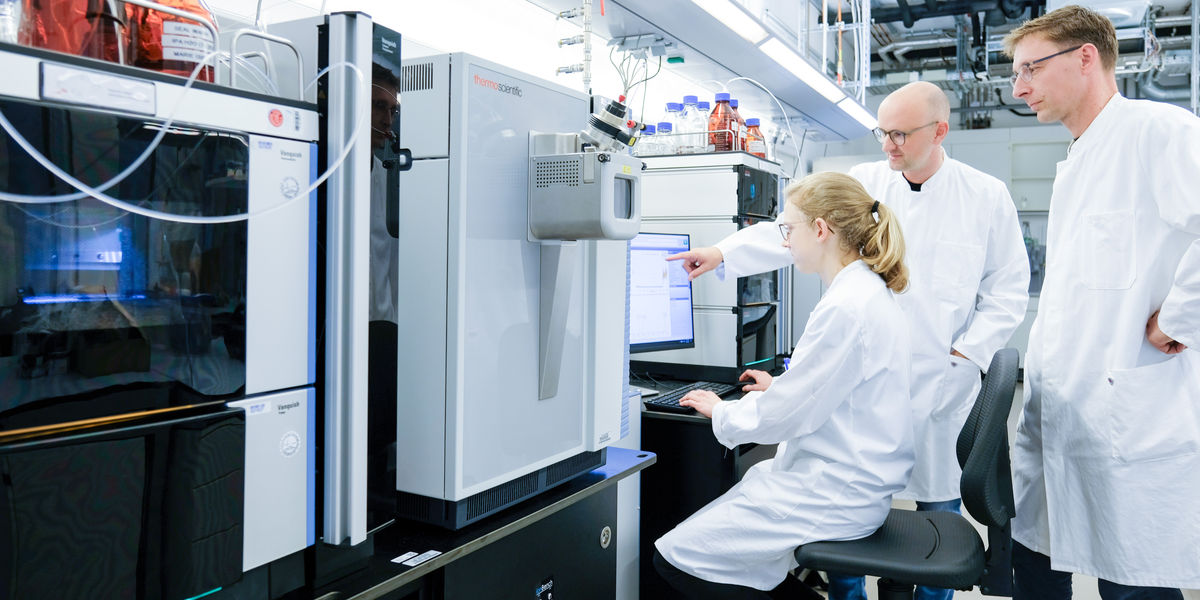
Metabolomics—the comprehensive analysis of small metabolic molecules—plays a key role. Using high-resolution mass spectrometry, the Kiel research teams are investigating NAD⁺ metabolism in the intestinal mucosa. This makes it possible to create spatial metabolic maps at the molecular level. These maps are intended to show where noticeable changes begin in the tissue and which cells are affected.
These maps are integrated with single-cell and genomic analyses as well as mathematical models. The UKSH, Christian-Albrechts-University of Kiel, and the Cluster of Excellence “Precision Medicine in Chronic Inflammation” (PMI) are contributing their expertise in the research of chronic inflammatory diseases and precision medicine. The goal is to identify characteristic metabolic patterns that could indicate an increased risk of cancer—ideally before changes become detectable through conventional tissue examinations or clinically.
Also participating are Charité – Universitätsmedizin Berlin, the Berlin Institute for Medical Systems Biology at the Max Delbrück Center (MDC-BIMSB), and the Technical University of Munich. In Berlin, researchers are investigating whether the discovered metabolic patterns are linked to early changes in the genome. “We want to understand how changes in cellular metabolism influence the stability of the genome and whether they occur before a tumor forms,” says Prof. Dr. Ashley D. Sanders, group leader at the MDC-BIMSB and professor of genomic instability and somatic mosaicism at Charité. “To do this, we combine single-cell genomic analyses with metabolic measurements and look for early signs that cells are developing into precancerous states.”
Targeting Early Stages
At TranslaTUM, the Central Institute for Translational Cancer Research at the Technical University of Munich, preclinical models are being used to investigate whether these metabolic changes can be influenced. The goal is to determine whether restoring NAD⁺ availability can limit early cancer-promoting developments. “The crucial question is whether there is a window of opportunity during which this dangerous development can still be reversed,” says Dr. Markus Tschurtschenthaler of TranslaTUM. “Our models are designed to show which preventive approaches are fundamentally viable for this purpose.”
In the long term, the results are expected to lead to the development of biomarkers that can be used to identify people at increased risk for colorectal cancer earlier and monitor them more closely. However, further research and clinical trials are necessary before these findings can be applied in clinical practice. At this time, no recommendations regarding the use of NAD⁺ precursors or other metabolic supplements can be derived from the project.
Note: This article has been translated using a computer system without human intervention. LUMITOS offers these automatic translations to present a wider range of current news. Since this article has been translated with automatic translation, it is possible that it contains errors in vocabulary, syntax or grammar. The original article in German can be found here.


Other news from the department science








Most read news







More news from our other portals











See the theme worlds for related content
Topic World Mass Spectrometry
Mass spectrometry enables us to detect and identify molecules and reveal their structure. Whether in chemistry, biochemistry or forensics - mass spectrometry opens up unexpected insights into the composition of our world. Immerse yourself in the fascinating world of mass spectrometry!

Topic World Mass Spectrometry
Mass spectrometry enables us to detect and identify molecules and reveal their structure. Whether in chemistry, biochemistry or forensics - mass spectrometry opens up unexpected insights into the composition of our world. Immerse yourself in the fascinating world of mass spectrometry!