Multiple Sclerosis: New Drug Significantly Reduces Relapses and Is Well Tolerated
Fewer MS Relapses with Treatment Using a New Active Ingredient

Advertisement


A new drug could provide more effective protection against relapses for people with relapsing-remitting multiple sclerosis (MS) in the future. In two large international studies involving a total of 2,007 female patients, remibrutinib reduced the annual relapse rate by 31 to 35 percent compared to an established MS treatment. New areas of inflammation in the brain were also significantly less common. Furthermore, the results suggest that the drug could slow the progression of physical disabilities. At the same time, the drug was well tolerated: Unlike other substances in the same class, there were no signs of liver damage. The results were published on October 23, 2026, in the journal *The Lancet* —coinciding with the initial presentation of the data at the MSToronto2026 World MS Congress in Toronto, the joint meeting of the European and American MS societies ECTRIMS and ACTRIMS. Based on the study results, efforts will now be made to seek approval of the drug for the treatment of MS.
“The results could significantly improve the treatment of people with multiple sclerosis in the future. With remibrutinib, we have a drug that not only reduces disease relapses and inflammation in the brain but may also slow the progression of permanent disabilities. It is particularly promising that we can use it to influence inflammatory processes that existing therapies can only target to a limited extent—especially inflammation within the brain itself, which is now considered a key driver of the gradual increase in disability,” says Prof. Dr. Heinz Wiendl, first and corresponding author of the publication, Chair of the international Steering Committee of the global remibrutinib MS study program, and Medical Director of the Department of Neurology and Neurophysiology at the University Medical Center Freiburg.
Fewer Relapses and Less Inflammation in the Brain
Multiple sclerosis is a chronic inflammatory disease of the central nervous system. Among other things, it can cause visual disturbances, muscle weakness, and difficulty walking. The goal of treatment is to prevent disease relapses and, as much as possible, avoid permanent disability.
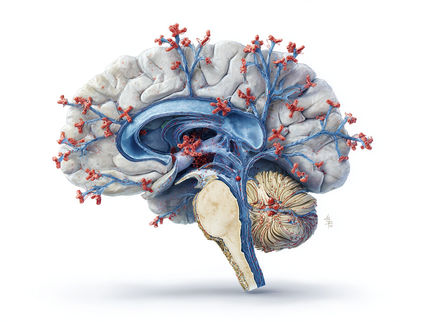
Remibrutinib could open up another treatment option for this. Compared to the established MS drug teriflunomide, 65 to 70 percent fewer new or enlarged inflammatory lesions in the brain occurred with remibrutinib. The number of acutely inflammatory, contrast-enhancing lesions decreased by 66 percent. On remibrutinib, patients experienced, on average, only about one relapse every 13 years. The concentration of neurofilament in the blood—a marker of nerve cell damage—was also lower on remibrutinib than on teriflunomide. Half of the patients treated with remibrutinib showed no measurable disease activity whatsoever during the course of the study—no relapses, no confirmed increase in disability, and no new inflammatory lesions—compared to about one-third of those on teriflunomide (50 percent versus 32 percent).
An advantage was also evident in the long-term progression of the disease: Among patients treated with remibrutinib, 7.7 percent experienced confirmed disability progression lasting at least six months during the study. In the comparison group, the figure was 10.5 percent—a 29 percent reduction in risk. This difference was nominally statistically significant. A positive trend was observed in the increase in disability confirmed after just three months (11.7 percent versus 14.1 percent), but it did not reach statistical significance. Whether the effect on disability is confirmed in the long term will be determined by the ongoing extension phase of the studies, in which patients will be treated with remibrutinib for up to five years.
The two identically designed, double-blind Phase III studies, REMODEL-1 and REMODEL-2, were conducted at 407 centers in 46 countries and funded by the manufacturer Novartis. The studies included adults between the ages of 18 and 55 with relapsing-remitting MS and confirmed disease activity. Scientific oversight of the global trial program was provided by an international steering committee chaired by Wiendl. Participant safety was continuously monitored by an independent committee, supported by an independent hepatology committee that assessed potential liver damage.
Well tolerated—no evidence of liver damage
Particular attention was paid to safety. In large MS studies, liver damage had occurred with other BTK inhibitors, which significantly hampered their further development. No such signal was observed with remibrutinib: Elevations in liver enzymes were rare, transient, and fully reversible—and they occurred less frequently than with teriflunomide (significantly elevated liver enzyme levels in 2.0 percent versus 7.4 percent of patients). Not a single case met the criteria for severe drug-induced liver injury (known as Hy’s Law).
Overall, adverse events occurred at a similar rate with remibrutinib as with the comparator therapy (79.5 percent versus 81.5 percent), and serious adverse events occurred in 6.0 percent versus 7.0 percent of patients. Fewer patients discontinued treatment due to side effects while on remibrutinib than while on teriflunomide (3.1 percent versus 5.8 percent). Infections occurred with roughly the same frequency in both groups. Mild bleeding events, such as petechiae and bruising, were more common with remibrutinib (12.7 percent versus 6.7 percent); in contrast, decreases in blood cell counts occurred less frequently. The safety profile is consistent with previous findings from the clinical development program involving more than 4,500 treated patients.
“For the entire class of BTK inhibitors, liver safety has been the key hurdle to date. The fact that we saw no evidence of liver damage and not a single case of severe liver damage among the approximately 1,000 patients who received remibrutinib in the studies is, in the Steering Committee’s view, the most important result alongside efficacy. It is only the combination of high efficacy and a favorable safety profile that makes a drug suitable for the long-term treatment of a chronic disease such as MS,” says Wiendl.
New Treatment Option in Tablet Form
Remibrutinib belongs to the class of drugs known as BTK inhibitors. These block the enzyme Bruton’s tyrosine kinase and thereby affect B cells as well as microglia and macrophages—immune cells considered key drivers of inflammation and the progression of disability in MS. Remibrutinib acts highly selectively, crosses the blood-brain barrier, and can thus also target inflammation occurring within the brain itself. The B cells are not destroyed in the process, but their function is altered; after discontinuation, signal transmission returns to normal. To date, no BTK inhibitor has been approved for the treatment of relapsing-remitting MS. “Unlike many other medications, the active ingredient does not need to be administered as an infusion but can be taken as a tablet. That would make everyday life significantly easier for patients,” says Wiendl.
Remibrutinib has been approved since early 2026 for the treatment of a specific form of hives (chronic spontaneous urticaria), but not for multiple sclerosis. Based on the positive study results, the manufacturer plans to apply for approval for MS.
Freiburg Research on Multiple Sclerosis
Wiendl and his team at the University Medical Center Freiburg have been involved in several international research projects on multiple sclerosis. As early as 2025, the Freiburg researchers reported positive results for a drug that can slow the progression of disability in certain MS courses. Another study, using artificial intelligence, showed that disease progression can be described more accurately than with the previous classification into MS subtypes. The goal of the research is to better understand the disease and to be able to treat patients in a more targeted manner.
Note: This article has been translated using a computer system without human intervention. LUMITOS offers these automatic translations to present a wider range of current news. Since this article has been translated with automatic translation, it is possible that it contains errors in vocabulary, syntax or grammar. The original article in German can be found here.
Original publication



Other news from the department science