New Method Reveals What a Cell Was Doing Days Ago
New technology now makes it possible to store these RNA molecules in cells for several days
Advertisement


What a cell did a few hours or days ago usually remains unknown to researchers. They can only measure its current state. This is a problem when they want to understand how immune responses develop or why individual cancer cells survive treatment.
Particularly revealing in this context is which genes are active in a cell. This provides scientists with essential insights into the function of cells and the body. To do this, they measure RNA molecules—transcripts of the active genes. However, this method only captures gene activity at the moment of measurement. Furthermore, each cell can only be analyzed once, as the RNA is destroyed during the analysis.
Researchers at the Department of Biosystems Science and Engineering at ETH Zurich in Basel have now developed a method for archiving RNA molecules within cells. For the first time, this allows them not only to examine a cell’s current state but also to reconstruct which genes were active in the past.

“You can no longer tell that the reaction took place at all”
“This glimpse into the past is particularly interesting for cellular reactions that last only a short time—and there are many of them: immune and stress responses are just a few examples,” explains Christopher Reinkemeier, a postdoc in the group led by ETH Professor Randall Platt. In such short-lived reactions, an external stimulus activates certain genes. As soon as the stimulus is gone, the cell shuts down these genes again.
As part of a study, researchers from Basel demonstrated how human cells in cell culture respond to a messenger substance from the immune system. “If you measure too late using the conventional method, you can no longer detect that the reaction took place at all,” says Marcos Manero Carranza, a Ph.D. student in Platt’s group and, together with Reinkemeier, a co-first author of the study.
How the RNA Archive Works
To create their intracellular RNA archive, the researchers must capture RNA molecules and protect them from their natural degradation. This is because RNA molecules are not normally designed to be preserved for long periods.
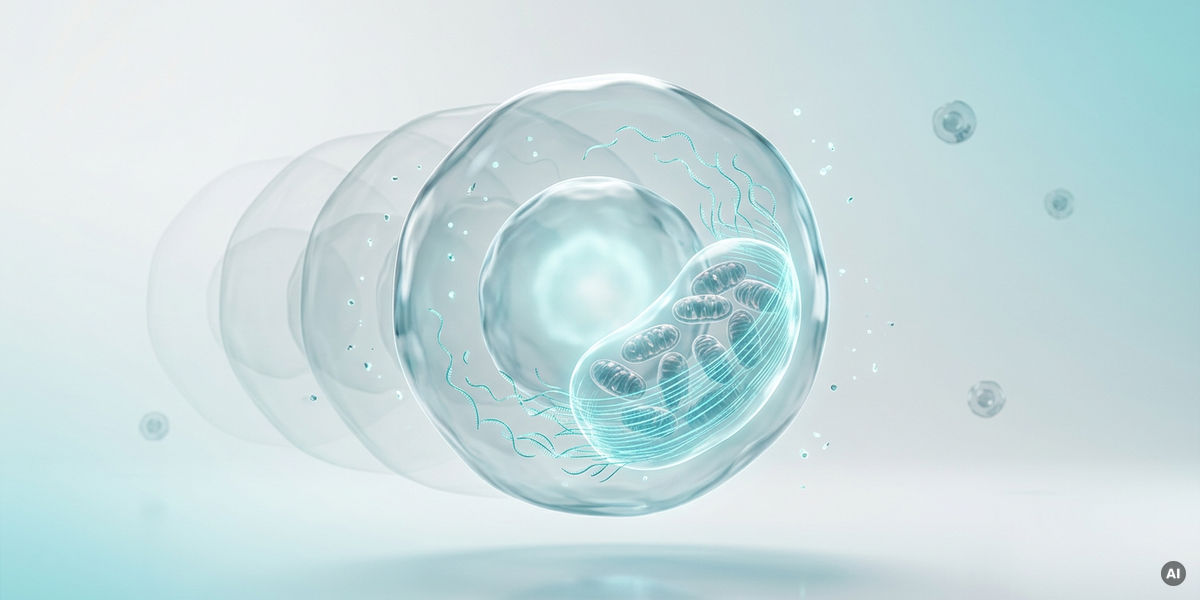
To do this, the scientists use, among other things, a protein that occurs naturally in so-called stress granules. These are RNA aggregates that form in cells under stress, such as during an infection. In such situations, the cell temporarily shuts down parts of its metabolism and stores RNA molecules for later use.
The researchers biotechnologically optimized this stress granule protein and two other proteins. In this way, they created a system that concentrates a cell’s RNA molecules in a film surrounding the cell’s mitochondria, shielding them there from RNA-degrading enzymes that occur naturally in the cells. The researchers introduce the genetic instructions for the three optimized proteins into the cells via so-called plasmids. The cells then assemble the archiving system themselves inside their cells. This allows several thousand RNA molecules per cell to be archived over several days.
Investigating How Cancer Recurrences Occur
The new method could now make it possible to detect rare events within cells. It could prove particularly useful when researchers only realize after the fact which cells are of interest to them. They can select these cells and then use the RNA archive to investigate which genes were previously active within them.
The researchers have filed a patent application for the new technology and plan to further develop it so that it can also be used in animals and in cancer research in the future.
One potential area of application is tumor cells that survive chemotherapy. Such cells can later contribute to a relapse. It is currently difficult to determine which cells will survive treatment and how they developed prior to treatment.
“It is not known from the outset which cells will develop into such persistent cells, and this process is poorly understood,” says Reinkemeier. “If we can apply our system to cancer research, we’ll be able to isolate persistent cells and look into their past. This will allow us to investigate how these cells form and develop. That could be a major step forward for cancer research.”
Note: This article has been translated using a computer system without human intervention. LUMITOS offers these automatic translations to present a wider range of current news. Since this article has been translated with automatic translation, it is possible that it contains errors in vocabulary, syntax or grammar. The original article in German can be found here.
Original publication


Other news from the department science