Beyond COVID-19: Fundamental principles that shape pandemics
Advertisement


d
Instanz: Teilen
Teilen:
05.08.2026 18:21
Beyond COVID-19: Fundamental principles that shape pandemics
Dr. Manuel Maidorn Presse- und Öffentlichkeitsarbeit Max-Planck-Institut für Dynamik und Selbstorganisation
• Pandemics follow common fundamental principles despite their differences
• The course of pandemics arises from the interplay of biological, mathematical, and social mechanisms
• Understanding these principles can improve preparedness and response to future pandemics
Every pandemic is different. Nevertheless, certain commonalities can be identified across all pandemics. Researchers at the Max Planck Institute for Dynamics and Self-Organization (MPI-DS), together with an interdisciplinary team of experts, have compiled ten fundamental mechanisms that can be used to describe the development of pandemics. The study brings together insights from epidemiology, sociology, mathematics, physics, political science, psychology, and public health.
“Many of these mechanisms have long been known in their respective fields and are considered fundamental knowledge there,” says Viola Priesemann, professor and group leader at MPI-DS. “However, they are rarely considered together.” The COVID-19 pandemic has once again demonstrated that outbreaks of infection cannot be explained by biological factors alone. While the development of a pandemic clearly depends on the characteristics of the pathogen, its spread is modulated by social interaction, societal response, and the implementation of measures. The researchers selected ten examples and thereof described fundamental and robust mechanisms that are common across various diseases and social contexts.
The mechanisms described include established mathematical principles, such as e.g. the exponential growth of infections in the early phase of an outbreak. Small changes in the intensity or timing of measures can thus have a major impact on the subsequent course of the outbreak.
“Reducing group sizes at events or in school classes also has an interesting and clear effect on the number of expected new infections – and it’s quadratic,” explains Sydney Paltra, doctoral candidate at the Technical University of Berlin. “If the number of people were halved, for example, only a quarter of the infections would be expected,” Paltra continues.
Social mechanisms such as trust in institutions, solidarity, and risk perception also shape people’s behavior and the course of a pandemic. While crises can initially strengthen social cohesion, in the long term they can also exacerbate social divisions and erode trust. Understanding these dynamics is crucial for developing effective communication strategies and maintaining public support during a prolonged health crisis.
“Of course, these mechanisms do not operate in isolation,” emphasizes Philip Bechtle, a lecturer at the University of Bonn. “The goal is to understand their interplay more precisely and thus make the measures even more effective. To do this, we need data on the pandemic that is as accurate as possible and publicly available, such as infection figures and mobility data,” Bechtle explains further. In addition to rapid data exchange and interdisciplinary collaboration, the researchers believe that reliable surveillance systems and open scientific cooperation are also crucial. At the same time, long-term funding for independent basic research creates a knowledge base that helps prepare for unexpected challenges.
Even though the acute phase of the global COVID-19 pandemic is over, pandemics are expected to arise in the future as well. The mechanisms compiled by the scientists help ensure robust pandemic preparedness, regardless of the pathogen. They thus provide a framework for policymakers, health authorities, the scientific community, and the public.
Originalpublikation:
https://www.sciencedirect.com/science/article/pii/S2589537026003548
Weitere Informationen:
https://www.ds.mpg.de/4135685/260805pandemicprinciples
Bilder
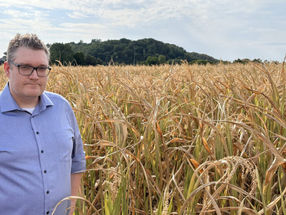
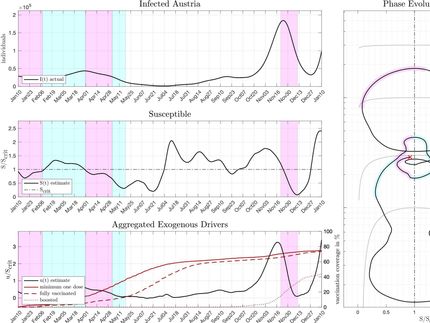
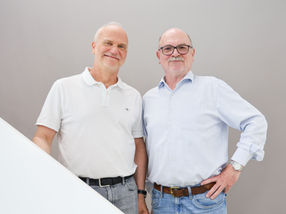
< Scientists at the MPI-DS have compiled ten fundamental mechanisms governing the course of pandemics ...
Merkmale dieser Pressemitteilung: Journalisten, Wissenschaftler Biologie, Ernährung / Gesundheit / Pflege, Gesellschaft, Medizin, Physik / Astronomie überregional Forschungsergebnisse Englisch
Ähnliche Pressemitteilungen im idw
05.08.2026 16:17
Taking appropriate protective measures during pandemics
Max-Planck-Institut für Dynamik und Selbstorganisation
1
11.02.2026 16:17
Fire-footed rope squirrels identified as a natural reservoir for monkeypox virus
Helmholtz-Zentrum für Infektionsforschung
1
11.03.2026 15:08
BNITM raises more than €9 million for global health in collaboration with international partners
Bernhard-Nocht-Institut für Tropenmedizin
22.06.2026 09:25
Social Inequality Harms the Foundations of Society
Goethe-Universität Frankfurt am Main
1
22.05.2026 09:50
A new approach to weaken dangerous pathogens
Christian-Albrechts-Universität zu Kiel
1
Original publication


Other news from the department science









These products might interest you