Vitamin B3 for the gut: From basic discovery to clinical translation
Innovation Transfer Award recognizes a long-standing collaboration
Advertisement


The gut microbiome does far more than aid digestion. It shapes metabolism, communicates with the immune system, and influences a wide range of diseases, from chronic inflammatory disorders to viral infections. But can these biological insights be translated into new therapies?
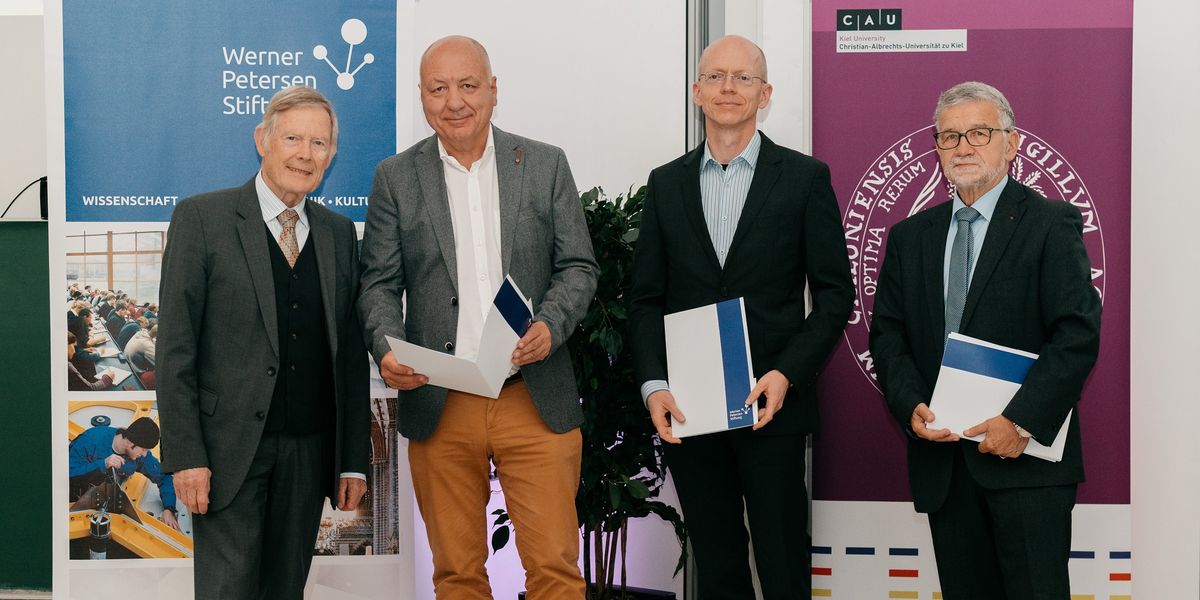
For more than a decade, researchers from the Cluster of Excellence Precision Medicine in Chronic Inflammation (PMI), University Hospital Schleswig-Holstein (UKSH), Kiel University (CAU), and CONARIS Research Institute AG - a biopharmaceutical company spun out of the former University Hospital Kiel in 1999 - have been working to answer that question. Their collaboration led to the development of CICR-NAM (Controlled Ileocolonic Release Nicotinamide), a novel formulation that delivers nicotinamide (vitamin B3) specifically to the lower small intestine and colon, where it is designed to modulate metabolic pathways and interact directly with the gut microbiome. For successfully advancing this concept from fundamental research into clinical development, the team has received the Innovation Transfer Award from the Prof. Dr. Werner Petersen Foundation. The award was presented on 12 June during the Faculty of Engineering Summer Reception at Kiel University. It recognizes collaborations between academia and industry in Schleswig-Holstein that successfully translate scientific discoveries into innovative technologies and applications with tangible societal benefit.
A therapeutic strategy inspired by the gut microbiome
When work on CICR-NAM began, the gut microbiome had not yet become the major research focus it is today. Researchers at PMI and CONARIS were already investigating how alterations in tryptophan and vitamin B3 metabolism contribute to chronic inflammatory diseases and how these pathways are influenced by the intestinal microbiome. Their findings led to a new hypothesis: if these metabolic processes could be targeted directly within the gut, they might provide the basis for entirely new therapeutic approaches. This scientific concept gradually evolved into a translational development programme. In 2012, CONARIS filed the first patent applications covering the underlying technology. Over the following years, the close collaboration between UKSH, Kiel University, and CONARIS resulted in additional patents for formulations that protect nicotinamide during its passage through the upper gastrointestinal tract and release it only in the terminal ileum and colon.
The innovation lies in where the drug is released
Nicotinamide itself is a well-established form of vitamin B3. The innovation behind CICR-NAM therefore lies not in the active compound, but in its targeted delivery. Conventional formulations are absorbed in the upper gastrointestinal tract. CICR-NAM, by contrast, protects nicotinamide as it passes through the stomach and small intestine, releasing it only when it reaches the lower intestine, where it comes into direct contact with the gut microbiome. "For many years, changes in the gut microbiome were viewed mainly as a consequence of disease. Today, growing evidence suggests that improving the microbiome itself can have therapeutic benefits," says Professor Stefan Schreiber, Director of the Department of Internal Medicine I at UKSH, Director of the Institute of Clinical Molecular Biology (IKMB; CAU/UKSH), and spokesperson for the PMI Cluster of Excellence. "CICR-NAM illustrates how a deeper understanding of biology can ultimately be translated into an entirely new therapeutic strategy."
From laboratory research to clinical studies
CICR-NAM first entered clinical testing during the COVID-19 pandemic. In a randomized, placebo-controlled trial involving 900 patients, researchers found that early nicotinamide treatment accelerated the recovery of physical performance following COVID-19. At the same time, they demonstrated that nicotinamide supplementation prevented the disturbances in gut microbial metabolism that are typically associated with COVID-19, providing important mechanistic evidence that the underlying therapeutic concept was working as intended. The findings were published in Nature Metabolism in 2025. Today, CICR-NAM is being further developed for the indication that originally inspired the project: chronic inflammatory diseases. The ongoing Phase II/III ORNATUS-1 trial is evaluating high-dose CICR-NAM in patients with ulcerative colitis, following promising anti-inflammatory effects observed in preclinical studies. Additional clinical studies investigating low-dose CICR-NAM as a medical nutritional supplement for other indications are currently in preparation. The tablets are already manufactured on an industrial scale and have demonstrated a shelf life of five years, providing a strong foundation for future large-scale clinical use. "For us, this award recognizes far more than the development of a single product, it acknowledges the entire journey from a scientific idea to clinical application," says Dr. Georg Wätzig, Coordinator of Translational Research at the Institute of Clinical Molecular Biology (IKMB), Project Leader at CONARIS, and inventor of CICR-NAM. "Projects like this can only succeed outside the traditional pharmaceutical industry when basic science, clinical research, and industrial expertise are closely integrated over many years." The award presented to Professor Schreiber and Dr. Wätzig thus also recognizes the long-standing partnership between UKSH, Kiel University, and CONARIS. Beyond CICR-NAM, this collaboration has generated further translational innovations, including the designer protein olamkicept, which is currently being developed as a treatment for inflammatory diseases.
Original publication


Other news from the department science








These products might interest you