Research Breakthrough on the Path to a New Reserve Antibiotic
For the first time, chemists have succeeded in synthesizing the highly potent natural compound neosorangicin A
Advertisement


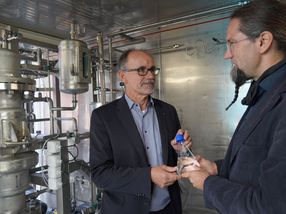
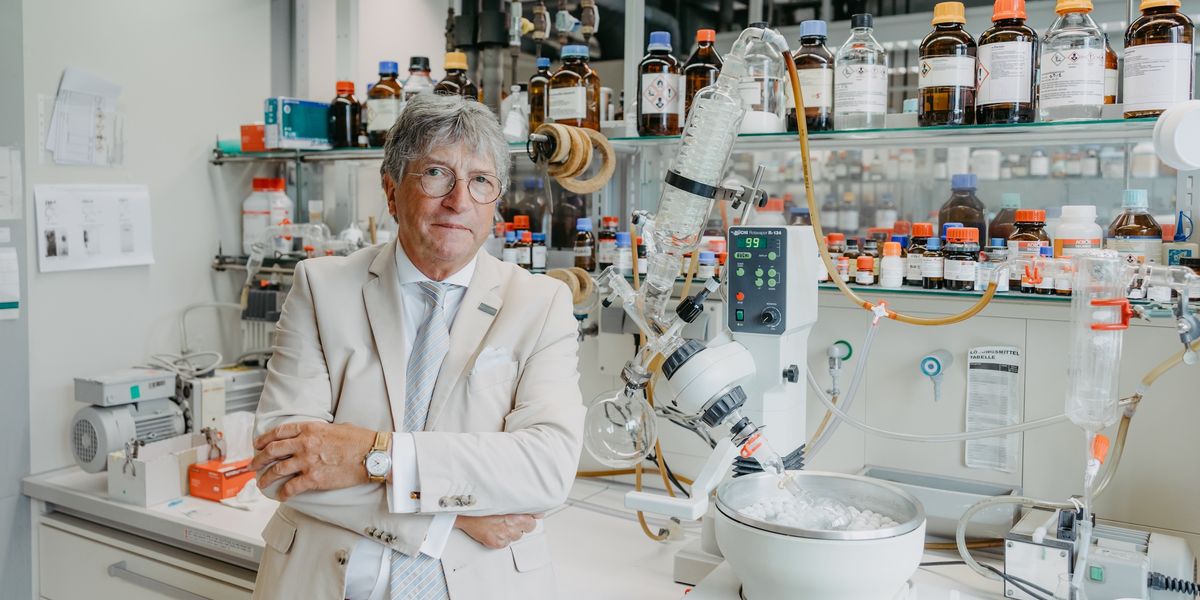
In the fight against drug-resistant bacteria, chemists at Otto von Guericke University Magdeburg have achieved a major research breakthrough: The team led by Prof. Dr. Dieter Schinzer of the Institute of Chemistry has succeeded for the first time in synthesizing key building blocks of the natural compound neosorangicin A in the laboratory. This makes it possible to further develop neosorangicin A as a promising candidate for use as a so-called “reserve antibiotic” and to combat antibiotic resistance in the future.
To synthesize the naturally occurring active compound, the scientists used a method known as relay synthesis: Instead of immediately producing the entire complex molecule, they first synthesized key subunits that served as intermediate steps on the path to the complete active compound. The success of the research thus lies not only in the synthesized building blocks, but also in the demonstration of the synthesis process itself. The results have just been published in the journal *Chemistry – A European Journal* by Wiley-VCH.
The Active Compound Neosorangicin A
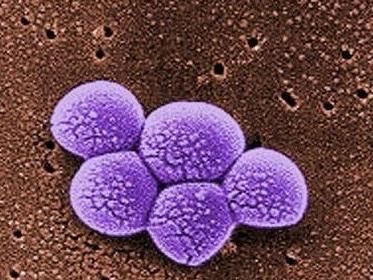
Neosorangicin A is a so-called secondary metabolite produced by myxobacteria to defend themselves against other microorganisms. According to previous studies, Neosorangicin A interferes with a central process in bacteria: It inhibits bacterial RNA polymerase—the enzyme that bacteria need to transcribe their genetic information and reproduce. So far, the substance has been shown to be effective against various groups of bacteria, including so-called Gram-negative pathogens. These bacteria are causing increasing problems in hospitals worldwide and are particularly difficult to treat because they possess an additional outer protective layer that repels many active substances. Neosorangicin A thus belongs to a class of substances that is of particular interest for the development of future reserve antibiotics.
“We are dealing here with a molecule that is extremely fascinating from a biological standpoint, but exceptionally difficult to access chemically,” says Prof. Dieter Schinzer. “The synthetic route we’ve now developed is essential for specifically modifying the natural compound, making it more stable, and thereby making it usable for further drug development in the first place.”
The Synthesis
The real challenge in the synthesis, Schinzer continues, was that neosorangicin A is not only a fairly large molecule but also highly complex in its three-dimensional structure. “The molecule contains 16 so-called chiral centers—in simple terms: points where the spatial arrangement of the atoms must be exactly correct. Even the slightest deviations can determine whether a drug fits into the molecular ‘pocket’ of its target protein or remains ineffective.” In addition, neosorangicin A is relatively unstable and can be rapidly broken down in the body. “That is precisely why a chemical approach is so important: Only now that we can synthesize the molecule in the lab can it be specifically modified chemically and biologically optimized.”
Together with his team, Prof. Schinzer developed a convergent synthesis strategy. Instead of building up the complex molecule step by step in a long sequence, the researchers first synthesized three highly complex central building blocks separately and only joined them together at the end. The synthesis of individual substructures required up to 19 chemical reaction steps. Using specialized coupling reactions, they were ultimately able to construct the complete carbon skeleton of neosorangicin A.
Antibiotic Resistance Worldwide
According to the World Health Organization (WHO), antibiotic resistance is one of the greatest threats to global health. A global analysis published in *The Lancet* in 2024 estimates that in 2021, approximately 1.14 million deaths were directly caused by bacterial resistance, and 4.71 million deaths were associated with it. By 2050, up to 1.91 million people could die annually directly from resistant bacterial infections if more effective countermeasures are not developed.
“Resistant infections are no longer an abstract future scenario, but have long been a global medical problem,” says Prof. Schinzer. “We need new types of structures because many of the classic antibiotics are losing their effectiveness. Natural compounds such as neosorangicin A can provide important models for this, but only if we learn how to make them chemically controllable.”
However, according to chemist Dieter Schinzer, there is still a long way to go before an effective drug can be developed. The successful synthesis of neosorangicin A, however, provides a crucial foundation for this: it makes a natural compound that was previously difficult to access chemically available and modifiable. “This will enable us to develop more stable variants in the future, test biological effects, and systematically investigate potential new drug candidates.”
The research project, titled “KMU-innovativ-21: NEOSORA” and was supported, among others, by the Federal Ministry of Research, Technology, and Space (BMFTR) through the KMU-innovativ program, as well as by the European Regional Development Fund (ERDF) (ZS/2024/01/183363).
The natural reference standard for Neosorangicin A was provided by the Helmholtz Center for Infection Research in Braunschweig.
Note: This article has been translated using a computer system without human intervention. LUMITOS offers these automatic translations to present a wider range of current news. Since this article has been translated with automatic translation, it is possible that it contains errors in vocabulary, syntax or grammar. The original article in German can be found here.
Original publication


Other news from the department science