Severe inflammatory reactions are attributable to an unknown immunological regulatory mechanism
Elevated FGL-1 levels correlate with more severe inflammation—the signaling pathway may also be relevant in other diseases
Advertisement


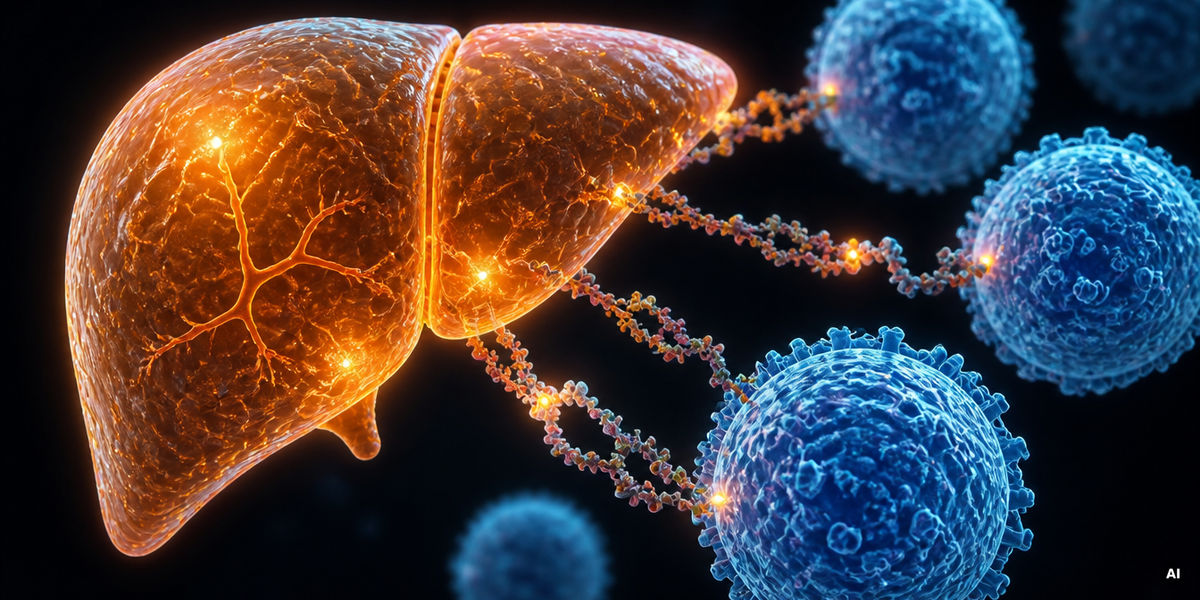
A research team at the University Medical Center Hamburg-Eppendorf (UKE), in collaboration with colleagues from the University of Basel, has identified a previously little-studied immunological feedback loop that significantly influences inflammatory responses in the human body. At the center of this is the protein FGL-1, produced by the liver, which inhibits the activity of T cells by interacting with the immune regulator LAG-3. T cells are white blood cells that play an essential role in the immune system. The scientists have published their findings in the journal *Communications Medicine*.
“The signaling pathway discovered by our team appears to play a central role in regulating excessive inflammatory responses. What we find particularly exciting is that the significance of this FGL-1/LAG-3 regulatory loop is likely to extend far beyond COVID-19,” says lead author Dr. Sophia Cichutek from the Second Department of Internal Medicine at the UKE.
Using samples from patients with COVID-19, the study shows that elevated FGL-1 levels are associated with a more severe inflammatory response and a more severe course of the disease, and likely represent a form of immunological counterregulation in response to overactivation. The findings not only provide new insights into the pathophysiology of severe viral infections but also open up new avenues for immunomodulatory therapies—not only for COVID-19 but also for other diseases characterized by excessive inflammatory responses.
“Since FGL-1 is produced in the liver and is involved in regulating immune responses, our study also opens up new avenues for understanding and treating liver inflammation as well as other diseases characterized by dysregulated immune activation,” says Prof. Dr. Julian Schulze zur Wiesch from the First Department of Internal Medicine at the UKE.
The study was conducted as part of the Collaborative Research Center (SFB) 1648 “Emerging Viruses: Pathogenesis, Structure, and Immunity.” The consortium is coordinated by the UKE and brings together 26 researchers from nine institutions in Hamburg, Germany, and Switzerland.
Note: This article has been translated using a computer system without human intervention. LUMITOS offers these automatic translations to present a wider range of current news. Since this article has been translated with automatic translation, it is possible that it contains errors in vocabulary, syntax or grammar. The original article in German can be found here.
Original publication


Other news from the department science