Why our brains age differently
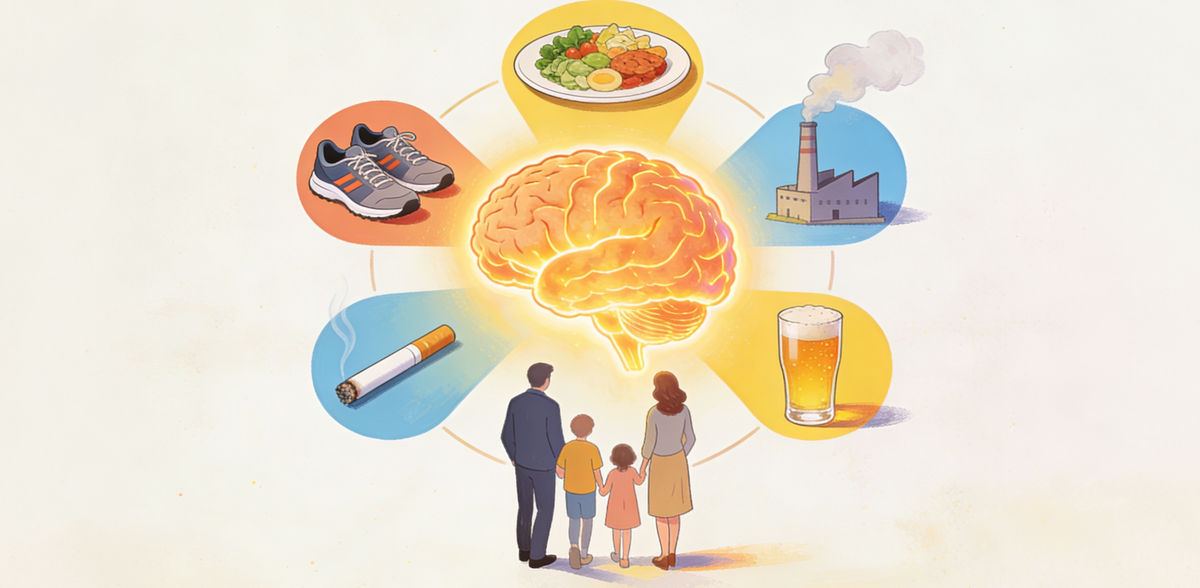
High blood pressure, smoking, alcohol consumption, diet, air quality, social circumstances, and much more leave their mark on the brain
Advertisement


Why do some people remain mentally sharp into old age, while others experience cognitive impairments earlier in life? Two recent studies involving Forschungszentrum Jülich provide new answers to this question. They show that brain health does not depend on a single factor, but on the interaction of many influences throughout our entire lives.
At the heart of both studies is the “exposome”. This is a concept that refers to the totality of all environmental and lifestyle factors to which a person is exposed over their lifetime – from diet and exercise to diseases, air quality, and social conditions. Instead of examining these influences in isolation, the researchers aim to understand how they interact with one another.
Many small influences – one large effect
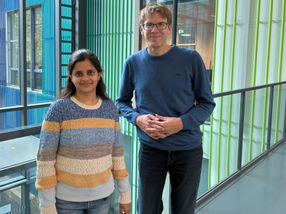
In a study published in Nature Communications, a research team analysed extensive data from the UK Biobank – a long-term prospective biobank study in the UK containing health-related data from hundreds of thousands of people. The work was led by Prof. Dr. Sarah Genon and carried out primarily at the Institute of Neuroscience and Medicine – Brain and Behaviour (INM-7) at Forschungszentrum Jülich. The lead author is Mostafa Mahdipour, a doctoral researcher in her research group.

The study focuses on the exposome at the individual level, i.e. the question of how personal factors such as lifestyle, health, and social influences shape the brain over the course of a lifetime.
Using two AI-based models, the researchers assessed the influence of more than 260 different factors on brain health and ageing. One model determines the current state of the brain based on imaging data – specifically MRI data from the UK Biobank. The second model links this information to individual lifestyle and health data. Particularly relevant are factors relating to cardiovascular and metabolic health, as well as lifestyle factors such as smoking, alcohol consumption, and diet. The study demonstrates in detail for the first time how individual lifestyle and health factors influence brain ageing over the course of a lifetime.
A key finding of the study is that not only the type of risk factor matters, but also how long it persists and at what stage of life it takes effect. Long-term exposures, such as high blood pressure or smoking, are closely linked to a less favourable development of brain structure.
These findings underline the importance of early preventive measures. Identifying and reducing health risks at an early stage can have a positive long-term effect on brain health.
Living conditions influence brain ageing
A second study, published in Nature Medicine, significantly broadens this perspective – from the individual to the global level. An international research team analysed data from around 18,700 people across 34 countries and linked the data to comprehensive information on environmental and societal factors. Around 100 researchers from various countries were involved in this large-scale collaboration, including scientists from Forschungszentrum Jülich. Prof. Dr. Genon and her colleague Dr. Masoud Tahmasian from INM-7 also contributed to this study. They examined both individual and global-level influences on the exposome.
The global analysis revealed that the conditions in which people live also have a measurable impact on brain ageing. Factors such as air pollution, climatic conditions, socioeconomic inequality, and political frameworks – for example, differences in access to healthcare and social security systems – are closely linked to the rate at which the brain ages.
This clearly shows that brain ageing not only depends on individual lifestyle, but is also strongly influenced by social and environmental conditions. The study also reveals that these external influences play a major role – in some cases even independently of existing diseases or individual risk factors.
Understanding how different factors interact
Taken together, the two studies highlight just how diverse the influences on brain health are – and how closely individual and societal factors are interlinked.
A recent article published in Nature Reviews Neuroscience places these findings in a broader scientific context. The lead author is Prof. Dr. Sarah Genon from Forschungszentrum Jülich. Unlike the two studies, the article does not provide new data, but instead describes a more overarching approach: brain health is shaped by a complex interaction of biological, individual, and societal factors – not only in ageing, but also in brain development and in mental illnesses such as depression.
The researchers emphasize that social and environmental inequalities should not merely be regarded as statistical background factors, but as playing a key role in brain health across different population groups. At the same time, the article highlights that many existing models rely heavily on data from affluent countries and have so far failed to adequately reflect global diversity.
“Individual risk factors often do not tell the full story. What matters is understanding how they interact across the lifespan,” says Genon.
To capture these complex relationships, new methodological approaches are required. In particular, machine learning techniques and large, diverse datasets are opening up new possibilities for systematically investigating the interactions of the exposome. The two recent studies provide a concrete example of this.
In the long term, such approaches could help to develop personalized prevention strategies, improve digital models of brain health, and identify risk groups at an earlier stage.
Implications for prevention and society
The findings show that brain health can, in principle, be influenced. This is a valuable insight, as brain health is closely linked to overall physical health. At the same time, however, it is also clear that prevention is not solely the responsibility of the individual. In addition to a healthy lifestyle, societal conditions play a crucial role.
Measures to promote brain health therefore range from individual preventive care to structural changes in areas such as the environment, education, and healthcare. Improved air quality, social stability, and access to medical care can contribute to prevention just as much as individual lifestyle choices.
Original publication
Mostafa Mahdipour, Somayeh Maleki Balajoo, Federico Raimondo, Jianxiao Wu, Eliana Nicolaisen-Sobesky, Shammi More, Felix Hoffstaedter, Holger Schwender, Masoud Tahmasian, Simon B. Eickhoff, Sarah Genon; "Exposome-wide patterns predict brain health in aging"; Nature Communications, Volume 17, 2026-4-10
Agustina Legaz, Sebastian Moguilner, Pablo Barttfeld et al.; "The exposome of brain aging across 34 countries"; Nature Medicine, Volume 32, 2026-4-3
Sarah Genon, Agustin Ibanez, Masoud Tahmasian, Simon B. Eickhoff; "Linking the exposome to the brain–behaviour phenotype"; Nature Reviews Neuroscience, 2026-5-14



Other news from the department science