New approaches to male contraception
"ContraPur" research network aims to reversibly block ATP-controlled sperm transport in the testicles

Advertisement


In the interdisciplinary research network "ContraPur", scientists from five German universities are working on the development of a new, non-hormonal contraceptive method for men. The project is coordinated by Prof. Marc Spehr, holder of the Chair of Chemosensorics at RWTH Aachen University. Other project partners are Ludwig-Maximilians-Universität München, Rheinische Friedrich-Wilhelms-Universität Bonn, Justus-Liebig-Universität Gießen (JLU) and the University of Münster. The Federal Ministry of Research, Technology and Space is funding the project with around three million euros over a period of three years.
The free decision as to whether and when people have children is a central component of individual self-determination. At the same time, the desire for contraceptive methods with fewer side effects and non-hormonal alternatives is growing, particularly among younger generations. In addition, there is a need for more diverse and equal options that take into account different life realities, genders and cultural contexts.
Against this background, there is a considerable need for safe, effective and reversible contraceptive methods for men. This is precisely where the ContraPur research project comes in: The aim is to decipher the underlying molecular and physiological processes in the testicles and to influence them in a targeted manner in the long term. In the future, this could make it possible to temporarily block sperm transport and make men temporarily infertile - without permanently impairing their fertility.
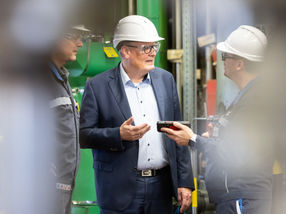
"With ContraPur, we are pursuing a completely new approach in contraceptive research," explains Prof. Marc Spehr. "Our aim is to develop a safe, reversible and non-hormonal method that opens up new family planning options for men and at the same time contributes to a fairer distribution of responsibility."
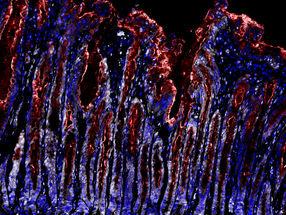
The research project focuses on a previously poorly understood biological process that regulates the transport of sperm in the testicles - the so-called purinergic signal transmission. This process is triggered by the body's own ATP molecule, which is primarily known as the universal energy currency of the cell. Recent studies by the project participants show that ATP also plays a central role in triggering contractions in the muscle cells surrounding the seminiferous tubules. These contractions ensure that mature but still immobile sperm are transported within the testicles.
Researchers from the participating universities want to investigate the genes, proteins and mechanisms involved in the ATP-triggered contraction of the peritubular cells in the wall of the seminiferous tubules. The project is designed as a structured, closely interlinked research program and comprises several sub-projects.
First, the genetic and molecular basis of purinergic signaling pathways in the human testis will be analyzed (subproject 1). Building on this, the researchers are using experimental models to investigate the spatio-temporal profiles of ATP release and the underlying mechanisms (subproject 2). Further work is dedicated to the interactions between testicular peritubular and immune cells in the testis (subproject 3, located at JLU) as well as the connections between the plasticity of peritubular cells and changes in the purinergic signaling network (subproject 4), which play a key role in sperm transport.
A special focus is also on the identification and development of potential drugs: novel active substances are to be specifically designed, synthesized and pharmacologically tested (subproject 5).
Note: This article has been translated using a computer system without human intervention. LUMITOS offers these automatic translations to present a wider range of current news. Since this article has been translated with automatic translation, it is possible that it contains errors in vocabulary, syntax or grammar. The original article in German can be found here.



Other news from the department science