Miltenyi Biotec expands Cologne production site for clinical reagents
Milestone for biotechnology made in Germany: More capacity for cell and gene therapies
Advertisement


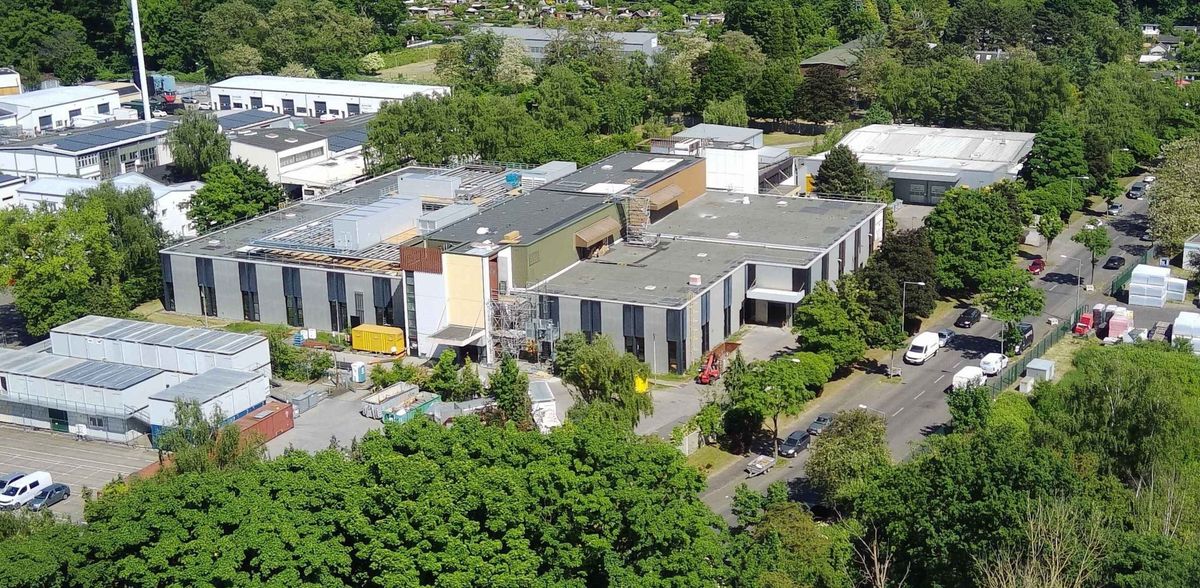
Miltenyi Biotec B.V. & Co. KG, headquartered in Bergisch Gladbach, Germany, currently supplies around 6,000 people worldwide with innovative cell and gene therapies every year. Demand continues to rise - and with it the need for production capacity. This is why the globally active biotechnology and biomedicine company with around 4,600 employees worldwide is investing in the expansion of its site in Cologne. Miltenyi Biotec is completely renovating a building complex there that was formerly used for pharmaceutical manufacturing and packaging processes. In future, reagents for clinical applications will be manufactured under the name Cologne Clinical Products Miltenyi Biotec (CPMB). The project recently reached an important milestone with the installation of the process technology systems. Drees & Sommer SE, a consulting firm specializing in construction, real estate and infrastructure, is supporting Miltenyi Biotec in this pioneering transformation.
Since its foundation in 1989 in the Moitzfeld district of Bergisch Gladbach, Miltenyi Biotec B.V. & Co. KG has established itself as a leading player in the German biotechnology industry. The company is driving forward research into innovative cell therapies and is considered a pioneer in cancer immunotherapy and the treatment of tumor diseases with cell therapies such as CAR-T cells. "We now have over 19,000 products in our portfolio, ranging from automated production systems and analysis and diagnostic tools to clinical reagents," says Martin Meyer, Head of Clinical Production at Miltenyi. Nevertheless, demand often exceeds supply. "We are therefore completely renovating and modernizing the entire building complex in Cologne to create even more space for the production of clinical reagents to the highest quality standards in the future," says Meyer.
Brownfield challenge - efficient subsequent use for sterile production processes
The existing premises offer around 12,000 square meters of floor space, 5,000 of which will be used for the production of clinical reagents on the first floor. In addition, there will be personnel airlocks in the basement, two technical floors on the first and second floors and office areas with around 430 square meters of space.
"Brownfield projects like this one are particularly challenging for us because we have to redesign existing areas so that they meet the requirements of the subsequent use," explains Harald Gräfe, Manager and expert for pharmaceutical buildings at Drees & Sommer. "To do this, we always start by looking at what can be retained from the original infrastructure and used for the subsequent use," says the expert. In Cologne, for example, parts of the building envelope, the supporting structure and selected clean room ceilings remain. Everything that can no longer be used will be replaced or supplemented with state-of-the-art technology within the existing building structure. This includes complex cleanroom conditions for sterile production processes as well as a digital infrastructure that networks and monitors all processes. "At the same time, we are integrating the strict regulatory requirements of Good Manufacturing Practice, or GMP for short, into the structural and technical conditions right from the start," says Gräfe. GMP comprises a comprehensive set of rules that ensures that clinical reagents are manufactured under controlled, reproducible and verifiable conditions. These include defined clean room classes, controlled material and personnel flows, hygienic surfaces and complete documentation requirements.
The Drees & Sommer project team has been commissioned to provide various services, including project management, technical project controlling, the digital GA audit to control commissioning and BIM management. BIM planning is used to network all planning, construction and operating processes, which can be mapped in a central digital building model, the so-called digital building twin. "Thanks to structured BIM management, project execution is traceable and quality-assured, as this ensures transparency across teams and increases efficiency across all project phases," says Sebastian Sebold, specialist for BIM solutions at Drees & Sommer.
Innovative energy concept for climate-friendly production
In addition to the technical equipment, the energy supply also plays an important role in the future viability of the site. The new energy concept relies on a decentralized structure instead of the previous centralized supply. "In future, high and ultra-high temperature heat pumps will be used here," says Harald Gräfe. "These can provide both process heat up to 200 degrees and steam with high energy efficiency." This significantly reduces energy consumption and CO₂ emissions. "We are thus enabling climate-friendly production on an industrial scale," says Gräfe.
The future of biotechnology made in Germany
For Miltenyi Biotec, the expansion at the Cologne site is a strategic step towards global competitiveness: "Germany has the opportunity to position itself as a leading biotechnology nation alongside the US and Chinese markets in the coming years. With the CPMB project, we are making our contribution towards achieving this goal and making therapies made in Germany available to significantly more patients worldwide more quickly and economically," says Martin Meyer. Miltenyi Biotec plans to put the renovated building complex into operation by the end of 2026.
Note: This article has been translated using a computer system without human intervention. LUMITOS offers these automatic translations to present a wider range of current news. Since this article has been translated with automatic translation, it is possible that it contains errors in vocabulary, syntax or grammar. The original article in German can be found here.



Other news from the department manufacturing




These products might interest you




Most read news








More news from our other portals
















See the theme worlds for related content
Topic world Gene therapy
Genetic diseases once considered untreatable are now at the center of innovative therapeutic approaches. Research and development of gene therapies in biotech and pharma aim to directly correct or replace defective or missing genes to combat disease at the molecular level. This revolutionary approach promises not only to treat symptoms, but to eliminate the cause of the disease itself.

Topic world Gene therapy
Genetic diseases once considered untreatable are now at the center of innovative therapeutic approaches. Research and development of gene therapies in biotech and pharma aim to directly correct or replace defective or missing genes to combat disease at the molecular level. This revolutionary approach promises not only to treat symptoms, but to eliminate the cause of the disease itself.