New process developed to produce universal blood plasma for all blood groups
Revolution in emergency medicine

Advertisement


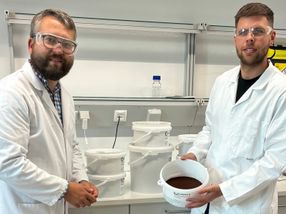
A research team from Greifswald has developed a universally applicable blood plasma for all blood groups. In the future, this will prevent bottlenecks in the supply of blood plasma, which will bring clear advantages, especially in the emergency care of patients.
The Paul Ehrlich Institute, the higher federal authority for medicinal products, has now approved the procedure. Until now, there has only been one other procedure of this kind in the world. The difference: the Greifswald variant is faster and cheaper.
Plasma transfusions are one of the basic treatments for patients with high blood loss. However, the transfusions must be suitable for the patient's blood group. For emergency care, hospitals must therefore stock plasma reserves of all blood groups and distribute them to patients in a compatible manner. "To simplify this in the future, we started our research with a mind game," explains Konstanze Aurich from the Institute of Transfusion Medicine at the University Medical Center. "The plasma of blood groups A, B and 0 contains various antibodies that are not compatible with the blood cells of patients with a different blood group. We want to remove these antibodies to make the blood plasma universally usable." The only exception so far has been blood group AB plasma, which has no antibodies and is therefore considered a natural, universally usable blood plasma. The problem is that it is extremely rare. With a percentage share of four percent, it is hardly represented in the German population.
"We want to increase availability and avoid bottlenecks, especially in emergencies where the blood group is unknown," explains Aurich. "To do this, we remove the problematic antibodies by allowing them to bind to a few red blood cells and then removing these cells from the plasma together with the antibodies. The result is the universally applicable blood plasma called 'frozen isoagglutinin-depleted fresh plasma'."
"We have now received approval from the Paul Ehrlich Institute, the higher federal authority for pharmaceuticals, and can now use the universal plasma to treat patients in emergencies very quickly," says Aurich, looking ahead to the next steps. Greifswald University Medicine is now in the process of establishing this method in routine operations.
"The procedure developed in Greifswald is simple and much cheaper, so that we can provide universal plasma in large quantities, especially for emergency care with unknown blood groups," says Prof. Karlhans Endlich, Scientific Director of the University Medical Center. "This discovered procedure is therefore something very special and holds great potential for Greifswald and the whole world."
Note: This article has been translated using a computer system without human intervention. LUMITOS offers these automatic translations to present a wider range of current news. Since this article has been translated with automatic translation, it is possible that it contains errors in vocabulary, syntax or grammar. The original article in German can be found here.


Other news from the department science