New biomarkers for detecting cancer
Able to distinguish between tumour stages
Advertisement


biomarkers in the blood could be used for the early detection of colorectal cancer, lung cancer and ovarian cancer. A new study from Uppsala University shows that the performance of such biomarkers is comparable to or better than established tests and could be developed for clinical use.
The chances of curing cancer depend largely on how early it is detected and whether or not it has had time to spread. Unfortunately, for many types of cancer, there are no effective methods for detecting tumours at an early stage, and many patients are still diagnosed far too late.
In order to detect cancer at an early stage, it would be desirable to be able to do so by means of a blood test. Blood samples are easy to collect and can often be analysed efficiently. In the current study, researchers have identified biomarkers in the form of combinations of proteins and other substances in the blood that can be used to detect colorectal cancer, lung cancer and ovarian cancer.

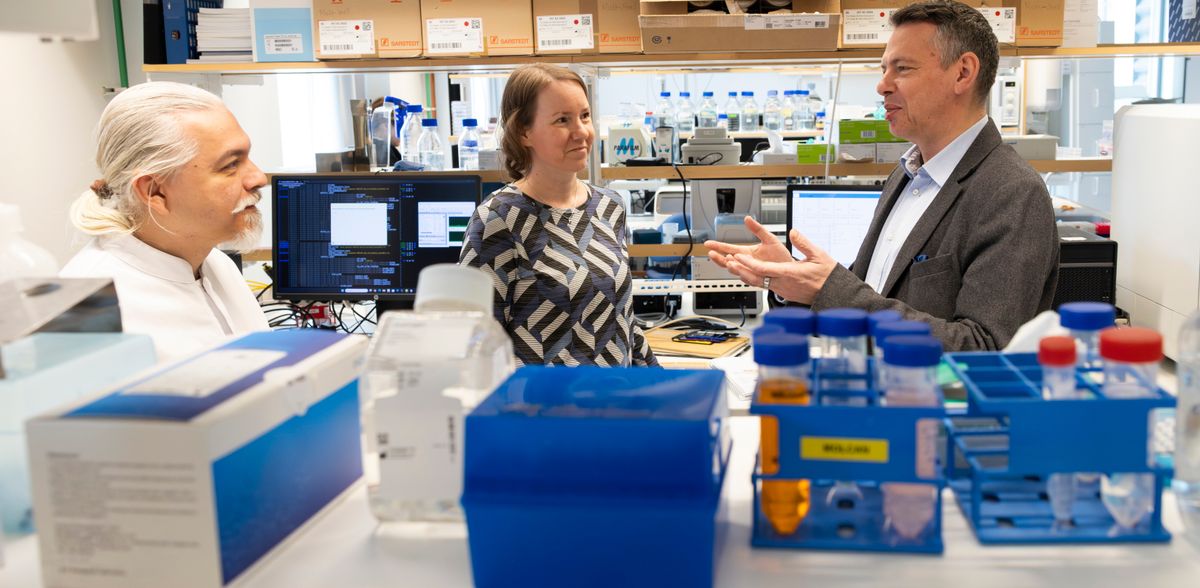
“We found several biomarkers that could be used to detect cancer. It was also possible to discriminate the stage of the tumour. The composite biomarkers we have identified could provide the basis for developing stable and reproducible diagnostic tests for detecting cancer,” says Tobias Sjöblom, who led the study.
Based on samples from cancer patients
The study is based on nearly 2,500 samples from the extensive U-CAN and EpiHealth biobanks. The U-CAN database contains blood samples collected from cancer patients. The samples from EpiHealth were used as control samples. The researchers then examined a large number of proteins to see if any of them differed between cancer samples and normal samples.
“In the study, we identified two proteins that, when used together, could detect ovarian cancer, and a set of four proteins that could reveal the presence of colorectal and lung cancer. They were all comparable to, or in some cases better than, established tests for detecting cancer based on blood or stool samples,” says Sjöblom.
Able to distinguish between tumour stages
In another part of the study, the researchers investigated the link between different tumour stages and the concentration of proteins and metabolites. Metabolites are small molecules that are produced or broken down during metabolism. Here they found that biomarkers containing metabolites were better at discriminating between different stages of cancer than those containing only proteins, particularly in the case of ovarian and lung cancer.
“A potential future application for biomarkers specific to different tumour types is to distinguish between different forms of abdominal cancer in patients with non-specific abdominal symptoms. Metastatic ovarian cancer, for example, can resemble bowel cancer, and in such cases a reliable blood test could complement or even replace a biopsy,” says Sjöblom.
The researchers now plan to collect samples from 100,000 study participants, who will take their own blood samples at home.
“We will then analyse the samples to see whether the biomarkers really can detect tumours at an earlier stage. The hope is that they can help reduce cancer mortality,” Sjöblom concludes.
Original publication
Jim Åkerrén Ögren, Joakim Ekström, Natallia Rameika, Emma Torell, Chatarina Larsson, Ivaylo Stoimenov, Patrick Micke, Ulf Gyllensten, Mats Hellström, Bengt Glimelius, Karin Stålberg, Tobias Sjöblom; "Composite proteomic and metabolomic plasma biomarkers for detection of colorectal, lung and ovarian cancers"; Molecular Cancer, Volume 25, 2026-4-7


Other news from the department science