Cherry compounds may slow aggressive breast cancer
Natural compounds in dark sweet cherries could reduce tumor growth, metastasis and therapy resistance in triple-negative breast cancer
Advertisement


Natural compounds found in dark sweet cherries may help slow the growth and spread of one of the most aggressive forms of breast cancer, according to new research from Texas A&M University.
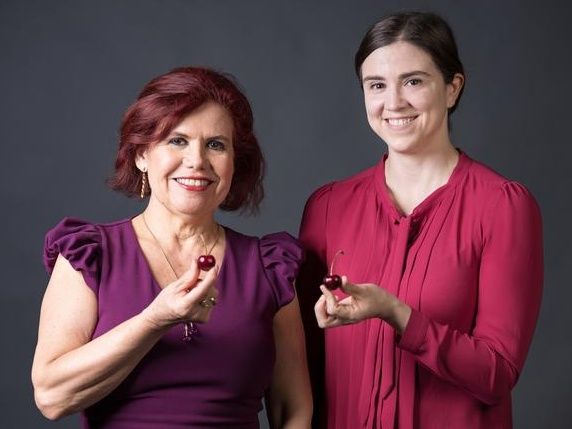
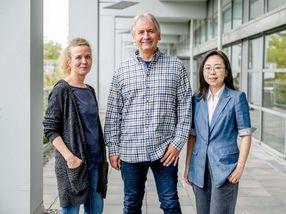
Dr. Giuliana Noratto and Dr. Lauren Stranahan hold dark sweet cherries, which contain anthocyanins studied for their potential role in slowing the spread of triple-negative breast cancer.
Texas A&M University
The study examined the effects of anthocyanins — natural plant pigments that give fruits like dark sweet cherries their deep red color — on triple-negative breast cancer, a disease known for its limited treatment options and high risk of metastasis.
Researchers from the Texas A&M University College of Agriculture and Life Sciences, Texas A&M AgriLife Research and College of Veterinary Medicine and Biomedical Sciences (VMBS) found that anthocyanin treatment slowed tumor growth, reduced cancer spread to multiple organs and altered gene activity linked to metastasis and therapy resistance.
“Triple-negative breast cancer is considered ‘the worst’ because it is more aggressive, higher grade, and has a higher mitotic index, meaning the cancer cells divide quickly,” said Dr. Giuliana Noratto, AgriLife Research associate research scientist in the College of Agriculture and Life Sciences’ Department of Food Science and Technology. “All these characteristics make it more likely to spread to distant organs and recur compared to other breast cancer types.”
Unlike other breast cancer subtypes, triple-negative breast cancer lacks estrogen receptors, progesterone receptors and expression of the HER2 protein, a growth-promoting protein that helps regulate how cells grow and multiply.
Because of the absence of these molecular targets, the cancer has fewer treatment options and is more likely to metastasize to different organs, particularly to the lungs and brain, according to Noratto.
Tumor growth, metastasis and gene activity
Rather than focusing only on tumor size, the researchers designed the study to evaluate both tumor growth and metastatic spread, which is the primary cause of cancer-related deaths.
“This is important because cancer lethality is primarily due to metastasis,” Noratto said. “A large primary tumor that does not metastasize may be more manageable, even curable if removed.”
To test whether anthocyanins could influence both tumor growth and spread, mice were divided into four treatment groups: a control group, a group that received anthocyanins before tumor implantation, a group treated with the chemotherapy drug doxorubicin after tumors developed and a group that received both anthocyanins and chemotherapy.
This design allowed researchers to examine anthocyanins as a preventive strategy and to evaluate whether they could enhance the effectiveness of chemotherapy.
They found that mice receiving anthocyanin-rich dark sweet cherry extracts before tumor implantation showed slower tumor growth without noticeable side effects and that treated mice continued to gain weight throughout the study period.
In comparison, mice treated with chemotherapy alone sometimes lost weight, and tumor growth slowed later in the study. When anthocyanins were combined with chemotherapy, tumor growth slowed earlier and mice maintained their weight.
In addition to these physical changes, researchers examined gene expression in tumors, which refers to which genes are turned “on” or “off” in cancer cells and helps determine which specific cellular processes are affected by dark sweet cherry anthocyanins, according to Noratto.
The study found that anthocyanins, whether alone or combined with chemotherapy, reduced the activity of genes associated with cancer spread and therapy resistance, a process in which cancer cells adapt to survive despite treatment.
In addition, anthocyanin treatment also reduced the spread of cancer to the lungs beyond what was observed with no treatment or chemotherapy alone. The treatment also lowered the likelihood of cancer spreading to other organs, including the liver, heart, kidneys and spleen, although the number and size of tumors varied among individual animals.
What tissue analysis revealed
To better understand how these molecular changes translated into physical changes in the cancer, the research team relied on histology — the study of tissue samples under a microscope — conducted by Dr. Lauren Stranahan, a VMBS veterinary pathologist.
Using this approach, Stranahan examined how rapidly cancer cells were dividing — a measure known as mitotic index — as well as how much of each organ was infiltrated by metastatic cancer cells and whether that tissue damage could interfere with organ function.
“Some tumors had a higher mitotic rate, so they were dividing faster,” she said.
Some tumors also showed signs of necrosis, or tissue death, which can occur when rapidly growing tumors outpace their blood supply.
In addition to tumor structure, Stranahan evaluated immune cell infiltration, including T lymphocytes, immune cells that play an important role in recognizing and destroying abnormal cells, including cancer cells.
“When we’re evaluating how aggressive a cancer is, we can also evaluate, ‘is that cancer able to reduce the number of T-cells that are coming after it?’” she said.
Diet-derived compounds as supportive strategies
Their findings also reinforce a growing understanding in cancer research: no single treatment is enough on its own.
“What we’re understanding about cancer now is that no single treatment is going to be effective against a cancer,” Stranahan said. “You’re going to have to employ a number of different treatments.”
Within that broader approach, Noratto said diet-derived compounds may help target cancer-related processes that are not fully addressed by standard therapies, offering researchers additional pathways to explore alongside existing treatments.
A study built through collaboration
Stranahan said the study also highlights how collaboration across disciplines can strengthen research, particularly when complex diseases like cancer are examined.
“The more people you have with different skillsets coming together, the better you can evaluate a study from different angles, from unique perspectives, and the stronger the study is going to be,” Stranahan said.
She also said the project illustrates how veterinary pathologists can play a valuable role in a wide range of research efforts, not only those focused on animal health.
“We do a lot of diagnostic work here for patients in the (Texas A&M) Veterinary Medical Teaching Hospital, but we can also provide a lot of research support,” Stranahan said.
While the findings point to promising new directions, additional research would be needed to better understand how anthocyanins influence tumor behavior, including their safety, absorption and potential role alongside existing cancer treatments.
Beyond the scientific findings, the publication also reflects the broader community that supported the research and helped advance the work.
“This publication is dedicated to the memory of Burdette Jerome ‘BJ’ Thurlby, late president of the Washington State Fruit Commission, whose enthusiasm for scientific discovery and support of cherry research have left a lasting impact on cherry research and the scientific community,” Noratto said.
Original publication
Ana Nava-Ochoa, Lauren W. Stranahan, Rodrigo San-Cristobal, Susanne U. Mertens-Talcott, Giuliana D. Noratto; "Dark Sweet Cherry Anthocyanins Suppressed Triple-Negative Breast Cancer Pulmonary Metastasis and Downregulated Genes Associated with Metastasis and Therapy Resistance In Vivo"; International Journal of Molecular Sciences, Volume 26, 2025-7-25



Other news from the department science