Occurrence of blood clots after COVID-19 vaccination deciphered
Discovery can make vaccines even safer in the future
Advertisement


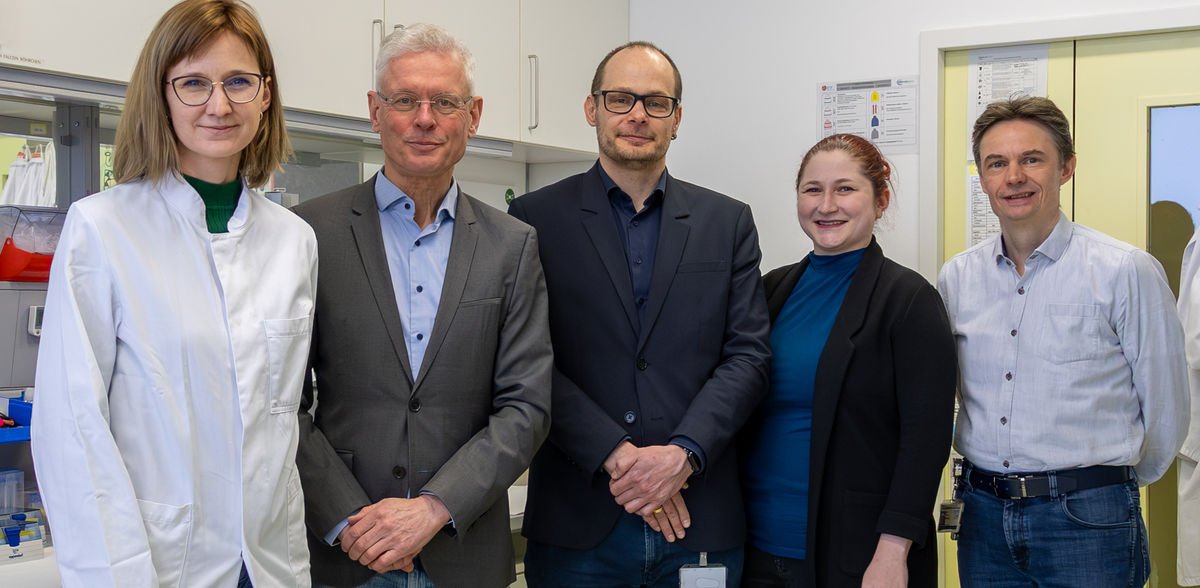
A research team from Greifswald, together with international partners from Australia and Canada, has discovered how to prevent a chain of rare circumstances from triggering so-called cerebral venous thrombosis after Covid-19 vaccination.
The discovery could make vaccines even safer in the future. The study has now been published in the New England Journal of Medicine. At the height of the coronavirus pandemic in 2021, the Greifswald research team led by Prof. Andreas Greinacher received worldwide attention when they identified the cause of very rare blood clots in the cerebral veins after vaccination with vector-based COVID-19 vaccines.
People develop antibodies against the adenovirus in the course of their lives through naturally occurring infections such as the common cold. This virus is so widespread that almost everyone is infected with it at least once. During this contact, antibodies are produced against a specific protein of the virus, protein VII. If contact with adenoviruses occurs again years later, these antibodies are reactivated. In very rare cases, this can lead to a random change in the genetic information, a so-called mutation, in individual antibody-producing cells.
In people with a particular genetic predisposition, this means that antibodies no longer bind to a specific site of protein VII, but instead incorrectly bind to the so-called platelet factor 4. As a result, the antibodies activate platelets and trigger the formation of blood clots. "It's as if one prong of a key is changed and the key then fits into a different lock," says co-author Dr. Linda Schönborn from the University Medical Center Greifswald. "This combination of random mutation and genetic peculiarity is extremely rare. The risk of this complication is therefore also very low."
Affected patients from all over Germany have provided the Greifswald research team with their blood samples. Thanks to this extraordinary willingness, the team was able to investigate the rare immunological processes in detail and thus clarify the mechanism.
Important finding for the future of vaccine development
"We can now specifically change the responsible site in protein VII of the vaccine and make vector vaccines safer for everyone. This is particularly relevant in regions where life-threatening infectious diseases such as Ebola are still prevalent today," says Prof. Andreas Greinacher, the head of the study.
Note: This article has been translated using a computer system without human intervention. LUMITOS offers these automatic translations to present a wider range of current news. Since this article has been translated with automatic translation, it is possible that it contains errors in vocabulary, syntax or grammar. The original article in German can be found here.
Original publication
Jing Jing Wang, Linda Schönborn, Theodore E. Warkentin, Luisa Müller, Thomas Thiele, Lena Ulm, Uwe Völker, Sabine Ameling, Sören Franzenburg, Lars Kaderali, Ana Tzvetkova, Alex Colella, Tim Chataway, Chee Wee Tan, Bridie Armour, Alexander Troelnikov, Lucy Rutten, James McCluskey, Roland Zahn, Tom P. Gordon, Andreas Greinacher; "Adenoviral Inciting Antigen and Somatic Hypermutation in VITT"; New England Journal of Medicine, Volume 394


Other news from the department science