New skin for burn victims
Spin-off cultivates personalized transplants from the body's own cells that feel like natural skin and grow with the body
Advertisement


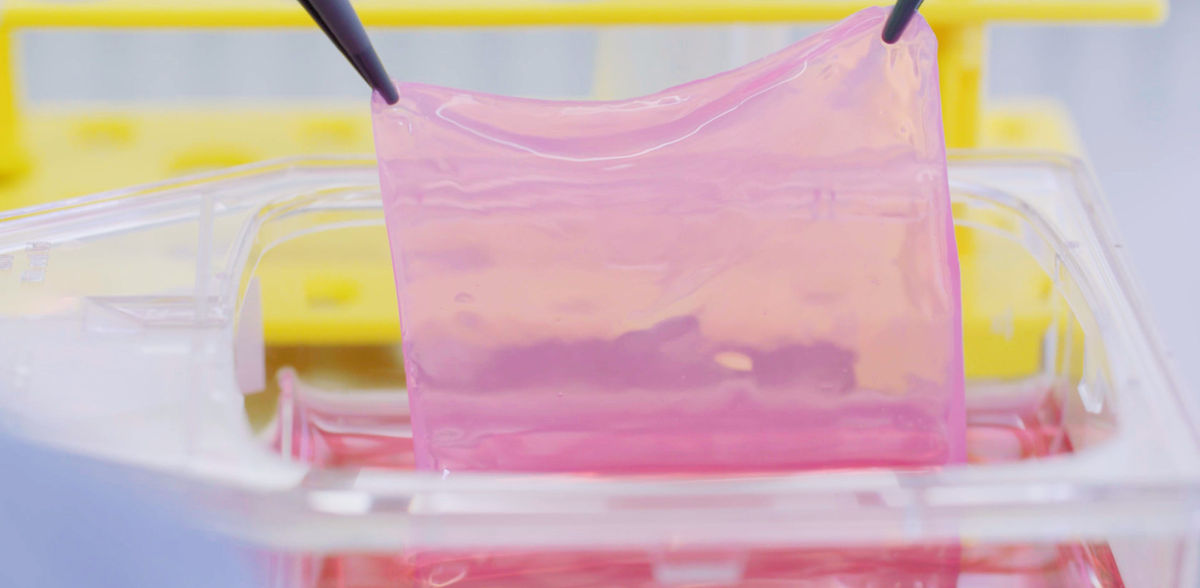
Bio-engineered skin grafts can play an important role in the treatment of burn victims. Researchers at UZH have been working on new approaches for such grafts for over 15 years. This work led to the creation of Cutiss in 2017, a spin-off that produces living skin tissue from the patients’ own cells.
The fire disaster in Crans-Montana claimed the lives of 40 people and injured 116. Between 80 and 100 of them – mostly young people – suffered severe burns, many covering more than 60 percent of their skin surface. Such injuries pose enormous challenges for medical treatment. In addition to stabilizing the patients’ condition, surgical procedures, infection control and often years of rehabilitation are needed.
For several of the injured, Zurich has become a central treatment location. The University Children’s Hospital Zurich and University Hospital Zurich have specialized centers for severe burn injuries that are among the most advanced in Europe.
Treatment in these centers follows proven medical procedures. First, patients are stabilized with intensive care. Then, burned, dead skin is surgically removed to prevent infection and to prepare for healing. In a further step, open wounds are covered. This is usually done with temporary biological or synthetic material and later with so-called autologous split-thickness skin grafts. These are thin layers of skin taken from uninjured areas of the body and grafted on to wounds in a procedure called autografting.
These procedures are the standard of care and save lives. However, the thin layers of split-thickness skin face limitations: donor site shortage – when there is not enough healthy skin left – and scarring. Scars are highly debilitating, require intense home care and can necessitate corrective surgery. In growing children, a further complication arises because the autografts do not stretch.
New, elastic skin from a small skin biopsy
Ideally, skin grafts that would feel and grow more like normal skin could greatly improve burn victims’ quality of life. Basic research on such bilayer skin grafts from human skin cells that reduce scarring and improve elasticity began at the University of Zurich (UZH) 25 years ago. Between 2001 and 2016, research was conducted at the Tissue Biology Research Unit (TBRU) at the University Children’s Hospital on the cultivation of human skin cells in a special gel.
A research team led by TBRU Director Ernst Reichmann succeeded in developing a promising skin substitute for the treatment of severe skin injuries that contained both the epidermis, with cells from the uppermost layer of skin, and the dermis, with cells from the lower layer of the skin. The base layer of cells from the dermis, the supportive skin layer, made the skin graft elastic and able to grow in pediatric patients, as shown in clinical studies to date.
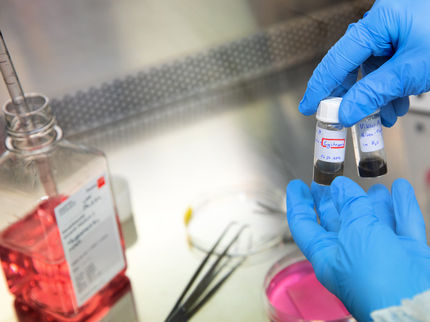
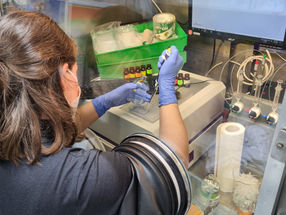
Biotechnologist Daniela Marino was already involved at that time and, in 2017, went on to co-found the spin-off company Cutiss that is aiming to make the solution, called denovoSkin, available in a clinical setting. “We developed a living human skin tissue graft that is cultivated in the laboratory from a small skin biopsy the size of a post-stamp taken from the patient,” says Daniela Marino, who is CEO of Cutiss. For the patients there are several advantages, she explains. “The key point is that it is a personalized bilayer graft.” Since the body’s own cells are used for cultivation, there is no risk of rejection.
“So far, long-term clinical data in both burns and reconstructive surgery, such as scar revisions and plastic surgery, show that the bilayer skin grafts safely close wounds and spare healthy skin for the patients while improving scar quality when compared to standard of care,” she says. Today, the company can grow multiple skin grafts of 50-square-centimeters each within four weeks.
Final stage of clinical trials
The treatment is in late-stage clinical development for burns and reconstructive skin surgery in children and adults. The Phase 3 clinical trial, which started in the spring of 2025, for severe burns in adults and adolescents is ongoing and able to take in new patients. A total of 20 burn centers are participating in this study across eight EU countries and Switzerland, including the University Hospital Zurich.
This final-stage trial intends to confirm efficacy and safety on a larger scale – a prerequisite for subsequent approval and wider application. Phase 2 data have been recently published. “Our product is an advanced therapy, and now we need Phase-3 data before we can proceed with the full regulatory approval process in different geographies, including Switzerland,” commented Daniela Marino.
In addition, over the past decade the bilayer skin graft by the UZH researchers has been used in eight individual cases as part of so-called compassionate use treatments – albeit on a targeted, case-by-case basis and under clearly defined medical conditions.
Burn victims to be treated with denovoSkin
The surgical team at the University Hospital Zurich has confirmed that, in selected cases and at the discretion of the treating physicians, tissue samples (biopsies) from burn patients from the Crans-Montana disaster have been sent to Cutiss for the bio-engineering of denovoSkin grafts.
However, the current circumstances also highlight the complexity of producing living, personalized skin tissue on demand. It requires specialized infrastructure, highly standardized processes and trained operators to ensure consistent quality and safety. To support future scalability, the company has therefore developed automated manufacturing systems – machines that replicate the manual process. Cutiss has partnered with original equipment manufacturer Tecan to industrialize the machines – the last step in development before they can be used in clinical settings.
With the promise of improving the treatment outcome of critically injured patients, the UZH spin-off Cutiss is a prime example of how basic research translates into clinical innovation if the right funding and support measures are in place.


Other news from the department science








Most read news








More news from our other portals

















Something is happening in the life science industry ...
This is what true pioneering spirit looks like: Plenty of innovative start-ups are bringing fresh ideas, lifeblood and entrepreneurial spirit to change tomorrow's world for the better. Immerse yourself in the world of these young companies and take the opportunity to get in touch with the founders.