Roche opens new high-tech innovation center for 300 million euros in Bavaria
Samples at the touch of a button: a new efficiency in the laboratory landscape
Advertisement


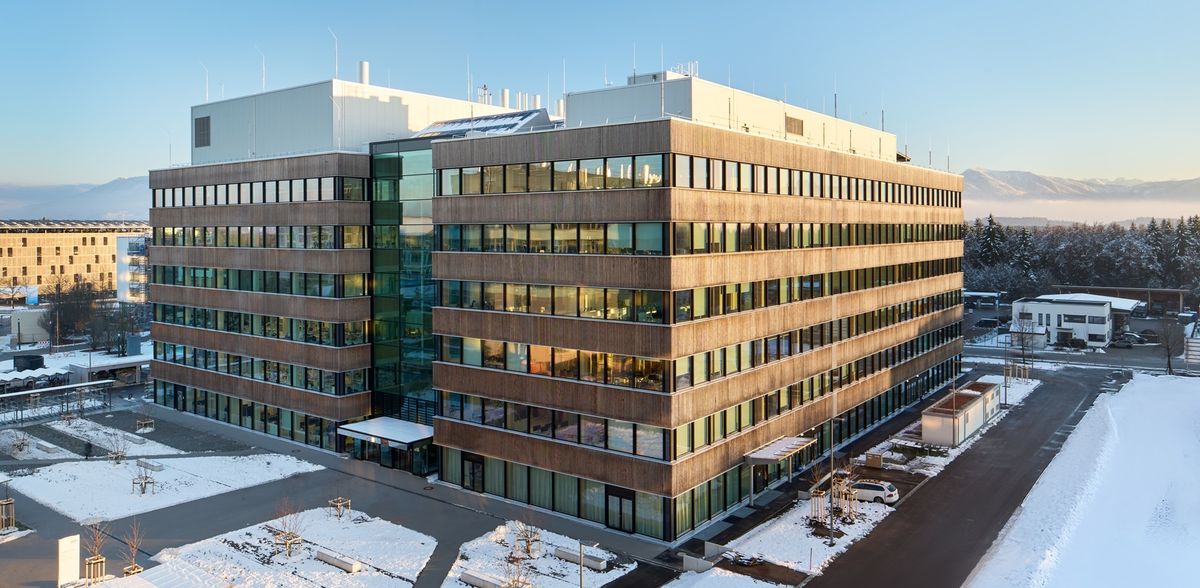
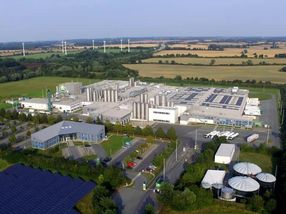
Data-driven, automated and sustainable: Roche opens one of the world's most modern development centers for diagnostics in Penzberg. Roche has invested around 300 million euros in the new 23,000 square meter building since construction began in February 2022. The high-tech building is part of Roche's long-term investment agenda in Germany: since 2020, more than 3.5 billion euros have been invested in Roche's German sites, around half of which has gone to Penzberg. In future, a good 1,000 of the site's approximately 7,700 employees will find a new home for the diagnostics research and development of the future on an area the size of three soccer pitches. Roche is working here on highly innovative in-vitro diagnostics for the fields of neurology, e.g. Alzheimer's and multiple sclerosis, cardiovascular diseases and infectious diseases, as well as on specific test procedures for personalized medicine. The company is thus sending out a strong signal for Germany as a location for innovation and the implementation of the European pharmaceutical and medtech strategy. The Innovation Center was officially inaugurated on 12 February 2026 in the presence of Minister President Markus Söder, Federal Minister of the Interior Alexander Dobrindt, Federal Minister of Research, Technology and Space Dorothee Bär, Thomas Schinecker, CEO of the Roche Group and the management of Roche's German sites.
"Our investment in Penzberg is a clear commitment to Germany as a business and science location," says Thomas Schinecker, CEO of the Roche Group. "By bringing research ideas to market faster, we are specifically strengthening Europe's competitiveness and making an important contribution to resilient healthcare in an increasingly volatile global environment. Roche is thus making an advance contribution and expects the German government to take the right measures to achieve the goal of its coalition agreement to make Germany a leading pharmaceutical and biotech location."
Markus Söder, Minister President: "Roche is a powerhouse for innovation. This is a strong commitment for Penzberg, the district of Weilheim-Schongau and the whole of Bavaria. As the Free State of Bavaria, we are supporting this success story as a strong partner in science, research and future technologies. Next door in Penzberg, a branch of the Fraunhofer Institute is being built with 40 million euros and in Martinsried we are building the new life science campus of the Max Planck Society with 600 million euros in funding. Biotech and biomed are central anchors of the Hightech Agenda Bavaria. The federal government is now also investing heavily with the High-Tech Agenda Germany based on the Bavarian model. We are doing everything we can to promote innovation and start-ups and to keep global players in Germany. Those who stand still will fall behind. That's why we're moving forward!"
Alexander Dobrindt, Federal Minister of the Interior: "The new Diagnostics Innovation Center in Penzberg represents a leap into the future of diagnostics: research, progress and responsibility from Germany for patients worldwide. Diagnostic innovation needs reliable guidelines, clear processes and coordinated framework conditions - then it strengthens health, society and Europe's competitiveness."
Dorothee Bär, Federal Minister of Research, Technology and Space: "With the High-Tech Agenda Germany, the Federal Government is taking Germany to the next level in terms of technology. To this end, we are focusing specifically on six key technologies. In this way, we are strengthening Germany as a leading location for innovation and can act as a magnet for talent and investment. One of these key technologies is biotechnology. It enables both modern therapeutics and innovative diagnostics. Diagnostics is the starting point of modern medicine. The more precise the diagnostics, the more personalized the therapy. With the new Diagnostics Innovation Center in Penzberg, Roche is sending out a strong signal. It combines excellent research with value creation, strengthens technological sovereignty and sets a decisive course for Germany as a location for innovation and healthcare."
Strong investment in future technologies
With the new Diagnostics Innovation Center, Roche is continuing to systematically implement its strategic investment agenda in Germany, thereby supporting the goals of the Federal Ministry of Education and Research's high-tech agenda. In the last decade, the company has invested more than half a billion euros - year after year. In order for such investments to have a lasting effect and for sites such as Penzberg to be able to fulfill their role as global innovation centers in the long term, Roche demands reliable political framework conditions. These include planning security, efficient approval processes, rapid market access and appropriate remuneration for medical innovations.
Roche's investments flow into innovations for more efficient, patient-centered and preventive healthcare, in which diagnostics is the foundation of modern medicine. This is because around 70 percent of all medical decisions are based on diagnostic results. However, only around 3 percent of healthcare expenditure is spent in this area. Particularly in view of the increasing pressure on health insurance companies, however, early diagnosis is the decisive lever for improving the chances of recovery and reducing the costs of further medical care.
Samples at the touch of a button: a new efficiency in the laboratory landscape
In its new high-tech building, which will be fully operational in June 2026, Roche is consistently focusing on digitalization, automation and modern robotics. Around 630 kilometers of data cable were laid for this purpose - roughly equivalent to the distance from Penzberg to Berlin. In addition, over 4,400 intelligent sensors and digital status displays ensure full transparency: they record energy consumption, workstation occupancy and the status of equipment in real time. This results in innovative digital solutions such as fully digital management of laboratory equipment, high-throughput pipetting systems and automated transport systems for sample logistics. At the heart of the building is the fully automated "Cube", a central sample storage facility in which 2.5 million biological samples are stored at minus 80 degrees Celsius. They form the basis for the development of new tests, the optimization of existing procedures and ensure that diagnoses are reliable, fast and reproducible. Thanks to the cube, these samples are now available to researchers at all times in consistently high quality and fully automatically at the touch of a button - without any long lead times. Roche is also digitizing, automating and parallelizing numerous steps in feedstock development. This accelerates development processes, increases the quality of reagents and significantly shortens development times for tests and diagnostic starting materials. At the same time, scientists gain more time for their research work. This means that innovations can be transferred more quickly from the laboratory to medical practice - a decisive advantage when it comes to detecting diseases earlier and using therapies in a more targeted manner. For patients, this means earlier diagnoses, tailored therapies and faster access to medical innovations.
Fewer devices, more exchange
The high level of automation and digital networking in the new building is continued in the spatial design: instead of traditional departmental structures, Roche relies on process-based laboratory environments in which teams work more closely together across departmental boundaries and share equipment. In addition, the combination of short distances and innovative work equipment with the inspiring mix of art and architecture promotes exchange. This principle is continued in the office areas: an activity-based office concept with open structures, an atrium, connecting bridges and deliberately designed zones for both exchange and concentrated work allow innovations to emerge more quickly.
70 percent less energy consumption thanks to CO₂-free research operations and sustainable building materials
Roche is also setting standards in terms of sustainability in the new innovation center for research and development. The office wing was built using a timber-hybrid construction method and is one of the largest projects of its kind in Bavaria. A highly flexible research environment has been created over seven floors, combining resource-saving construction methods with energy-efficient operation. Intelligent energy management and the use of existing energy and supply systems at the site - such as the use of a low-temperature network from waste heat or a photovoltaic system with a total electrical output of 130 kilowatts on the roof of the building - enable CO₂-free operation. Compared to similar laboratory buildings of previous generations, the energy requirement is reduced by around 70 percent. This is an important contribution to climate-friendly research operations, strengthens the site in the long term and supports Roche's global sustainability goals of becoming completely climate-neutral by 2045.
Note: This article has been translated using a computer system without human intervention. LUMITOS offers these automatic translations to present a wider range of current news. Since this article has been translated with automatic translation, it is possible that it contains errors in vocabulary, syntax or grammar. The original article in German can be found here.



Other news from the department business & finance















More news from our other portals


















See the theme worlds for related content
Topic world Digitalization in the laboratory
The topic world Digitalization in the lab presents innovations and trends from digital data systems (ELN, LIMS) to laboratory robots and networked devices (IoT) to AI and machine learning.

Topic world Digitalization in the laboratory
The topic world Digitalization in the lab presents innovations and trends from digital data systems (ELN, LIMS) to laboratory robots and networked devices (IoT) to AI and machine learning.
Topic world Diagnostics
Diagnostics is at the heart of modern medicine and forms a crucial interface between research and patient care in the biotech and pharmaceutical industries. It not only enables early detection and monitoring of disease, but also plays a central role in individualized medicine by enabling targeted therapies based on an individual's genetic and molecular signature.

Topic world Diagnostics
Diagnostics is at the heart of modern medicine and forms a crucial interface between research and patient care in the biotech and pharmaceutical industries. It not only enables early detection and monitoring of disease, but also plays a central role in individualized medicine by enabling targeted therapies based on an individual's genetic and molecular signature.