InhalPlus GmbH founded to improve drug delivery to the lungs of premature infants
Advertisement


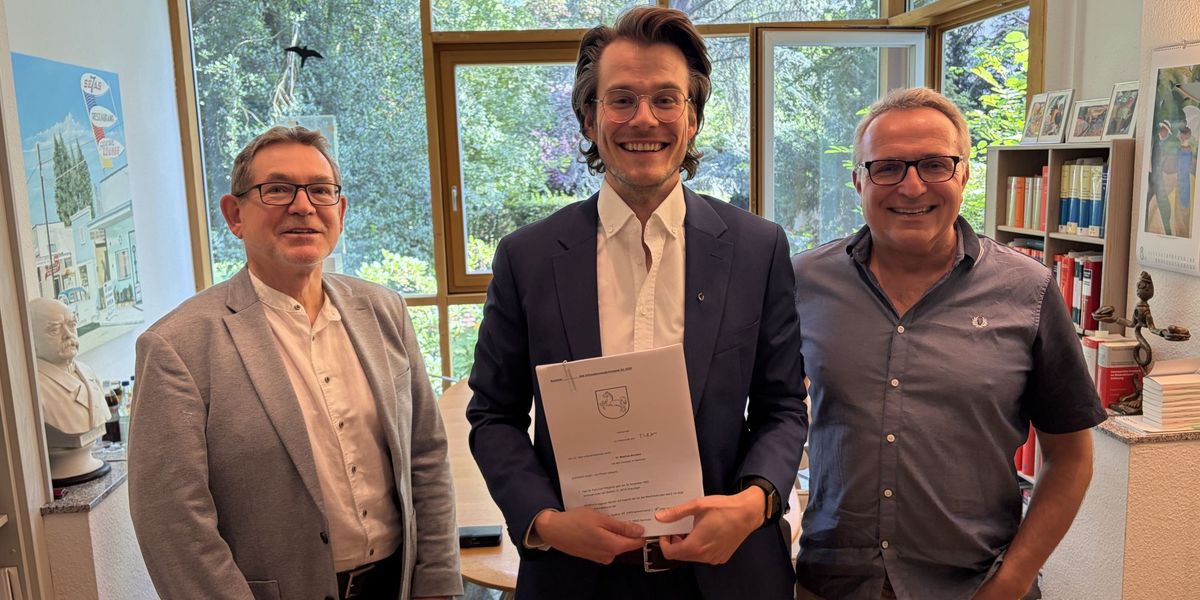
Medicines designed to protect the immature lungs of preterm infants have so far reached their target organ only unreliably. Over more than two decades, Fraunhofer ITEM has developed a technology that solves this problem. Following the establishment of InhalPlus GmbH on August 27, 2026, and the signing of the licensing agreement with the Fraunhofer-Gesellschaft in September, the company now uses the Fraunhofer-Gesellschaft’s patent portfolio under an exclusive license. The next step is the first clinical trial.
Many premature infants in neonatal intensive care units receive noninvasive respiratory support through a therapy known as CPAP (Continuous Positive Airway Pressure). In this treatment, a continuous low level of positive pressure is delivered through the nose to keep the airways open and make breathing easier. In the DACH region, around 37,000 premature infants receive CPAP each year, and many of them develop lung problems. A local treatment of the lungs would therefore be highly attractive from a medical perspective. So far, however, the challenge has not been the medication itself, but getting it to where it is needed: aerosols become diluted within the respiratory circuit, deposit on tubing, or are lost through leaks. Given the very small tidal volumes of premature infants, the dose that actually reaches the lungs is difficult to predict and is often too low.
Two decades of pioneering research
The solution to this challenge builds on Fraunhofer ITEM’s longstanding expertise in aerosol research and inhaler development – an area of research the institute has been pursuing since its founding in 1981.
Under the leadership of Dr. Gerhard Pohlmann, projects with industry and public-sector partners established the technical foundations for generating highly concentrated drug aerosols and delivering them to the patient’s airways as directly and with as little loss as possible. A key breakthrough came from the doctoral research of Dr. Felix Carl Wiegandt at the institute: the bypass architecture. A small, defined portion of the air is diverted from the respiratory circuit, enriched with aerosol outside the main gas stream, and then returned directly at the patient interface – without changing pressure, humidity, or oxygen concentration and without interrupting respiratory support. In preclinical studies, the system delivered substantially higher aerosol quantities than conventional inhalation setups.
“The founding of InhalPlus GmbH is an outstanding example of successful technology transfer,” says Prof. Dr. Norbert Krug, Director of Fraunhofer ITEM. “It demonstrates how excellent, long-term research can translate into tangible benefits for patients. The underlying technologies and intellectual property are the result of more than two decades of scientific work at Fraunhofer ITEM. I am particularly pleased to see a vision pursued by Dr. Gerhard Pohlmann with extraordinary persistence, scientific excellence, and entrepreneurial foresight now becoming a reality. Together with his team, he has laid the foundation for this innovation to move into clinical application and into a company of its own.”
This development was made possible, on the one hand, by the institute’s infrastructure, including purpose-built test systems, models for simulating the breathing of premature infants, measurement technology for recording neonatal breathing patterns, and expertise in aerosol physics as well as regulatory assessment and approval. On the other hand, industry and research funding provided the financial basis for developing a clinically suitable prototype. This included the Fraunhofer AHEAD Accelerator internal funding program and an EXIST grant (Research Transfer Phase I) for outstanding start- up projects funded by the German Federal Ministry for Economic Affairs and Energy. With the spin-off, InhalPlus GmbH receives the rights to the underlying patent portfolio under an exclusive license.
Business model and next milestone
The InhalPlus Bypass System delivers inhaled medications directly to the nasal interface used to provide respiratory support to very small premature infants, bypassing the ventilator tubing, where the active ingredient can become diluted and largely lost. This enables the medication to act where it is needed, without exposing the entire body as can occur with intravenous administration, which may be associated with significant side effects. The system’s core component remains within the respiratory circuit and does not need to be replaced more frequently than standard components of the respiratory support system. Unlike other aerosol delivery approaches, respiratory support is maintained while the system is connected. InhalPlus therefore combines effective prevention of severe lung damage with a particularly simple and gentle application. Market entry in the DACH region is planned from 2029 through selected reference centers.
The next step will be the first use of the system in patients as part of a clinical study. A proof-of-concept study involving around 40 premature infants at specialized neonatal centers will investigate whether the active ingredient budesonide can be reliably delivered through the system to premature infants receiving CPAP. Following assessment of the system’s safety and technical reliability, the study will also demonstrate its practical use in everyday clinical care. Preparation and implementation of the proof-of-concept study are being funded through the state-funded “zukunft.niedersachsen” program. Dr. Felix Wiegandt secured the funding as project lead for Fraunhofer ITEM, and the Institute of Biomedical Translation Lower Saxony (IBT) selected the project to receive 1.3 million euros in funding.
InhalPlus’s vision goes one step further, explains Dr. Felix Carl Wiegandt, who joined the company as founder and CEO after completing his doctorate at Fraunhofer ITEM: “With InhalPlus, our goal is to overcome one of the biggest barriers to inhaled therapy: the dilution effect. Our vision is to enable effective and efficient local lung therapy for premature infants for the first time, before serious long-term damage occurs. If we can ensure that medications reach the lungs in high concentrations exactly where they are needed, we can sustainably improve treatment for our smallest and most vulnerable patients. In the long term, we also see potential to make our technology available to other patient groups with severe lung diseases, such as adults with COPD.”
InhalPlus GmbH, headquartered in Hannover, was founded by Dr. Felix Carl Wiegandt (CEO), Dr. Gerhard Pohlmann (COO), and Dr. Dirk Schäfer (CFO). The founding team consists of six people.


Other news from the department business & finance

















Most read news









More news from our other portals



















Something is happening in the life science industry ...
This is what true pioneering spirit looks like: Plenty of innovative start-ups are bringing fresh ideas, lifeblood and entrepreneurial spirit to change tomorrow's world for the better. Immerse yourself in the world of these young companies and take the opportunity to get in touch with the founders.