One week after the GSK shock: Works Council and IGBCE develop a plan for Dresden's future
External experts are assessing the economic prospects for the historic vaccine plant
Advertisement


One week after GSK announced its plan to close the Dresden vaccine plant by 2028, the works council and IGBCE are taking stock of the situation. The site has not yet been saved, and the road ahead remains difficult. But one thing is already clear: GSK cannot quietly and discreetly wind down the plant and its 641 jobs.
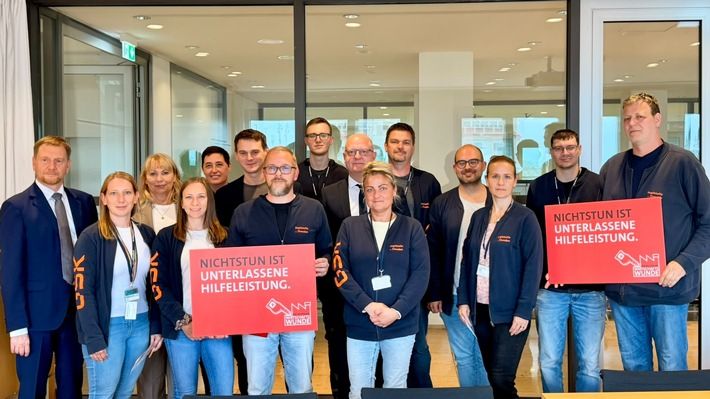
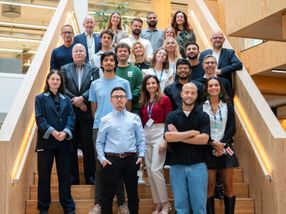
Discussion on the Future of GSK Dresden on September 16, 2026, at the Saxon State Parliament: Michael Kretschmer, Minister President of the Free State of Saxony, together with members of the GSK Dresden Works Council, Henning Homann, Chair of the SPD parliamentary group in the Saxon State Parliament; Petra Köpping, Saxon Minister of State for Social Affairs, Health, and Social Cohesion; and Philipp Zirzow, Regional Director of IGBCE Saxony.
IGBCE
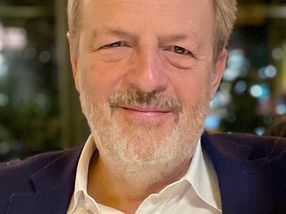
“Dresden has taken notice. Saxony has taken notice. Germany has taken notice. And the stakes here have also been recognized at the European level,” explains Philipp Zirzow, district director of IGBCE Saxony. “Now the conversation is no longer just about corporate profits, but about 641 people, their families, and their life’s work. That is our first shared success.”
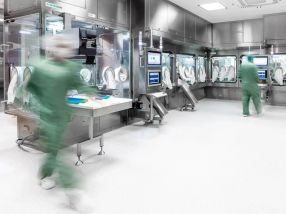
Sächsisches Serumwerk represents 115 years of history, highly qualified employees, and pharmaceutical expertise. The facility can not only manufacture vaccines but also has capabilities in filling, quality control, and packaging. This expertise cannot simply be rebuilt after a closure.
Broad Political Support for the Site
As early as Monday, the works council and the IGBCE union met with Dirk Panter, Saxony’s Minister of State for Economic Affairs, Labor, Energy, and Climate Protection, to discuss the situation and possible prospects for the facility. Company representatives did not participate in the meeting. They explained that they needed to focus on supporting the employees at that time.
On September 16, the entire works council and the IGBCE accepted an invitation to attend the “Aktuelle Stunde” session in the Saxon State Parliament. In a background discussion with Minister President Michael Kretschmer, Minister of Social Affairs and Health Petra Köpping, Minister of Economic Affairs Dirk Panter, and SPD parliamentary group leader Henning Homann, the future of the plant was discussed.
Minister President Kretschmer called on everyone “not to give up now” and to fight together with the employees and the union for a future as a pharmaceutical and manufacturing hub. Henning Homann emphasized: “Dresden is an efficient and modern location that is also competitive within GSK.”
Support is also growing at the European level. Saxony’s Member of the European Parliament, Oliver Schenk, intends to raise the issue with the European Commission. For the works council and the IGBCE, one thing is clear: Preserving pharmaceutical production capacity is not just a regional issue, but affects the security of supply and resilience of Germany and Europe.
Not Just Resistance—A Concrete Plan for the Future
In parallel with their public and political efforts, the works council and the IGBCE have begun developing a robust plan for the future. Together with external experts, they are examining
- which new vaccines, medications, or contract manufacturing projects could be brought to Dresden,
- what partnerships, investors, or new ownership models are possible,
- whether the site can be operated independently or in collaboration with new partners,
- and which political and European instruments can be utilized for this purpose.
This also includes the European Critical Medicines Act. It is intended to strengthen the production of important medications in Europe and, when making political decisions, to take into account not only the lowest price but also security of supply and existing production capacities.
“We’re not promising a ready-made solution today. But we do promise that we will professionally evaluate every serious possibility and pool all the expertise and passion of the people at the site,” said Zirzow.
“Deeply affected, but not broken”
At the town hall meeting, exactly one week after the closure announcement, the atmosphere was marked not only by concern and anger but, above all, by energy, solidarity, and determination.
Peter Mißbach, chairman of the GSK Dresden works council, explains: “This news strikes us to the core. We are deeply affected, but we are not broken. We will show what this workforce is capable of and what potential this plant holds.”
From the perspective of the works council and IGBCE, GSK still bears responsibility. The company must disclose the basis for its decision, seriously examine alternatives, and explain why, allegedly, no new products, orders, or partnerships are possible for Dresden.
Peter Mißbach concludes: “Over the past 115 years, this plant has weathered two world wars, political upheavals, floods, and countless challenges. We will not allow an irresponsible financial decision—made without any discernible serious commitment to securing a future for this location—to bring this history to an end. Now, the employees, the works council, and the IGBCE are writing our own history—with competence, passion, courage, and solidarity.”
Note: This article has been translated using a computer system without human intervention. LUMITOS offers these automatic translations to present a wider range of current news. Since this article has been translated with automatic translation, it is possible that it contains errors in vocabulary, syntax or grammar. The original article in German can be found here.



Other news from the department business & finance