The Bacterial Savings Account
Microbes Bank Nutrients in Extracellular Vesicles, then Cash Out

Advertisement


New Nature Communications study reveals how bacteria stockpile and recycle nutrients by employing extracellular vesicles (EVs) as a flexible deposit to survive periods of starvation.
Bacteria as tiny economies
Bacteria do more than invade and infect – they also handle resources with remarkable finesse, behaving in many ways like tiny economies. In a new study in Nature Communications, researchers of the University of Veterinary Medicine Vienna, describe how bacteria stockpile nutrients in EVs when nutrients are abundant and later utilise these reserves like a “flexible deposit” when starvation hits. The work, titled “Bacterial extracellular vesicles as recyclable nutrient reservoirs”, reveals a previously unrecognised function of bacterial EVs and reshapes our view of microbial survival tactics.
Miniature storage units outside the cell
EVs are nano-sized, membrane‑enclosed particles released by cells. For years, they were mainly known as vehicles for toxins, signalling molecules or genetic information. In this study, the team used the bacterial pathogen Bacillus cereus to show that EVs, which are packed with valuable biomolecules such as lipids, proteins, and nucleic acids, can serve as external nutrient depots.

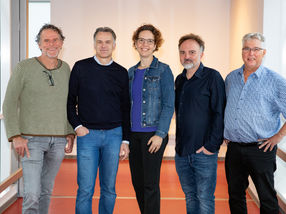
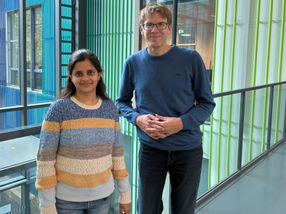
“What first caught our attention was that extracellular vesicles in nutrient-rich environments did not simply accumulate over time as expected,” say first authors Astrid Laimer-Digruber and Tanja Vanessa Edelbacher. “Instead, under nutrient-rich conditions, we observed that extracellular vesicle populations were disappearing after prolonged incubation. That unexpected turnover suggested that bacteria were actively degrading or recycling EVs, which led us to investigate their fate in detail.”
When conditions change, bacteria cash out
The researchers found that EVs behaviour depends strongly on the environment. Under nutrient-rich conditions, EVs initially accumulate but are broken down as nutrients become scarce. In nutrient-poor conditions, they are stable and continue to accumulate. Lipidomic analysis revealed that EVs produced under nutrient-rich conditions contain high levels of a lipid called sphingomyelin, making them susceptible to breakdown by the bacterial enzyme sphingomyelinase. When nutrients start running low, B. cereus deploys this enzyme to open the EVs and release the stored nutrients, which the bacteria can then reuse. In simple terms, the bacteria store resources during good times and use them later when resources become limited. This “cash-out” strategy gives them a clear survival and growth advantage under nutrient stress.
“This microbial behaviour mirrors principles we know from human societies: saving in times of plenty and spending in times of crisis,” explains senior author Monika Ehling‑Schulz. “Bacterial EVs act as high‑energy reserves that support not only the producing cell but the whole community, which is a powerful survival strategy in changing environments.”
Implications for infection and innovation
These findings could have important implications. Many disease-causing bacteria produce sphingomyelinase, suggesting that this type of nutrient recycling via EVs may be a common survival strategy among bacteria. Understanding how these EVs are formed and broken down could help researchers develop new ways to weaken harmful bacteria during infections or to improve the stability of EVs for novel medical and biotechnological applications.
The study shows that bacterial life is shaped by more than just genes and biochemistry. Bacteria also manage their resources in ways that resemble economic behaviour: they build up nutrient reserves when conditions are favourable and draw on these stores when food becomes scarce. At the population level, this strategy supports not just individual cells but also their neighbours, helping bacterial communities survive in changing environments.
Original publication
Astrid Laimer-Digruber, Tanja V. Edelbacher, Masoumeh Alinaghi, Mia S. C. Yu, Dapi Menglin Chiang, Benedikt Kirchner, Susanne I. Wudy, Waltraud Tschulenk, Ingrid Walter, Stefan Kummer, Christina Ludwig, Jan Přibyl, Michael W. Pfaffl, Monika Ehling-Schulz; "Bacterial extracellular vesicles as recyclable nutrient reservoirs"; Nature Communications, Volume 17, 2026-4-6


Other news from the department science