New antiviral antibiotic: Daunorubicin stops bacteriophages through premature cell death
Researchers decipher how the cancer drug interrupts the viral infection cycle at an early stage
Advertisement


Bacteria also produce molecules with an antiviral effect. Researchers at Heinrich Heine University Düsseldorf (HHU) and Forschungszentrum Jülich (FZJ), together with colleagues from Marburg and Zurich, have investigated the antiviral molecule daunorubicin and deciphered its mode of action against viruses. They describe this mechanism, which is primarily directed against a specific group of viruses, the bacteriephages, in the scientific journal Proceedings of the National Academy of Sciences (PNAS).
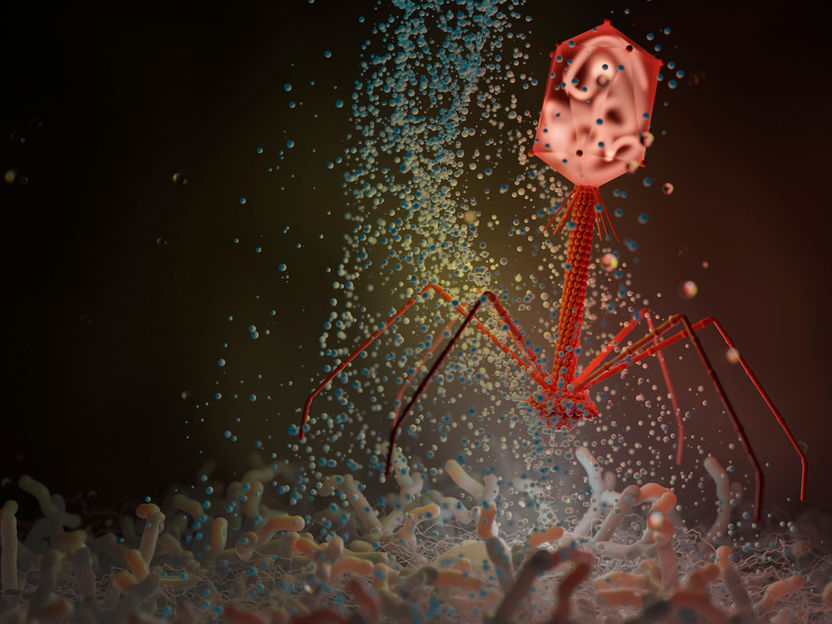
The soil bacterium Streptomyces is a well-known producer of small, bioactive molecules that can have antibacterial, anti-cancerogenic and also antiviral properties.
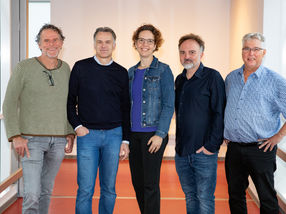
Copyright: HHU / Julia Frunzke/Verena Resch
During a summer walk through the forest, the fresh scent of the forest floor is pleasantly noticeable. However, this smell does not come from the forest itself, but is a mixture of small volatile molecules produced by soil bacteria - the streptomycetes. And these molecules are also relevant in other ways: In fact, more than two thirds of medically used active ingredients of natural origin are produced by streptomycetes .
The bacteria use these molecules to protect themselves against other microorganisms. And it has been shown that these substances often also work well in humans. In addition to the known antibiotics against bacterial infections, soil bacteria also produce molecules that protect against viruses - so-called bacteriophages.
One known molecule that shows such antiviral activity is "daunorubicin". This cell growth-inhibiting molecule is used particularly in cancer therapy. In a study conducted by HHU and the FZJ under the direction of Prof. Dr. Julia Frunzke (Institute of Microbial Interactions), the researchers showed that daunorubicin effectively inhibits the successful reproduction of various bacteriophages: During the infection of a bacterium with a bacteriophage, a mutual destruction process is triggered. The Max Planck Institute for Terrestrial Microbiology in Marburg and ETH Zurich were involved in the study, which was funded as part of the DFG Priority Program SPP 2330. Collaboration partners from the Collaborative Research Center SFB1535 "MibiNet", which is coordinated by HHU, were also involved.
Prof. Frunzke, corresponding author of the study now published in PNAS: "We were able to show that daunorubicin halts or delays the infection cycle at an early stage. As a result, toxic viral proteins, which are normally required in strictly regulated quantities for a successful infection, are produced in greater quantities. They kill the bacterial cell prematurely and thus also prevent viral replication."
Dr. Larissa Ernst, first author and postdoc in Frunzke's research group: "However, if other bacterial 'defense mechanisms' are present, the presence of daunorubicin increases their effectiveness and enables the cell to survive without the viruses being able to replicate in the cell."
Prof. Frunzke on the further perspectives of the results: "The past few years have fundamentally changed our understanding of bacterial immune systems. With our research, we are contributing to a better understanding of how these different defense systems interact. This knowledge is particularly important for the further development of effective phage therapies. In times of increasing antibiotic resistance, phages offer a promising alternative for the treatment of infections caused by multi-resistant pathogens. Since such therapies are often combined with antibiotics, it is crucial to understand the bacterial defense mechanisms in detail and make them therapeutically useful."
Note: This article has been translated using a computer system without human intervention. LUMITOS offers these automatic translations to present a wider range of current news. Since this article has been translated with automatic translation, it is possible that it contains errors in vocabulary, syntax or grammar. The original article in German can be found here.
Original publication
Larissa Ernst, Cornelia Gätgens, Bente Rackow, Nadiia Pozhydaieva, Elyès Gaaloul, Aileen Krüger, Johannes Seiffarth, Michelle Bund, Vivien Joisten-Rosenthal, Dietrich Kohlheyer, Björn Usadel, Alexander Harms, Katharina Höfer, Julia Frunzke; "DNA-intercalating antiphage molecules trigger abortive infection through mutual destruction and synergize with bacterial immunity"; Proceedings of the National Academy of Sciences, Volume 123, 2026-6-3


Other news from the department science