New weak point discovered in therapy-resistant breast cancer
Research team opens up further options for personalized cancer medicine
Advertisement


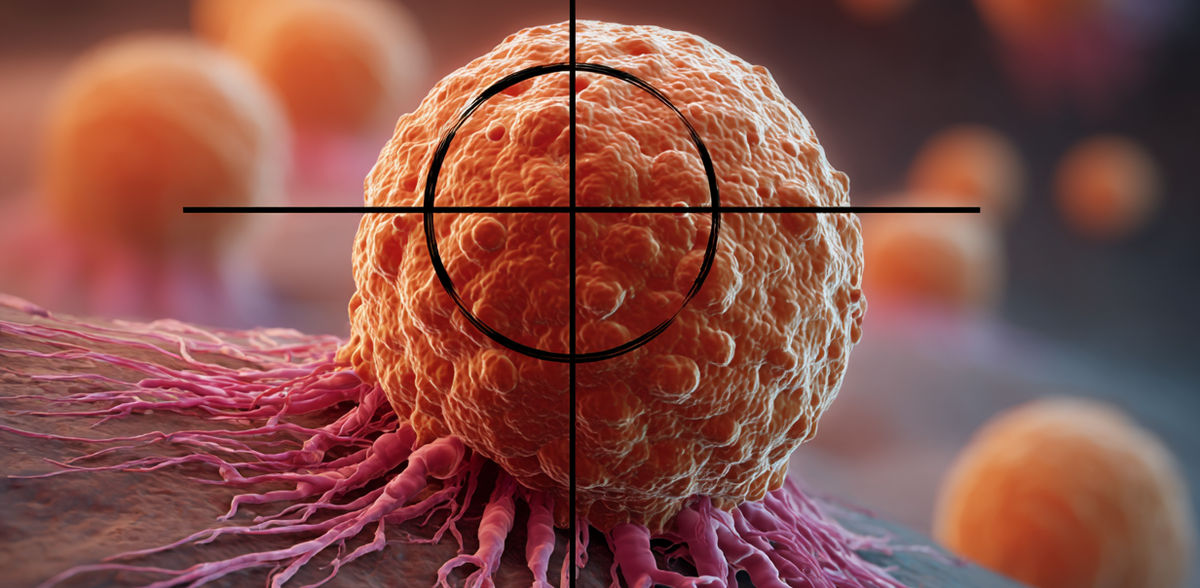
Researchers at Philipps University Marburg have identified a new approach for the treatment of specific therapy-resistant forms of breast cancer, so-called hormone receptor-positive, HER2-negative breast cancer. In experimental models, they were able to show that tumor cells that have become resistant to modern standard medications such as CDK4/6 inhibitors develop a previously unrecognized metabolic vulnerability. Drugs such as metformin or dichloroacetate, which interfere with energy metabolism, put these cells under massive energy stress and trigger their death. The researchers led by Luise von Wichert and Dr. Niklas Gremke have now published their findings in the journal "cell death & Disease". Since around 70 percent of all breast cancers belong to this subtype and CDK4/6 inhibitors are now standard in first-line therapy of advanced cancer, the study addresses a significant clinical need: "It focuses on therapy resistance after initially successful treatment," explains last author Dr. Niklas Gremke.
Programmed cell death
The work focuses on the functional modeling of pronounced CDK4/6 inhibitor resistance under controlled laboratory conditions: The researchers systematically characterized the molecular and metabolic properties of highly resistant cell clones. This revealed a clearly defined phenotype: overactivation of the mTOR signaling pathway, inhibited autophagy - i.e. a restricted cellular recycling process - and a pronounced dependence on energy metabolism.
Mechanistically, mTOR overactivity leads to the cells losing their ability to compensate for energy deficiency through autophagy. "If metabolic stress is also induced, for example by the drug metformin, the resistant cells react with programmed cell death," reports first author Luise von Wichert, who is doing her doctorate on the topic at the Philipps University of Marburg.
Viewing the development of resistance as an opportunity
"Resistance does not only mean treatment failure, but can also reveal new therapeutic vulnerabilities," explains junior research group leader Dr. Niklas Gremke. Instead of viewing resistance as an unspecific progression of the disease, the study identifies a biologically clearly defined resistance subtype.
Tailored treatment options
In the long term, this could make it possible to examine patients more closely after the failure of CDK4/6 therapy. Doctors will be able to better distinguish which patients will benefit from further treatment that specifically targets the energy metabolism of the tumor cells. The study thus contributes to more personalized cancer medicine: Future treatment decisions could be based less on the general standard and more on the individual characteristics of the tumor. The aim is to offer affected patients more tailored and effective treatment options.
Note: This article has been translated using a computer system without human intervention. LUMITOS offers these automatic translations to present a wider range of current news. Since this article has been translated with automatic translation, it is possible that it contains errors in vocabulary, syntax or grammar. The original article in German can be found here.
Original publication
Luise von Wichert, Alina Stroh, Marie Witt, Michael Wanzel, Marco Mernberger, Sebastian Griewing, Thomas Wündisch, Berit M. Pfitzner, Julia Teply-Szymanski, Anne-Sophie Litmeyer, Carsten Denkert, Uwe Wagner, Thorsten Stiewe, Niklas Gremke; "mTOR-driven autophagy suppression defines metabolic vulnerability in CDK4/6 inhibitor-resistant HR+/HER2− breast cancer"; Cell Death & Disease, Volume 17, 2026-2-19



Other news from the department science