Key Protein SYFO2 Enables ‘Self-Fertilization’ of Leguminous Plants
New perspectives on how the use of fertilizers in crops could be reduced in the future
Advertisement


An international research team led by Prof. Dr. Thomas Ott has demonstrated for the first time that the protein SYFO2 is responsible for enabling nitrogen-fixing bacteria to enter the root cells of leguminous plants. This forms the basis for the ability of the plants to ‘fertilize themselves’. The discovery, published in the journal Science, opens up new perspectives for future efforts to transfer natural nitrogen fixation to important crop plants like tomatoes – thus reducing the need for fertilizer in the long term.
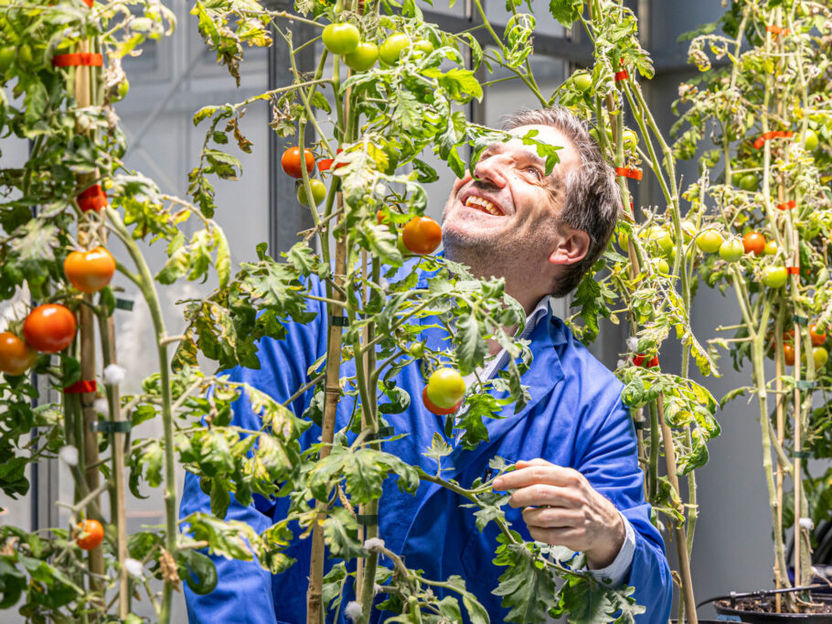
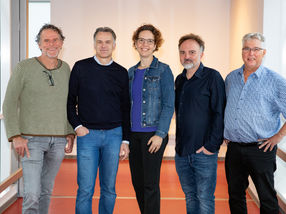
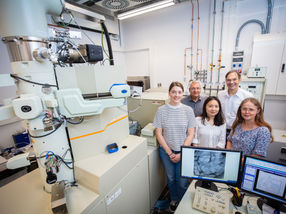
CIBSS scientist Prof. Dr. Thomas Ott.
Michael Spiegelhalter / Universität Freiburg
Most plants allow fungal microorganisms to enter their root cells and provide them with carbohydrates in exchange for a better supply of nutrients and water. Only leguminous plants like peas, beans, and clover enter into an additional, mutually beneficial symbiosis with nitrogen-fixing soil bacteria. The alliance with so-called rhizobia enables them to supply themselves with the nitrogen they need for their growth from the air.
Within the context of the Enabling Nutrient Symbiosis in Agriculture (ENSA) project, funded by the organization Gates Agricultural Innovations, a team of researchers led by Prof. Dr. Thomas Ott, professor for cell biology of the plant at the Faculty of Biology and a member of the Cluster of Excellence CIBSS – Centre for Integrative Biological Signalling Studies, succeeded in demonstrating for the first time that SYFO2, a poorly studied protein found in the roots of legumes and other plants, plays a key role in the ‘self-fertilization’ of legumes, because it enables rhizobia to enter the root cells. As soon as the bacteria have been entrapped by the root hairs of the plants, SYFO2 initiates the reorganization of the actin cytoskeleton – the key step for enabling bacteria to enter the root cells and infect them from within. As a result of the infection, tiny nodes form along the plant’s roots, where rhizobia fix nitrogen from the air and make it available to the plant.
The international team succeeded in demonstrating this process using a combination of imaging, molecular biological, and genetic methods. In addition, the scientists were able to activate the tomato’s own version of SYFO2 by introducing a regulatory factor of the root node symbiosis with nitrogen-fixing bacteria, the transcription factor NIN.
The study, titled ‘Nanodomain-localized formin gates symbiotic microbial entry in legume and solanaceous plants’, improves our understanding of how the tomato’s own symbiosis-related genes can be controlled. It lays the groundwork for future efforts to enhance beneficial plant–rhizobia interactions and to transfer nitrogen-fixing abilities to crop plants – with the long-term aim of reducing the need for fertilizer. The findings were published in the journal Science.
Foundation for key process identified
‘Most legumes have developed sophisticated mechanisms to allow cellular entry of symbiotic bacteria’, says Ott. ‘In this study, we identified the molecular foundation for a key process in which the plant switches from “catching the bacteria” to “opening the door” for them’. The study received additional support from CIBSS researcher Prof. Dr. Robert Grosse, director of the Institute of Experimental and Clinical Pharmacology and Toxicology at the Faculty of Medicine.
Furthermore, the researchers were able to show that SYFO2 is required in some plants that do not enter into symbioses with nitrogen-fixing bacteria for the initiation of the most common and evolutionarily older type of symbiosis: the mycorrhizal symbiosis between plants and fungi. Against this backdrop and in view of the successful activation of the protein in tomato plants, Ott summarizes: ‘This result is especially interesting, because it shows that genes normally involved in mycorrhizal symbiosis can be redirected to help engineer bacterial nitrogen-fixing symbiosis in plants.’
Original publication
Lijin Qiao, Heng Sun, Jiping Tang, Casandra Hernández-Reyes, Beatrice Lace, Julian Knerr, Eija Schulze, Tak Lee, Jean Keller, Cyril Libourel, Jilin Yao, Feiyang Zhao, Ying Ni, Yutian Jia, Xia Xu, Guanghui Yang, Lin Zhang, Yanli Zhang, Robert Grosse, Changfu Tian, Giles E. D. Oldroyd, Pierre-Marc Delaux, Thomas Ott, Pengbo Liang; "Nanodomain-localized formin gates symbiotic microbial entry in legume and solanaceous plants"; Science, Volume 391


Other news from the department science