Superglue for cells
Advertisement


Scientists in Canada have developed a super-strong membrane adhesive that can stick red blood cells together. The polymer, which is based on the phospholipid head group phosphatidyl choline, could be used to secure cells in particular positions for tissue engineering and wound closure.
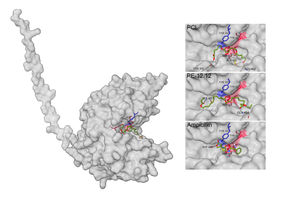
Research describes how the scientists inverted phosphatidyl choline to choline phosphate (CP) and incorporated this into a water-soluble polymer to produce a positively-charged material containing a controlled number of CP groups that was shown to bind to a variety of cell membranes through electrostatic interactions. The team tested the adhesive capabilities of the new polymer on red blood cells and found that although the cells aggregated together very strongly, there was no damage to the cell membranes, suggesting that the polymer could be used as a tissue sealant.


Other news from the department science












These products might interest you