KITTU 2.0: Artificial intelligence prototype for optimized tumor therapy is being further developed
Advertisement


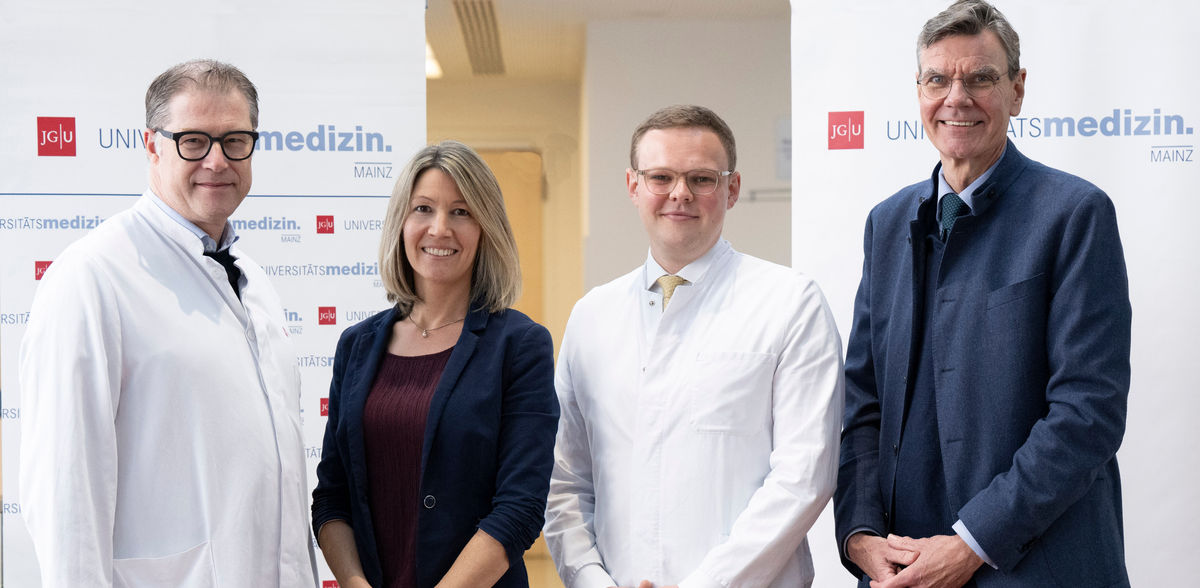
Researchers at the Mainz University Medical Center, together with experts from the German Research Center for artificial intelligence (DFKI) in Kaiserslautern and the University Hospital of Tübingen, have launched the project "KITTU 2.0: Prospective multicenter clinical study to evaluate an AI-supported therapy recommendation for patients in urological oncology". This is a prospective, multicenter clinical evaluation of the previously developed prototype of an artificial intelligence (AI)-based, explanatory - and thus transparent - assistance system for tumor therapy recommendations in urological oncology.
A research project is being launched at the Mainz University Medical Center to further develop the prototype of an artificial intelligence (AI)-based assistance system for urological tumor therapies. Researchers from the Department of Urology and Pediatric Urology at the Mainz University Medical Center successfully developed this system together with experts from the German Research Center for Artificial Intelligence (DFKI) in Kaiserslautern in the first phase of the joint project. In the recently launched follow-up project "KITTU 2.0: Prospective multicenter clinical study to evaluate an AI-supported therapy recommendation for patients in urological oncology", its multicenter clinical evaluation is now underway. As part of its Translational Medicine funding line, ForTra gGmbH of the Else Kröner-Fresenius Foundation (EKFS) is supporting the project with 555,000 euros over a period of two years.
The aim of the newly developed AI assistance system is to support doctors in selecting the optimal therapy for urological-oncological tumor patients. It is used for this purpose in so-called tumor boards. In these interdisciplinary case conferences, experts work together to develop recommendations for individual cancer therapies. To make their decisions, they also draw on a large amount of medical data - which has to be evaluated individually for each patient.
"Artificial intelligence can be particularly useful for the rapid evaluation of large amounts of data," explains Prof. Dr. Prof. h.c. Andreas Dengel, consortium partner of the KITTU project, AI ambassador for the state of Rhineland-Palatinate and Managing Director of the German Research Center for Artificial Intelligence (DFKI) in Kaiserslautern. "In order to develop the AI assistance system for urological-oncological therapy decisions, we therefore created a comprehensive database from hundreds of thousands of pieces of information on patients with prostate, urothelial or renal cell carcinoma in the first KITTU project. We then trained the technology in a two-stage process that mimics the recommendations of tumor boards. We succeeded in developing a dashboard that can automatically recommend independent, explainable therapies."
KITTU first makes a rough prediction of the relevant type of therapy, i.e. medication or surgery. It then provides specific information, such as which medication it specifically recommends. Using diagrams in the dashboard, it also provides an explanatory overview of the patient factors that had the greatest influence on the AI-generated therapy suggestion. Furthermore, extracted study data can be included in the dashboard, making suitable, evidence-based study information automatically available for the treatment decision in addition to the individual treatment suggestion.
"KITTU is a very good example of successful interdisciplinary basic research into the use of artificial intelligence in the medical sector. It is an extraordinary achievement of the scientists that they have managed to successfully develop a prototype for an explanatory and thus transparent AI assistance system for tumor therapy recommendations in urological oncology. A successful translation of this innovation into clinical patient care could improve the quality of treatment for tumor patients in the future," explained the Scientific Director and Dean of the Mainz University Medical Center, Prof. Dr. Philipp Drees.
"Initial project results show that, based on retrospective patient data, the recommendations achieve an accuracy of over 70 percent. Depending on the tumor entity and recommendation, the accuracy of the AI assistance system is even up to 90 percent," explain Mainz project leader Dr. Gregor Duwe and his team colleague Dr. Verena Kauth from the Clinic and Polyclinic for Urology and Pediatric Urology at the Mainz University Medical Center. "In our follow-up project KITTU 2.0, which has now been launched, we are conducting a prospective, multicenter evaluation of the system. We are comparing the extent to which the recommendations of the tumor conference participants match or differ from the respective KITTU recommendations - currently without the human decision-makers being aware of the AI-generated recommendation. Our long-term goal is that the specially developed AI assistance system KITTU can be used consciously in the tumor boards to optimize the upcoming evidence-based decision-making."
Prof. Dr. Igor Tsaur, Medical Director of the Department of Urology at the University Hospital of Tübingen, which is involved in the study as a new partner and study center, explains: "We hope that KITTU can contribute in the long term to relieving the burden on those involved in the process and to determining the optimal therapy for the patient from a large number of suitable therapies, thereby improving the quality of life."
Note: This article has been translated using a computer system without human intervention. LUMITOS offers these automatic translations to present a wider range of current news. Since this article has been translated with automatic translation, it is possible that it contains errors in vocabulary, syntax or grammar. The original article in German can be found here.


Other news from the department science