New AI Method Revolutionises the Design of Enzymes
New Riff-Diff technology designs enzymes for chemical reactions efficiently and precisely in a one-shot process
Advertisement


Researchers at TU Graz and the University of Graz can use the technology to construct artificial biocatalysts. These new enzymes are significantly faster, more stable and more versatile than previous artificial biocatalysts.
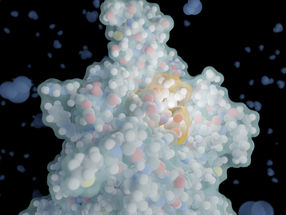
Enzymes with specific functions are becoming increasingly important in industry, medicine and environmental protection. For example, they make it possible to synthesise chemicals in a more environmentally friendly way, produce active ingredients in a targeted manner or break down environmentally harmful substances. Researchers from Gustav Oberdorfer’s working group at the Institute of Biochemistry at Graz University of Technology (TU Graz), together with colleagues from the University of Graz, have now published a study in the scientific journal “Nature“ describing a new method for the design of customised enzymes. The technology called Riff-Diff (Rotamer Inverted Fragment Finder–Diffusion) makes it possible to accurately and efficiently build the protein structure specifically around the active centre instead of searching for a suitable structure from existing databases. The resulting enzymes are not only significantly more active than previous artificial enzymes, but also more stable.
Highly efficient biocatalysts
“Instead of putting the cart before the horse and searching databases to see which structure matches an active centre, we can now design enzymes for chemical reactions efficiently and precisely from scratch using a one-shot process,” says Gustav Oberdorfer, whose ERC project HELIXMOLD was a key basis for this breakthrough. Lead author Markus Braun from the Institute of Biochemistry at TU Graz adds: “The enzymes that can now be produced are highly efficient biocatalysts that can also be used in industrial environments thanks to their stability. This drastically reduces the screening and optimisation effort previously required and makes enzyme design more accessible to the wider biotechnology community.”
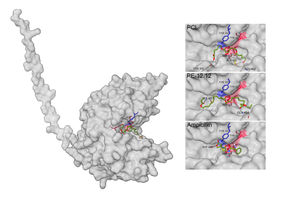
This progress was made possible by new developments in machine learning, which allow the design of much more complex structures than previous methods. Riff-Diff combines several generative machine learning models with atomistic modelling. First, structural motifs of proteins are placed around an active centre, then a generative AI model called RFdiffusion generates the complete protein molecule structure. The researchers refine this scaffold step by step using other models so that the chemically active elements are placed in it with high precision – precision at the angstrom level (1 angstrom corresponds to 0.1 nanometres) was achieved as proven by experimentally determined high-resolution protein structures.
Evolutionary short-cut
The team successfully confirmed how well the method works in the laboratory. Active enzymes for different reaction types have already been generated from 35 tested sequences. The new catalysts were significantly faster than previous computer-aided designs. In addition, the new enzymes showed high thermal stability and almost all retained their functional shape up to 90 degrees Celsius or more, which is particularly relevant for use in industrial applications. Lead author Adrian Tripp from the Institute of Biochemistry at TU Graz adds: “Although nature itself produces a large number of enzymes through evolution, this takes time. With our approach, we can massively accelerate this process and thus contribute to making industrial processes more sustainable, developing targeted enzyme therapies and keeping the environment cleaner.”
This breakthrough was also made possible by the interdisciplinary collaboration between TU Graz and the University of Graz. Mélanie Hall from the Institute of Chemistry at the University of Graz confirms the strength of the collaboration: “The integration of different areas of expertise at the interface of protein science, biotechnology and organic chemistry shows how crucial interdisciplinary approaches are for the advancement of modern biocatalysis.”
Original publication
Markus Braun, Adrian Tripp, Morakot Chakatok, Sigrid Kaltenbrunner, Celina Fischer, David Stoll, Aleksandar Bijelic, Wael Elaily, Massimo G. Totaro, Melanie Moser, Shlomo Y. Hoch, Horst Lechner, Federico Rossi, Matteo Aleotti, Mélanie Hall, Gustav Oberdorfer; "Computational enzyme design by catalytic motif scaffolding"; Nature, Volume 649, 2025-12-3


Other news from the department science