Using lab-grown lung tumors as test subjects for tailored cancer therapies
A major step for precision medicine

Advertisement


lung cancer varies widely from patient to patient, and that diversity makes it hard to find effective treatments. Researchers at the Berlin Institute of Health at Charité (BIH) have developed a method to evaluate multiple therapeutic approaches on patient-derived “tumoroids” – miniature tumors grown from tissue removed during surgery at Charité. By testing drug responses across these tumoroids, the team showed that therapeutic success depends on a complex interplay of tumor characteristics rather than a single factor. Their results suggest that tumoroid-based testing could help physicians tailor treatments to individual patients and improve clinical decision-making. The BIH researchers have published their findings in Nature Biomedical Engineering.
Medicine offers many options for treating lung cancer — surgery, radiation, chemotherapy, and immunotherapies such as CAR-T cell therapy — yet treatments still often fall short. Which therapy works best depends not only on the cancer stage and the patient’s overall condition, but also on the tumor’s biological diversity and its strategies for evading treatment. Knowing the specific features of a patient’s tumor is therefore critical to success.
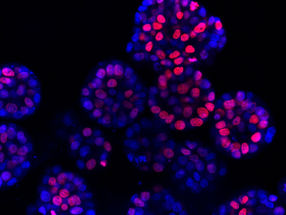
Researchers at the BIH Center for Regenerative Therapies of the Berlin Institute of Health at Charité (BIH) have developed a lab procedure to grow miniature versions of a patient’s tumor, called tumoroids, from tissue samples taken during surgery. Crucially, these tumoroids preserve the original tumor’s genetic, cellular and protein-level characteristics. Because tumoroids faithfully mirror how a patient’s tumor behaves, researchers can test multiple therapies on them and observe which approaches are most likely to succeed. This tumoroid-based testing could become a powerful tool for tailoring treatments to individual patients and improving outcomes.
A test platform for CAR-T cells
The BIH researchers first confirmed that tumoroids reproduce how real tumors respond to standard chemotherapy. Next they used those same tumoroids to test CAR-T cells — a form of immunotherapy in which a patient’s T cells are genetically engineered to carry a chimeric antigen receptor (CAR) that recognizes and kills cancer cells. T cells are immune-system sentinels that patrol the body and eliminate infected or abnormal cells; CARs reprogram them to target specific molecules on tumor cells. Although CAR-T therapy has been very effective against some blood cancers, developing successful CAR-T treatments for solid tumors like lung cancer has proved difficult. In these experiments the researchers found that the abundance of target molecules on tumor cells is not the only thing that determines CAR-T success. The tumor’s own protective mechanisms and immune-escape strategies also affect whether CAR-T cells can kill it. To check for potential side effects, the team ran parallel tests on healthy lung organoids as a safety control.
A major step for precision medicine
“Our study shows that we can use patient-derived tumoroids to both validate standard therapies and realistically test new CAR-T cell approaches,” says co-lead authorLukas Ehlen, a researcher in the BIH's Experimental Immunotherapy Group and a physician in the Charité’s Department of Anesthesiology and Intensive Care Medicine. “This is an important step toward truly personalized treatment for lung-cancer patients.”
“We were struck by how strongly a tumor’s own protective mechanisms determine whether CAR-T cells can destroy the tumoroids,” adds Martí Farrera-Sal, co-lead author and postdoc researcher in the BIH's Experimental Immunotherapy Group.
“With our improved protocol, we can cultivate and characterize patient-specific lung tumoroids within three months of surgery,” explains Michael Schmück-Heneresse, head of the BIH's Experimental Immunotherapy Group. “The model opens up new clinical applications, such as a testing platform for experimental therapies – especially for patients who have not responded to standard treatments. This represents a significant step toward improving CAR-T cell therapies for solid tumors and advancing personalized oncology.”
Original publication
Lukas Ehlen, Martí Farrera-Sal, Martin Szyska, Janine Arndt, Simon Schallenberg, Cedric Scholz, Mingxing Yang, Claudia Vollbrecht, Anna Löwa, Rebecca Friedrich, ... Michael Schmueck-Henneresse; "Lung tumouroids as a testing platform for precision CAR T cell therapy"; Nature Biomedical Engineering, 2026-1-21



Other news from the department science