Research team finds target for resistant leukemia cells
Iron-dependent cell death opens up new therapeutic perspectives for chronic leukemia that is difficult to treat
Advertisement


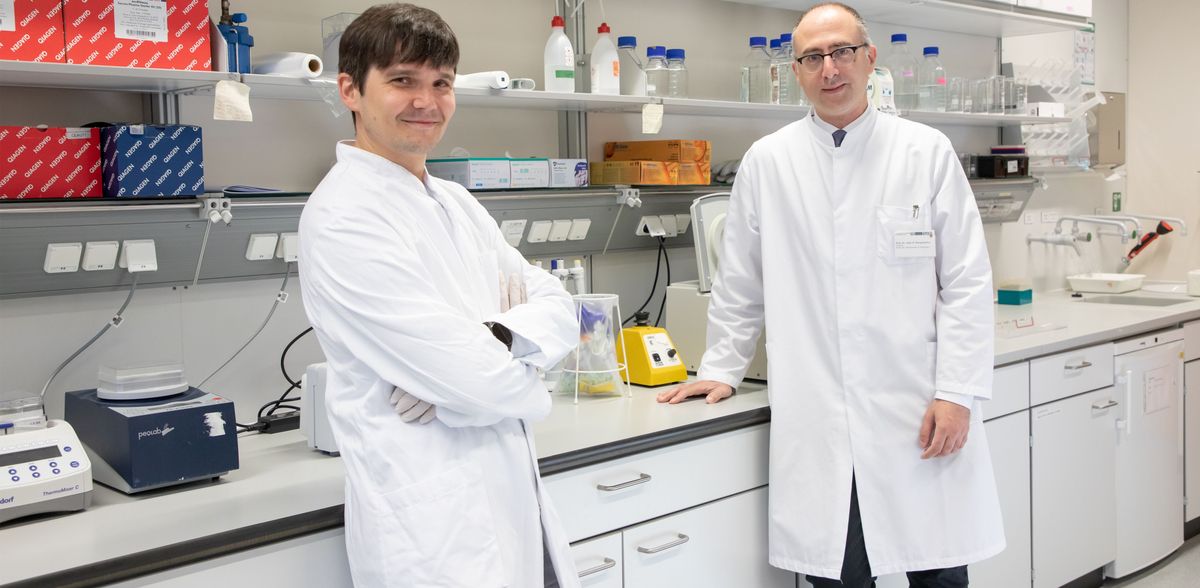
An interdisciplinary research team at Magdeburg University Hospital has identified a previously little-noticed weakness in the metabolism of cells in chronic lymphocytic leukemia (CLL). CLL is the most common form of blood cancer in adults. The findings, published in the journal Signal Transduction and Targeted Therapy, could contribute to the development of new treatment strategies for patients whosem existing therapies are no longer sufficiently effective. The study was conducted under the direction of the University Clinic for Hematology, oncology, and Cell Therapy Magdeburg and was carried out in close collaboration with national and international partner groups from Zurich, Rotterdam, Düsseldorf, Regensburg, Erlangen, and Heidelberg.
In recent years, targeted therapies have significantly changed the treatment of CLL. “In Magdeburg, we now treat most patients with CLL completely without conventional chemotherapy,” explains Prof. Dimitrios Mougiakakos, MD, director of the Clinic for Hematology, Oncology, and Cell Therapy in Magdeburg. Nevertheless, some patients develop resistance to these therapies as the disease progresses. The disease then continues to progress, highlighting the need for new, biologically based therapeutic approaches.
Iron as the Achilles heel of leukemia cells
The current study shows that certain CLL cells are sensitive to a specific process called “ferroptosis.” This is a form of cell death that depends on the cell's iron metabolism and is triggered by harmful chemical reactions and changes in fat metabolism. “Our data systematically shows for the first time that leukemia cells are fundamentally very susceptible to this mechanism,” explains Dr. Martin Böttcher, head of the research laboratory. “This provides a clear therapeutic target that is independent of the cell's classic self-destruction processes.”
At the same time, however, the study also shows why this cell death is often ineffective in reality. Leukemia cells prefer to reside in the bone marrow and lymph nodes. There, they are protected by their environment, the so-called tumor microenvironment. “This environment acts like a protective shield,” explains Böttcher. “It helps CLL cells to intercept harmful chemical reactions that would normally lead to ferroptosis, i.e., cell death. This allows the cells to survive longer and withstand therapies better.”
Additional vulnerability in fat metabolism
Another finding of the study is particularly significant: CLL cells that are particularly resistant and often exhibit genetic changes with an unfavorable prognosis also show a weakness in fat metabolism.
“We were able to show that these resistant leukemia cells have a specific vulnerability when dealing with certain fatty acids,” says Prof. Mougiakakos. “This target can be used to specifically enhance ferroptosis, also in combination with already established targeted therapies. This could open up new treatment options, especially for patients with difficult-to-treat or high-risk CLL.”
The results are based on a combination of studies on patient samples, laboratory experiments, and animal models. These different approaches allowed the key findings to be comprehensively verified and confirmed. In addition, the results were validated in close collaboration with several national and international research groups. “The fact that we were able to consistently demonstrate these mechanisms across different models and at different locations underscores the robustness of the results and their clinical significance,” emphasizes Prof. Mougiakakos.
Based on this work, the Magdeburg researchers are now investigating how the new findings can be translated into concrete treatment approaches. The aim is to further develop ferroptosis-based strategies, especially for therapy-resistant and genetically unfavorable forms of CLL. Before such approaches can be used in everyday clinical practice, their efficacy and possible side effects must be carefully investigated in clinical trials.
Original publication
Martin Böttcher, Lea Reemts, Paul J. Hengeveld, Romy Böttcher-Loschinski, Vikas Bhuria, Junyan Lu, Silvia Materna-Reichelt, Durdam Das, Natasa Stojanović Gužvić, Heiko Bruns, Wolfgang Huber, Thorsten Zenz, Denny Schanze, Martin Zenker, Sascha Dietrich, Anton W. Langerak, Dimitrios Mougiakakos; "Immunoglobulin heavy-chain status and stromal interactions shape ferroptosis sensitivity in chronic lymphocytic leukemia"; Signal Transduction and Targeted Therapy, Volume 11, 2026-1-5


Other news from the department science