Rivercell launches with $25 million to build data platforms and AI models that predict how human cells respond to treatment
Founded by serial entrepreneur and CEO, Yann Fleureau, and former AI research leader at Novartis and Owkin Eric Durand

Advertisement


Rivercell, a Paris-based biotechnology and AI company building its own data infrastructure on how human cells respond to any treatment and training a world model of the cell that can predict those responses, announced a $25 million seed round led by HV. HCVC, Alven and Bpifrance Digital Venture also participated in the round, which will fund the scale-up of Rivercell’s proprietary data generation platform, the expansion of its wet lab in Paris (a lab working with chemicals and biological samples), and the launch of its AI Virtual Cell program. Being indication-agnostic, Rivercell's world model can drive groundbreaking discovery across any cell behavior that leads to disease because it learns the underlying rules of how human cells respond to drugs and genetic changes, not the features of a single disease.
Rivercell was started in summer 2025 by CEO Yann Fleureau, the engineer-turned-entrepreneur behind AI company Cardiologs, joined in 2026 by CSO Eric Durand, an AI scientist and former C-Level executive at AI drug discovery unicorn Owkin. Rivercell builds a proprietary platform that generates massive, high-quality pre-training datasets to train its “AI virtual cell” (AIVC) model. AIVC is a world model designed to predict how human cells respond to a drug or genetic change in silico, reducing the overall need for physical wet-lab experiments significantly. Rivercell’s long-term goal is to fundamentally change drug discovery by accelerating and redesigning it. Developing a single drug can take years and be costly, with the industry investing nearly $300 billion in R&D each year.
Realizing this potential depends on data. AlphaFold revolutionized protein structure prediction because it could draw on decades of publicly available protein structure data. Building a comparable model of the cell is a far greater challenge: it requires diverse, multimodal, time-resolved data on how cells respond to perturbations. No such dataset exists at the scale needed today, so Rivercell is creating that foundation. The company generates a large-scale biological dataset and uses it to train its AI virtual cell. Because today's laboratory instruments were not designed for this application, Rivercell is developing an innovative, purpose-built platform capable of capturing the data at the scale required to pre-train its world model. The company describes this platform as the "GPU for the bio data center" of the future.
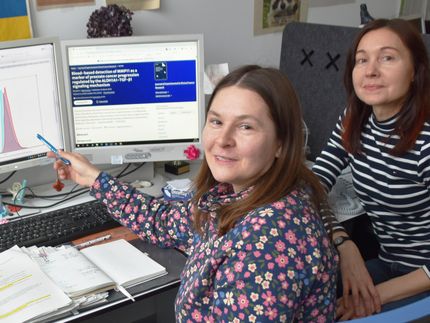
“A world model of the cell is the opportunity of the century in medicine. The missing piece is data: how cells change over time and under treatment, seen through multiple lenses and at multiple layers, captured at scale. Building that data engine in Europe is strategic, not only for Rivercell but for the continent's place in AI and biology," said Yann Fleureau, co-founder and CEO of Rivercell.
Engineer and serial entrepreneur Yann Fleureau previously co-founded and led AI diagnostics company Cardiologs, raising several funding rounds before its nine-figure acquisition by Philips in 2021. Data scientist Eric Durand was director of oncology data science at Novartis and served as Chief Data Science Officer at Owkin before co-founding bio foundation model company Bioptimus, which raised $76 million.
“AI is already rewriting how we understand the chemistry of life, from protein structure to molecular design. The next frontier is predicting how cells behave, and that requires a full-stack approach that combines a novel platform, automated wet labs, and world models. Yann and Eric bring exactly this combination of expertise, and with its footing in both Paris's AI ecosystem and Basel's pharma cluster, Rivercell is uniquely positioned to lead it,” said Maxi Pethö-Schramm, Principal at HV.
Rivercell is also backed by scientific advisors including Dr. Charlotte Bunne and Prof. Dr. Dr. Fabian Theis and angel investors including founders and executives from Twist Bioscience, DNA Script, Agilent and Abivax/Ipsen.
“AI virtual cells will transform how we understand and engineer biology. Rivercell’s ambition to unite large-scale perturbation experiments with AI simulation is why I’m excited to join its Scientific Advisory Board,” said Dr. Charlotte Bunne, Assistant Professor, Artificial Intelligence in Molecular Medicine at EPFL.
"Understanding how cells respond to perturbations, over time rather than in snapshots, is one of the big open problems in biology. Rivercell is tackling it at scale, with both the data and the AI models to match. I'm thrilled to join its Scientific Advisory Board," closed Prof. Fabian Theis, Director of the Computational Health Center at Helmholtz Munich, Scientific Director of Helmholtz AI and Professor of Mathematical Modeling of Biological Systems at the Technical University of Munich.



Other news from the department business & finance









Most read news








More news from our other portals




















Something is happening in the life science industry ...
This is what true pioneering spirit looks like: Plenty of innovative start-ups are bringing fresh ideas, lifeblood and entrepreneurial spirit to change tomorrow's world for the better. Immerse yourself in the world of these young companies and take the opportunity to get in touch with the founders.