Genes or environment? Which has the greater influence on who we are?
What’s in our genes: International research team identifies over 1,000 markers linked to human personality

Advertisement


genes or environment? Which has the greater influence on who we are? This question has been debated for decades. An answer has now been found regarding human personality: whether we are shy or brave, tidy or rather chaotic is partly determined by our genes. This is shown by a large-scale study published in the journal Nature. An international research team has analysed the genetic material of over a million people. The Leibniz Research Centre for Working Environments and Human Factors Dortmund (IfADo) also contributed to the study, providing data from the Dortmund Vital Study.
Over a million people, more than 1,000 genetic markers
For the study, the team compiled data from 46 studies across the globe. Depending on the trait under investigation, between 611,000 and 1.14 million people took part. In all studies, DNA samples were taken and the five well- known personality traits from the so-called ‘Big Five’ model were examined: Extraversion (how open and sociable someone is), Agreeableness (how friendly and considerate), Conscientiousness (how organised and reliable), Neuroticism (how anxious or balanced) and Openness to Experience (how curious and imaginative).
To do this, the team used a method known as a genome-wide association study, or GWAS for short. This involves comparing the genetic material of a very large number of people to identify where differences occur that are linked to a particular trait. In this way, the team found 1,260 genetic loci associated with personality. 824 of these were previously unknown.
However, there is no single gene that makes someone shy or brave. Genes account for only a small proportion of the differences between people – between 4.8 and 9.3 per cent, depending on the trait. The rest depends on the environment: on upbringing, social circles and life experiences. However, several gene variants combined provide a valid representation of the Big Five. A Dutch teenager with a high level of extraversion exhibits similar genetic variants to an American pensioner with a high level of extraversion.
The contribution of the IfADo in Dortmund
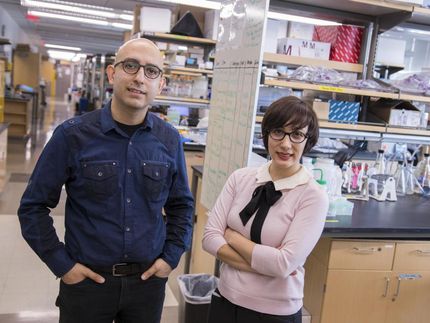
A long-term study, known as the Dortmund Vital Study, has been running at IfADo in Dortmund since 2016. Around 600 healthy people aged between 20 and 70 are taking part. Among other things, they provide hair, blood and saliva samples for genetic analysis and complete questionnaires about their personality. This data from Dortmund has been incorporated into the large- scale analysis.
“With our data from Dortmund, we were able to contribute a piece to this vast global jigsaw,” says Erhan Genç, who heads the “Neuroimaging and Interindividual Differences” group at IfADo. “Studies like this only work if many institutes around the world collaborate and share their data.” A total of four researchers from IfADo contributed to the project: Erhan Genç, Patrick Gajewski, Stephan Getzmann and Christoph Fraenz.
What the results show – and what remains to be clarified
Previous research into the genetics of personality has often been criticised because it was unclear how reliable the identified associations were. This study has systematically examined this and provides some clear findings. The associations found between genes and personality apply in very similar ways to people from different countries, to both younger and older people, and regardless of whether someone assesses themselves or is assessed by a close relative or friend. This suggests that these are reliable, generalisable associations and not merely a coincidence in a single study.
The genetic associations with personality traits differ significantly from those linked to education, income and cognitive ability. This does not mean that genes play no role in these other traits, education and cognitive abilities are also influenced by a multitude of genetic and environmental factors. Nevertheless, the genetic variants associated with personality identified in this study showed only weak or no clear links to these characteristics. Furthermore, in addition to genetic factors, environmental conditions such as the family home and socio-economic background also play a crucial role in educational attainment.
Genetically determined personality traits, on the other hand, reveal links to certain behaviours. For example, the study revealed a connection with health and behaviour. People with a genetic predisposition towards greater conscientiousness had, on average, a lower body mass index and were less likely to smoke. People with a predisposition towards greater extraversion had a higher risk of contracting Covid-19 – presumably because sociable people have more contact with others. Neuroticism was found to be associated with less healthy ageing.
Not all the findings are consistent with previous assumptions. For instance, the team found a link between openness to experience and a higher genetic risk of certain mental health conditions. This contradicts earlier studies, which had shown little evidence of such a link. The researchers themselves point out that further investigation is needed in this area.
Links between personality and health
The findings are primarily important for research at this stage. They help to better understand how personality develops and how genes and the environment interact in this process. The genetic traces identified cannot be used to develop a genetic test that predicts an individual’s personality – the influence of individual genes is far too small for that. The authors expressly emphasise this in their study.
In the long term, however, the findings could help to better understand the links between personality and health, for example in the case of mental health conditions. Further studies are needed, though, before these findings can be put into practice. Ethical factors need also be considered, like how to handle such genetic data responsibly.
Original publication


Other news from the department science