Press Release: Detecting Diseases Through Body Odor?
New Laser Technology Shows Potential for Non-Invasive Diagnostics

Advertisement


Researchers at the Fraunhofer Institute for Integrated Circuits IIS and the Technical University of Dresden have tested a new approach for investigating disease-related changes in body odor. Using laser- based photoacoustic spectroscopy, they analyzed volatile organic compounds in simple body swabs. An initial study revealed differences between samples from healthy individuals and those from people with Parkinson’s disease, COVID-19, and other diseases. The results demonstrate the method’s potential for faster preliminary screenings in the future.
Body Odor as a Source of Information for Diagnostics
Diseases can alter the composition of volatile organic compounds (VOCs) and thus body odor. These characteristic odor patterns can be detected in exhaled breath and in bodily fluids – the human volatilome. However, existing analytical methods are often complex, time-consuming, and require specialized personnel. Consequently, there is currently a lack of rapid, simple methods that can be used on-site for widespread application.
The research team from Fraunhofer IIS and TU Dresden combined a simple sampling method on participants with highly sensitive laser measurement technology. Swabs samples were taken from the anterior nasal cavity, the navel, and the outer ear. A spectrometer then recorded the patterns of the volatile compounds. The nasal swab proved to be particularly promising.
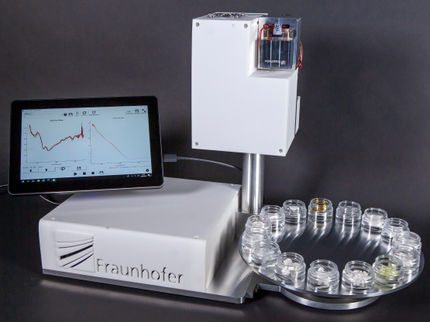
Laser Technology Reveals the Composition of Disease-Related Changes in Body Odors
The measurement system developed at Fraunhofer IIS uses widely tunable quantum cascade lasers and a sensitive photoacoustic detector. This generates a characteristic spectral fingerprint of the VOCs. Statistical analysis showed that the scope of measurement can be significantly reduced without losing relevant information. This paves the way for the development of a compact, fast, and cost-effective measurement technique in the future.
Initial Study Provides Promising Evidence
This proof-of-concept study was conducted under controlled laboratory conditions. Twenty-four participants were randomly selected from a large-scale study (SMELLODI): six healthy controls, as well as six people each with Parkinson’s disease, COVID-19, and other conditions. Additional measurements of samples from three participants with Parkinson's disease after two weeks provided initial evidence of the stability of the results over time.
The results are not a substitute for a medical diagnosis. Before the technology can be used in a clinical setting, larger studies involving a more diverse range of participants under real-world conditions are necessary. In the long term, however, the technology could provide early indications of potential diseases and support decisions regarding further testing.
Partners Combine Technical and Medical Expertise
Fraunhofer IIS developed the experimental setup, conducted the laboratory measurements, and performed statistical analysis of the data. The Technical University of Dresden contributed medical and clinical expertise and coordinated recruitment, diagnosis, and sample collection.
The research was partially funded by the European Union through the “SMELLODI” project (HORIZON-EIC-2021-PATHFINDEROPEN-01, grant number 101046369). Open- access publication was enabled and organized by the project DEAL. The study, entitled “Detection of disease-associated VOC signatures with laser-based photoacoustic spectroscopy (LPAS)”, was published in Scientific Reports by Springer Nature.
Original publication


Other news from the department science












Most read news







More news from our other portals


















See the theme worlds for related content
Topic world Diagnostics
Diagnostics is at the heart of modern medicine and forms a crucial interface between research and patient care in the biotech and pharmaceutical industries. It not only enables early detection and monitoring of disease, but also plays a central role in individualized medicine by enabling targeted therapies based on an individual's genetic and molecular signature.

Topic world Diagnostics
Diagnostics is at the heart of modern medicine and forms a crucial interface between research and patient care in the biotech and pharmaceutical industries. It not only enables early detection and monitoring of disease, but also plays a central role in individualized medicine by enabling targeted therapies based on an individual's genetic and molecular signature.
Topic World Spectroscopy
Investigation with spectroscopy gives us unique insights into the composition and structure of materials. From UV-Vis spectroscopy to infrared and Raman spectroscopy to fluorescence and atomic absorption spectroscopy, spectroscopy offers us a wide range of analytical techniques to precisely characterize substances. Immerse yourself in the fascinating world of spectroscopy!

Topic World Spectroscopy
Investigation with spectroscopy gives us unique insights into the composition and structure of materials. From UV-Vis spectroscopy to infrared and Raman spectroscopy to fluorescence and atomic absorption spectroscopy, spectroscopy offers us a wide range of analytical techniques to precisely characterize substances. Immerse yourself in the fascinating world of spectroscopy!