How Chemicals End Up in the Mountains
Permanent chemicals harm insects—even in near-natural habitats
Advertisement


The decline in insect populations is evident not only in densely populated areas and regions with intensive agricultural use, but also in remote, near-natural, and protected habitats. “Persistent chemicals” may play a role in this: Carried by the atmosphere, they reach remote areas and accumulate in organisms there, according to a study by the University of Innsbruck and the Bavarian State Office for the Environment (LfU).
The largely clean windshield after long car trips reminds us of what data has been showing for more than two decades: Insect populations are declining in terms of biomass, abundance, and species richness. If the number of animals decreases or species go extinct, this has serious consequences for the functioning of ecosystems.
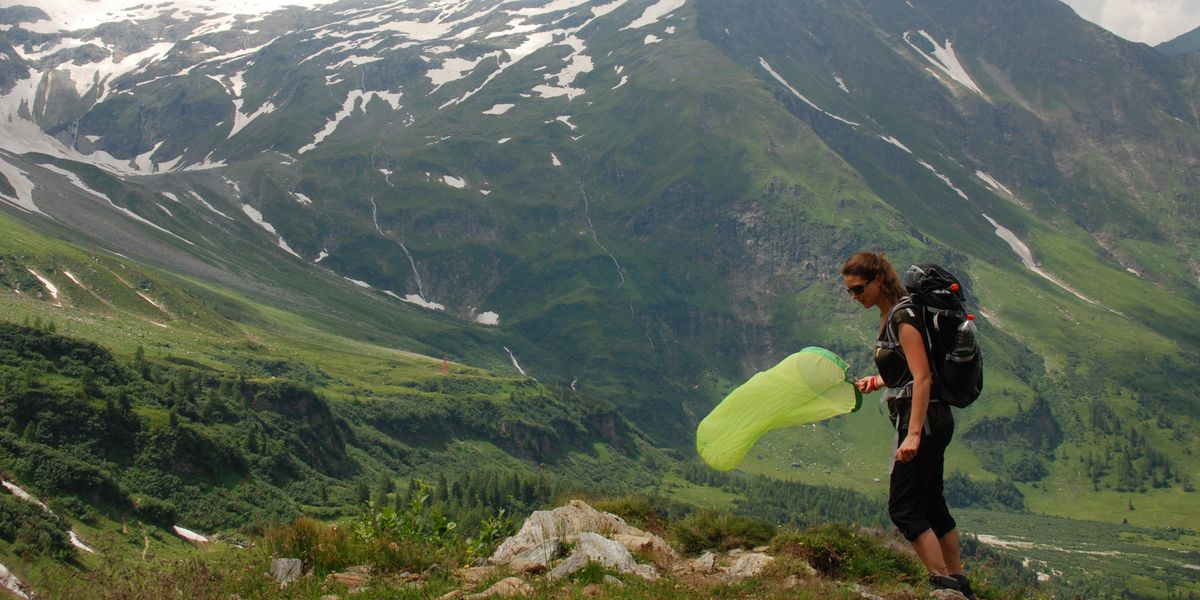
Habitat loss due to soil sealing and intensive agricultural use, as well as climate change and environmental pollution, are considered the main causes of the global decline in insect populations. Yet the decline can also be observed in remote, near-natural, and protected habitats where neither fertilizers nor pesticides are used. A research team from the University of Innsbruck and the Bavarian State Office for the Environment has studied insects around the Hoher Sonnblick and the Zugspitze and analyzed the factors behind this decline.
How Chemicals Reach the Mountains
The focus was on the effects that persistent, bioaccumulative, and toxic chemicals (PBTs) have on insects—bumblebees, ants, and beetles—in remote natural areas. Colloquially, PBTs are known as “eternal chemicals” due to their longevity. Dispersed through the atmosphere, they accumulate—primarily in cold regions such as the Arctic and the Alps—through evaporation and condensation processes. Insects ingest these substances through their food. As they move up the food chain, PBTs accumulate in organisms because they preferentially bind to fatty tissue or proteins. Excretion and metabolism, if they occur at all, take place only at very low rates, and thus PBTs can also trigger chronic effects.
“We detected 30 different PBTs in the insects’ bodies, including per- and polyfluorinated alkyl substances (PFAS), polychlorinated biphenyls (PCBs), brominated flame retardants (BFRs), and the heavy metal mercury,” explain the study authors Birgit Schlick-Steiner and Florian Steiner from the Institute of Ecology at the University of Innsbruck, as well as Veronika Hierlmeier-Hackl and Korbinian Freier (both from LfU). “Many of these substances are considered carcinogenic, affect the immune system, or impair reproductive capacity. This has been documented repeatedly in various organisms, which is why many of these pollutants are now banned.”
Highest Exposure in Scavenging Insects
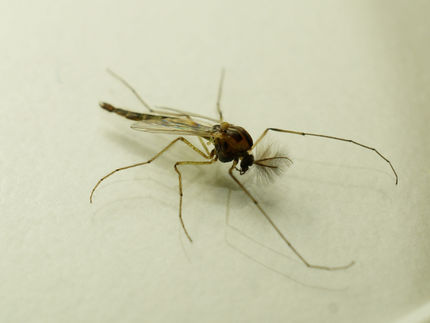
Previous studies show that the concentration of PBTs increases significantly as one moves up the food chain. The research team demonstrated this phenomenon for the first time in the insect species studied: While meadow and mountain forest bumblebees, which have a purely plant-based diet, exhibited the lowest levels of pollutants, concentrations rose significantly in the omnivorous mountain forest ants and Kerbameisen. The highest levels were detected in the scavenging burying beetles: The concentration of mercury in the burying beetles ranged from 0.046 to 0.097 mg/kg, which was 120 times higher than in the bumblebees. By way of comparison: An EU food safety regulation sets a maximum mercury content of 0.01 mg/kg for meat from cattle, pigs, and other animals—meat with higher levels is not permitted for sale. The situation is similar for per- and polyfluorinated substances in meat and meat products: The maximum level prescribed by the EU is 0.4 µg/kg—significantly higher levels were found in both the ants and the beetles.
The researchers compared these levels with atmospheric PBT concentrations at the Hoher Sonnblick and the Zugspitze. Pollutant measurements have been taken at both peaks for more than two decades: “The measured atmospheric levels of PBTs are extremely low at both stations; nevertheless, we see that the substances accumulate so strongly as they move up the food chain that they reach significant levels and exceed comparable EU environmental quality standards,” explains co-author Korbinian Freier.
Individual PBTs affect insect health
To quantify the effects of PBTs on insects, individual insects were examined for symmetry in their body structure: Asymmetries represent a change in body structure and suggest reduced fitness in the insects. Inbreeding as an alternative cause of asymmetries was ruled out through genetic testing. “We see that individual PBTs can be significantly correlated with asymmetries. Therefore, we conclude that PBTs are a significant additional factor contributing to insect decline,” emphasizes the research team.
Nature reserves alone are not enough
“The study shows that PBTs can be detected even in remote or protected natural areas for decades and accumulate in organisms through the food chain—especially as one moves up the food chain,” the study authors note. “It is therefore not enough to simply designate nature reserves. When approving new substances, their consequences and long-term effects must be precisely assessed. When imposing bans, we must consider the entire class of substances to prevent the regular substitution with nearly identical but equally problematic compounds,” the scientists say regarding the phased bans on individual PFAS groups in the EU.
Note: This article has been translated using a computer system without human intervention. LUMITOS offers these automatic translations to present a wider range of current news. Since this article has been translated with automatic translation, it is possible that it contains errors in vocabulary, syntax or grammar. The original article in German can be found here.
Original publication



Other news from the department science