Channelrhodopsin from green algae wins Berlin researchers the Nobel Prize
Peter Hegemann shares the 2026 Nobel Prize in Medicine with Georg Nagel and Karl Deisseroth for the development of optogenetics
Advertisement


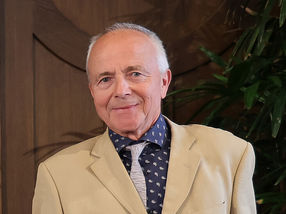
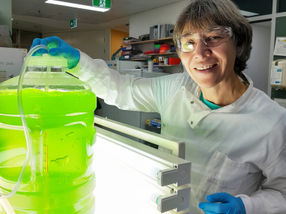
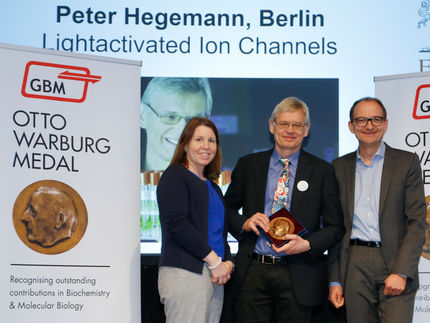
Prof. Dr Peter Hegemann is being honoured for his research in the field of optogenetics. Together with the other two Nobel laureates, he has laid the foundations for a new era in the neurosciences.

Prof. Dr Peter Hegemann is being honoured for his research in the field of optogenetics. Together with the other two Nobel laureates, he has laid the foundations for a new era in the neurosciences.
Philipp Plum
Prof. Dr Peter Hegemann of the Department of Biology at Humboldt-Universität zu Berlin (HU) is to receive, together with Prof. Dr Georg Nagel (Julius Maximilian University of Würzburg) and Prof. Dr Karl Deisseroth (Stanford University, USA) the 2026 Nobel Prize in Physiology or Medicine for their discoveries concerning light-controlled ion channels and optogenetics.
“I would like to offer my warmest congratulations to Peter Hegemann on winning the Nobel Prize – the world’s most prestigious scientific award! He is receiving the prize for his outstanding research in the field of optogenetics – with which, according to the Nobel Committee, he has laid the foundation for a new era in the neurosciences,” says Prof. Dr Julia von Blumenthal, President of Humboldt-Universität zu Berlin. “Peter Hegemann is a visionary researcher: the discovery of light-controlled ion channels in green algae was made as part of a basic research project. Humboldt-Universität is fortunate to count Peter Hegemann amongst its researchers. It is largely thanks to his commitment that a new research building is currently being constructed in Berlin for the promising field of optobiology.”
The origins of optogenetics
Hegemann’s research began with the question of how single-celled green algae perceive light and orient their movement accordingly. As early as 1991, together with Dr Hartmann Harz (Ludwig Maximilian University of Munich), he demonstrated that light triggers electrical ion currents in the green alga Chlamydomonas within a very short time.
Together with Georg Nagel and other researchers, Hegemann subsequently identified and characterised the channelrhodopsins responsible for this process. These extraordinary proteins combine a light sensor and an ion channel in a single molecule: light opens the channel, thereby altering a cell’s electrical potential within milliseconds. In 2002, the researchers described channelrhodopsin-1 as a directly light-controlled ion channel; this was followed in 2003 by channelrhodopsin-2, which is particularly well suited to controlling the electrical activity of other cells using light.
These discoveries provided the molecular basis for optogenetics. In 2005, Karl Deisseroth and his colleagues demonstrated that channelrhodopsin-2 can be used in nerve cells to trigger electrical signals with millisecond precision using light. Since then, optogenetics has fundamentally transformed the neurosciences in particular: specific types of nerve cells can be selectively activated or inhibited, thereby enabling investigation of their causal role in perception, movement, memory, emotions and behaviour.
To this day, optogenetics is primarily used in the neurosciences. However, its potential applications extend beyond this: light-sensitive proteins are increasingly being researched to specifically investigate and influence electrical and molecular processes in other cell types. For example, José-Alain Sahel (University of Pittsburgh, USA), together with colleagues, demonstrated that retinal cells rendered light-sensitive using an optogenetic technique were able to restore some visual perception in a blind patient. The versatility of optogenetics suggests that many more exciting advances lie ahead.
About Peter Hegemann
Peter Hegemann is the Hertie Senior Research Professor of Neuroscience at the Department of Biology, Humboldt-Universität zu Berlin. Hegemann completed his studies in chemistry at the University of Münster and Ludwig Maximilian University of Munich, and obtained his PhD in 1984 at the Max Planck Institute for Biochemistry in Martinsried. In 1985, he went to Syracuse University in New York as a postdoctoral researcher, where he was already attempting to biochemically isolate the photoreceptor of the alga Chlamydomonas. Following posts in Munich and Regensburg, he has been Professor of Experimental Biophysics at Humboldt-Universität zu Berlin since 2005. He has received numerous awards for his pioneering work in the field of optogenetics. As early as 2013, he received – together with the 2026 Nobel laureates Georg Nagel and Karl Deisseroth, as well as other colleagues – the Grete Lundbeck European Brain Research Prize; followed in 2021 by the Lasker Award, considered the most prestigious prize for biomedical research in the USA. In 2022, he was awarded the Louisa Gross Horwitz Prize by Columbia University, jointly with Deisseroth and Prof. Dr Gero Miesenböck of the University of Oxford.


Other news from the department science