Unusual Pathogen: Fatal Viral Infection During Advanced Cancer Immunotherapy
When cancer treatment opens the door to a avian virus
Advertisement


Modern immunotherapy may leave patients vulnerable to rare and potentially severe infections, according to a case study by researchers at the University Medical Center Hamburg-Eppendorf (UKE) and the Leibniz Institute of virology (LIV).The team identified an avian virus, typically harmless to humans, as the cause of a fatal brain infection in a cancer patient. The patient, who had multiple myeloma, had undergone a stem cell transplant and was treated with the bispecific antibody teclistamab. He developed rapidly progressive encephalitis, a severe inflammation of the brain, and died despite intensive care. A highly mutated Newcastle disease virus was revealed as the cause.
Immunotherapies such as the bispecific antibody teclistamab represent a breakthrough in threating cancers like multiple myeloma, a blood cancer. By directing the body's own immune cells to specifically attack cancer cells, they offer new and highly effective treatment options for patients with this form of disease. However, the profound changes these therapies induce in the immune system can also increase susceptibility to rare and unusual infections.
In this unusual case, the patient had undergone a stem cell transplant and was receiving teclistamab along with other medications. He developed rapidly progressive encephalitis, a severe and life-threatening inflammation of the brain, that ultimately progressed to coma and death.
Despite extensive testing for known pathogens, initially no cause could be identified. The breakthrough came only through metagenomic sequencing of brain tissue: a comprehensive method that scans all genetic material in a sample without preselecting for specific microbes. This approach revealed the presence of Newcastle disease virus, a virus typically found in poultry and wild birds. In these animals, it can cause severe respiratory and neurological disease. Human infections, by contrast, are rare and generally mild, typically causing transient conjunctivitis. In this case the exceptionally high viral load in the brain linked the infection as the cause of inflammation in the brain.
The research team also identified unusual changes in the viral genome: Certain genes showed an exceptionally high number of mutations, displaying a pattern that had been previously observed in chronic measles virus infections of the brain.
`The case provides the first evidence of such changes involving a paramyxovirus originating from animals, such as Newcastle disease virus. Our findings suggest that the virus was able to evolve within the immunocompromised patient and adapt to persist in nervous tissues,´ says Prof. Adam Grundhoff, Head of the Virus Genomics Research Department at LIV.
While this case alone cannot determine how often these infections occur during advanced immunotherapies, it underscores the need to broaden diagnostic thinking in immunocompromised patients. Even normally harmless infectious agents can pose a risk in severely immunocompromised patients. This case also demonstrates the value of metagenomic sequencing in identifying the causes of otherwise unexplained infections.
`Metagenomic sequencing allows us to search for pathogens without preconceived assumptions and thereby uncover unexpected causes of infection,´ says Prof. Dr. Nicole Fischer, Director of the Institute of Molecular Virology and Tumor Virology of the UKE and Leader of the associated research group Molecular Virology and Tumor Virology at LIV. `The ability to detect such pathogens will help us better address the challenges of treating patients with weakened immune systems in the future.´
The recently reported first detection of Shamonda virus in a human patient in France further underscores this challenge. Previously known primarily as an animal pathogen, the virus was identified in an immunocompromised patient who developed severe encephalitis and subsequently died. In this case, too, metagenomic sequencing played a key role in identifying the causative pathogen.
Original publication


Other news from the department science














Most read news









More news from our other portals















See the theme worlds for related content
Topic world Diagnostics
Diagnostics is at the heart of modern medicine and forms a crucial interface between research and patient care in the biotech and pharmaceutical industries. It not only enables early detection and monitoring of disease, but also plays a central role in individualized medicine by enabling targeted therapies based on an individual's genetic and molecular signature.

Topic world Diagnostics
Diagnostics is at the heart of modern medicine and forms a crucial interface between research and patient care in the biotech and pharmaceutical industries. It not only enables early detection and monitoring of disease, but also plays a central role in individualized medicine by enabling targeted therapies based on an individual's genetic and molecular signature.
Topic world Antibodies
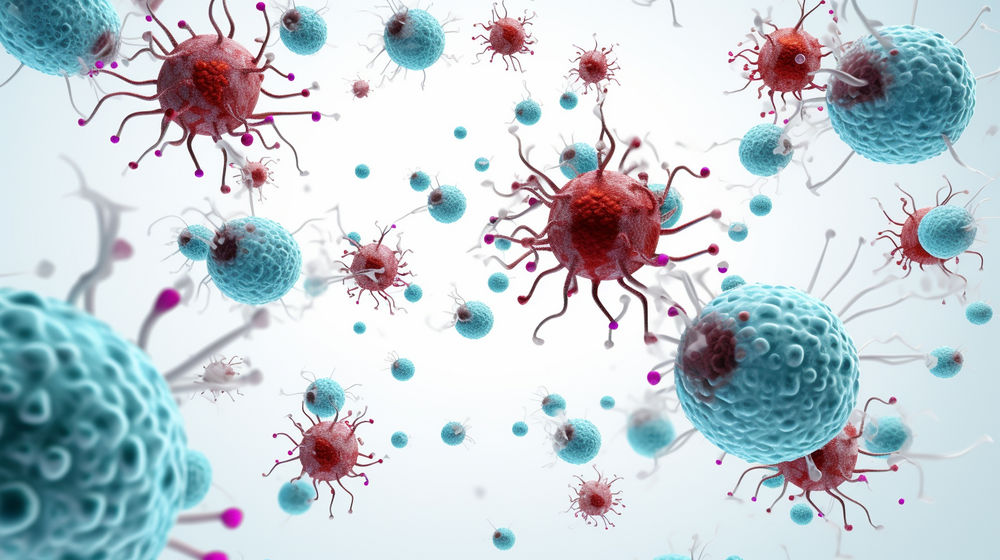
Antibodies are specialized molecules of our immune system that can specifically recognize and neutralize pathogens or foreign substances. Antibody research in biotech and pharma has recognized this natural defense potential and is working intensively to make it therapeutically useful. From monoclonal antibodies used against cancer or autoimmune diseases to antibody-drug conjugates that specifically transport drugs to disease cells - the possibilities are enormous
Topic world Antibodies
Antibodies are specialized molecules of our immune system that can specifically recognize and neutralize pathogens or foreign substances. Antibody research in biotech and pharma has recognized this natural defense potential and is working intensively to make it therapeutically useful. From monoclonal antibodies used against cancer or autoimmune diseases to antibody-drug conjugates that specifically transport drugs to disease cells - the possibilities are enormous
