How sunlight and microbes could be turned into food
Proteins without farming or livestock
Advertisement


Producing food from microbes and electricity may sound futuristic, but several companies already market protein products made from dried microbes. The SOLARSPOON consortium, which includes the Technical University of Munich (TUM), is working to advance this technology further. The goal is to reduce reliance on extensive infrastructure requirements and thereby contribute to food security, including in regions threatened by famine and at remote research stations.
According to United Nations projections, global food demand is expected to increase by around 60 percent by 2050. Meeting that demand will be a major challenge in the face of limited resources and climate change. “We will likely need to find new ways of producing food,” says Nicolas Plumeré, Professor of Electrobiotechnology at TUM.
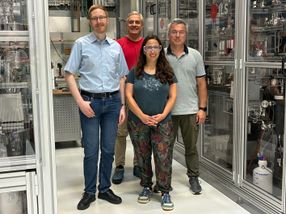
Together with Magnus Fröhling, Professor of Circular Economy and Sustainability Assessment, he is participating in the SOLARSPOON consortium. The researchers aim to develop alternative food sources that do not rely on farmland or livestock and use resources as efficiently as possible. To achieve this, the team draws on the ability of certain autotrophic to produce edible organic compounds from hydrogen, light and inorganic feedstocks such as carbon dioxide and nitrogen. The consortium is led by the University of Cambridge. Other partners include the Technical University of Denmark (DTU), Imperial College London, and the company Solar Foods.

Current approaches: limited in use
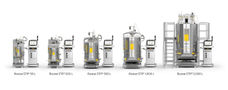
Current production methods also rely on autotrophic bacteria, which are cultivated in bioreactors supplied with carbon dioxide, water, and nitrogen. Hydrogen serves as an energy source and electron donor, driving the cellular processes involved in protein production. Building on these existing approaches, the researchers now aim to further develop the technology to reduce its dependence on infrastructure and external hydrogen supplies. If they succeed, the production systems could obtain the energy they need directly from light and generate the required hydrogen on site. This would eliminate the need to first convert sunlight into electricity or source hydrogen externally.
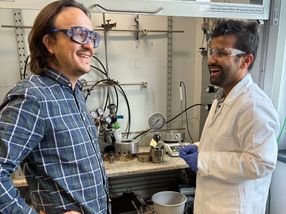
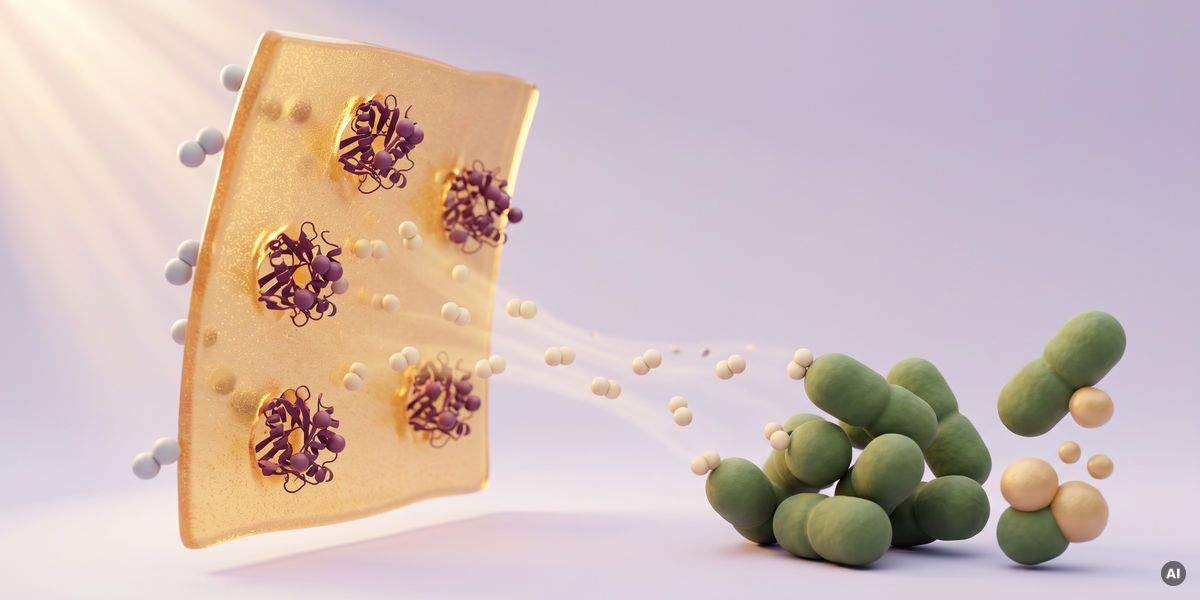
To achieve this, Nicolas Plumeré’s team contributes its expertise in hydrogenases, enzymes found in bacteria that can convert electrons and water into hydrogen. Integrating hydrogenases into technical systems, however, is challenging. They are highly sensitive to oxygen and quickly become inactive. As a result, they have seen only limited use in technological applications to date.
Producing hydrogen where it is needed
To address this challenge, Plumeré’s team is advancing one of its patented technologies. The researchers have developed a polymer film that protects hydrogenases from oxygen while creating a microenvironment in which they can efficiently convert electrons into hydrogen. As part of SOLARSPOON, the team is now working to integrate this polymer film into the technology in a way that enables its stable and efficient use for protein production.
Nicolas Plumeré says: “With some modifications, the process could be used to process not only proteins but also fats from components of ambient air. We are exploring these options from the outset so that the platform can ultimately address a wide range of nutritional needs.” The Chair of Circular Economy and Sustainability Assessment is supporting the project by evaluating questions related to energy efficiency, scalability, and sustainability.


Other news from the department science










These products might interest you