Bridging Disciplines with Methodological Courage—The Life Sciences Bridge Award Goes to Three Brilliant Pioneers
Early-career researchers will each receive 100,000 euros

Advertisement


By boldly crossing the boundaries between established fields of research, they break new ground through the combination of cutting-edge methods, thereby uncovering connections and new perspectives. In this way, they are shedding new light on the development of immune disorders, memory impairments, and cancer. For this work, a molecular biologist, a neuroscientist, and a chemist in Frankfurt am Main were awarded Germany’s most lucrative prize for early-career researchers in the life sciences. The Life Sciences Bridge Award, each prize worth 100,000 euros, is intended to help the recipients cross the bridge to a tenured professorship.
How do the workflows on the assembly lines of intracellular protein factories influence the development of immune disorders? What rhythm do the bursts of nerve cells in the human hippocampus follow when they form or retrieve memories? What is the nature of the sugar coating that surrounds a body cell like a forest, and what does that reveal about the state of that particular cell? These are questions to which the three winners of this year’s Life Sciences Bridge Award have found illuminating answers—insights that guide the direction of their future research.
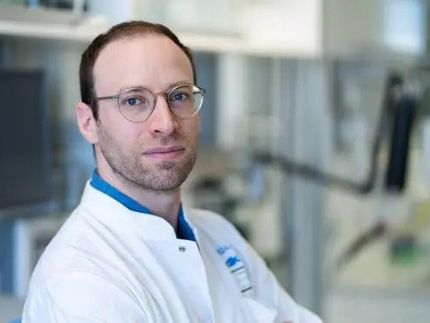
Dr. rer. nat. Jonathan Bohlen (34), as part of his doctoral thesis at the German Cancer Research Center in Heidelberg, observed human ribosomes for the first time as they scanned the genetic code delivered in segments by mRNAs transcribed from DNA, in order to translate it into proteins. In the process, he discovered the unique function of the translation factor MCTS-1. As a postdoc in the group of Jean-Laurent Casanova, a pioneer in the human genetics of infectious diseases, he applied this discovery in Paris to explain the origin of the rare genetic disorder MSDM. Affected patients lack the gene for MCTS-1. As a result, they can no longer produce a signaling molecule they need to defend against infections. Although the transcript of this molecule is still present, it is not translated. Transcriptomics—the analysis of all RNAs present in the cell cytoplasm—is therefore unable to detect this cause. It only becomes apparent through selective translation, which Bohlen thus identified as a regulatory axis of immune cells. At the LMU Munich Gene Center, he is now working to make this axis therapeutically accessible.

Prof. Dr. med. rer. nat. Lukas Kunz (36) is researching how memory works at the Department of Epileptology at the University Hospital of Bonn. He is one of the few neuroscientists conducting research in the human brain. He collaborates with epilepsy patients who, for medical reasons, temporarily have electrodes implanted in their brains. While these individuals perform memory tasks in a virtual environment, Kunz and his team record what happens in individual neurons and which electrical oscillations occur there. This has enabled him to identify specialized nerve cells that support our memory. He discovered that high-frequency oscillations in the hippocampus coordinate the activity of two types of nerve cells when our brain establishes and stores connections. Kunz’s research could lay new groundwork for the diagnosis and treatment of memory disorders. As early as his medical dissertation, he had demonstrated that young people genetically predisposed to Alzheimer’s disease exhibit reduced activity in certain nerve cells decades before the disease might eventually develop.
Prof. Dr. rer. nat. Leonhard Möckl (37) has, at the Friedrich-Alexander University of Erlangen-Nuremberg and the Max Planck Institute for the Physics of Light in Erlangen, mapped the topography of the sugar coat (glycocalyx) that surrounds our body’s cells, in 2025 at a resolution of less than one millionth of a millimeter. In doing so, he has made it possible for the first time to provide a detailed functional description of this structure. Möckl achieved this breakthrough by combining single-molecule high-resolution microscopy and click chemistry—two methods he learned during his postdoc at Stanford under Nobel laureates W. E. Moerner and Carolyn Bertozzi. Möckl is pursuing the hypothesis that the glycocalyx encodes the state of each cell like a business card. He has begun compiling an atlas of the glycocalyx of various cell types and states. In it, he has already documented cancer cells that enlarge their sugar coat to camouflage themselves from the immune system, as well as immune cells that remodel their glycocalyx within minutes after being alerted. In this way, Möckl sheds light on the clinical relevance of a structure that has long been underestimated.
“Throughout their careers to date, the three award recipients have impressively demonstrated the courage to embark on new, uncertain paths,” said Prof. Dr. Günther Wess, Chairman of the Board of Trustees of the Aventis Foundation. “We are honoring their creativity and determination with the Life Sciences Bridge Award so that they can continue their successful research in the academic sector.”
With its Life Sciences Bridge Award, the Aventis Foundation aims to enable talented researchers in the life sciences to pursue independent scientific work at an early stage and to encourage them to implement even unconventional ideas. Scientists from German universities with the highest research output in the life sciences, as ranked by the German Research Foundation (DFG), were eligible to apply for the award. This focus is intended to promote cutting-edge university research in Germany and to encourage particularly talented young researchers to pursue an academic career despite uncertain future prospects.
The Aventis Foundation is an independent, nonprofit foundation based in Frankfurt am Main. It is dedicated to promoting the arts and culture, as well as science, research, and teaching.
Note: This article has been translated using a computer system without human intervention. LUMITOS offers these automatic translations to present a wider range of current news. Since this article has been translated with automatic translation, it is possible that it contains errors in vocabulary, syntax or grammar. The original article in German can be found here.


Other news from the department science