Not Just Fighting the Tumor: Researchers Are Targeting Its Protective Barrier
An Approach to a New Generation of Immunotherapies
Advertisement


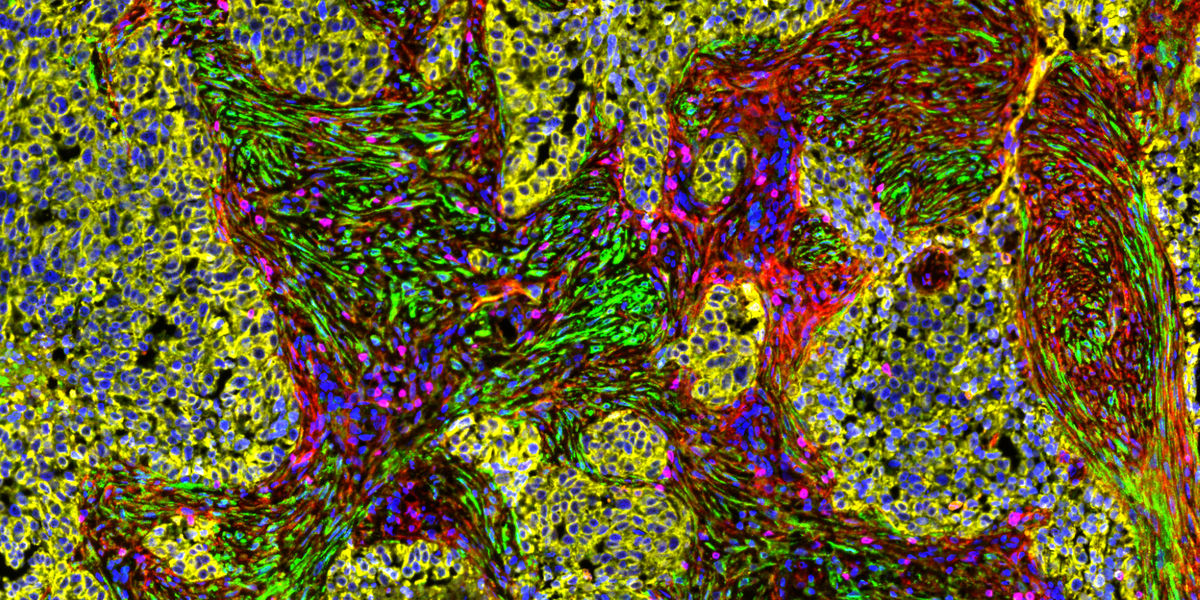
A new approach could improve the effectiveness of immunotherapies for certain types of cancer: Instead of attacking cancer cells directly, the therapy targets the tumor microenvironment. Using tissue samples from patients with lung and ovarian cancer, researchers at the Bosch Health Campus, the University of Stuttgart, and Jena University Hospital demonstrate how a newly developed antibody attacks the tumor tissue and triggers an immune response against the tumor. The study was published in the journal *Science Advances*.
A tumor consists of much more than just cancer cells. Its immediate surroundings include connective tissue cells that support the tumor’s growth and can make it harder to treat. The researchers have now investigated a novel approach that targets not the cancer cells themselves, but these connective tissue cells (fibroblasts). The preclinical results show that the antibody used can eliminate the tumor-supporting cells in the connective tissue and, furthermore, can even kill neighboring tumor cells.
Targeted Modification of the Tumor Microenvironment
At the heart of the research is the FAP x CD3 bispecific antibody OMTX305, which was developed by the Institute of Cell Biology and Immunology at the University of Stuttgart in collaboration with the Spanish industry partner Oncomatryx. A key characteristic of bispecific antibodies is their ability to bind to two different cell types simultaneously. The molecule used here acts as a bridge between immune cells and their target—in this case, tumor-supporting fibroblasts. These fibroblasts often form a dense network around the tumor that acts as a protective barrier, making it difficult for immune cells and drugs to penetrate. By binding to the fibroblasts, the immune cells were activated and eliminated the barrier-forming cells.

The researchers found it particularly remarkable that not only were the targeted cells killed, but neighboring tumor cells were also eliminated. The study thus provides evidence that the targeted elimination of tumor-supporting fibroblasts actually promotes a more extensive immune response against the tumor.
“We attack the tumor from its immediate surroundings,” explains Dr. Thomas Mürdter, deputy director of the Dr. Margarete Fischer-Bosch Institute for Clinical Pharmacology (IKP) at the Bosch Health Campus. “By specifically removing the fibroblasts, we alter the tumor microenvironment and thereby create better conditions for immune cells to reach and fight the tumor.”
Tissue sections reveal the entire tumor structure
Researchers at the IKP conducted the studies on tumor tissue from patients at Robert Bosch Hospital who had lung or ovarian cancer. A key methodological feature of the study is the combination of the new immunotherapeutic approach with a preclinical yet patient-oriented testing system. This made it possible to investigate how the therapy works within a complex tumor environment—rather than just on isolated tumor cells.
Tumor tissue sections approximately 250 micrometers thick (Precision-Cut Tumor Slices) are particularly useful for this purpose. Unlike traditional cell cultures, these tissue sections preserve numerous cell types and structures from the original tumor. This allows researchers to investigate how cancer cells, fibroblasts, and immune cells interact with one another and how this complex environment responds to therapy.
Modern techniques were used for the detailed analysis, including multiplex immunofluorescence and single-cell RNA sequencing. The researchers analyzed tissue stains using machine learning techniques to identify different cell types and their spatial distribution within the tumor tissue. Single-cell RNA sequencing enabled them to examine changes in individual cell populations and their response to therapy.
An Approach for a New Generation of Immunotherapies
Many tumors do not respond adequately to treatment despite modern immunotherapies. Consequently, the role of tumor-supporting fibroblasts as therapeutic targets is currently being investigated internationally. In addition to antibodies, CAR-T cell therapies, for example, are being developed that target these connective tissue cells. This study complements these approaches by investigating a FAP x CD3 bispecific antibody in patient-relevant tumor models. The results thus make an important contribution to a new generation of immunotherapies that target not only the cancer cells themselves but also their supporting microenvironment.
Participating Institutions and Funding
The project was funded by the Baden-Württemberg Ministry of Science, Research, and the Arts; the German Research Foundation (DFG); the Federal Ministry of Research, Technology, and Space; the Leibinger Foundation; and the Robert Bosch Foundation. Participants included the Dr. Margarete Fischer-Bosch Institute for Clinical Pharmacology and the Robert Bosch Hospital at the Bosch Health Campus, the University of Stuttgart, the University Hospital Jena (Comprehensive Cancer Center Central Germany), and the Spanish biotechnology company Oncomatryx.
Note: This article has been translated using a computer system without human intervention. LUMITOS offers these automatic translations to present a wider range of current news. Since this article has been translated with automatic translation, it is possible that it contains errors in vocabulary, syntax or grammar. The original article in German can be found here.
Original publication


Other news from the department science











Most read news






More news from our other portals

















See the theme worlds for related content
Topic world Antibodies
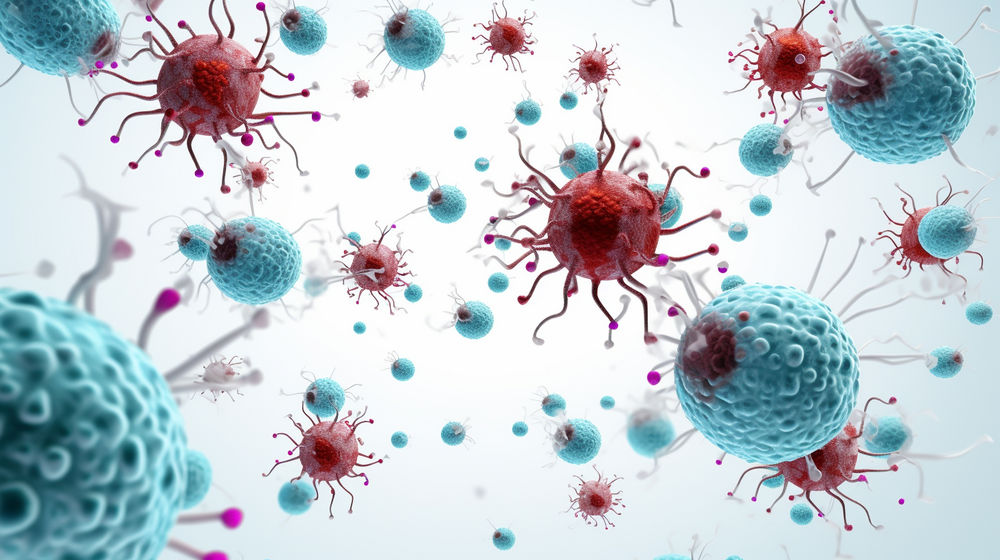
Antibodies are specialized molecules of our immune system that can specifically recognize and neutralize pathogens or foreign substances. Antibody research in biotech and pharma has recognized this natural defense potential and is working intensively to make it therapeutically useful. From monoclonal antibodies used against cancer or autoimmune diseases to antibody-drug conjugates that specifically transport drugs to disease cells - the possibilities are enormous
Topic world Antibodies
Antibodies are specialized molecules of our immune system that can specifically recognize and neutralize pathogens or foreign substances. Antibody research in biotech and pharma has recognized this natural defense potential and is working intensively to make it therapeutically useful. From monoclonal antibodies used against cancer or autoimmune diseases to antibody-drug conjugates that specifically transport drugs to disease cells - the possibilities are enormous