Don’t Slow Down—Speed Up: A New Approach to Cancer Research
Research Team Pursues a New Strategy Against Pancreatic Cancer

Advertisement


What if we could fight cancer by specifically activating a key enzyme instead of deactivating it? That’s exactly what a research team at Marburg University has achieved for the first time with the enzyme PRMT1. The scientists developed a small molecule called TR-07 that activates PRMT1. As a result, pancreatic cancer cells die more easily, and an established chemotherapy regimen is more effective in a mouse model. The discovery opens up a new avenue in cancer research and has now been published in the Journal of Medicinal Chemistry ( https://doi.org/10.1021/acs.jmedchem.5c03281 ).
A Shift in Perspective
The surprise: Until now, researchers worldwide have primarily been searching for compounds that inhibit the PRMT enzymes responsible for cancer. The findings of the Marburg team led by Prof. Dr. Uta-Maria Bauer of the Institute of Molecular Biology and Tumor Research, Prof. Dr. Wibke E. Diederich of the Institute of Medicinal Chemistry, and Prof. Dr. Peter Kolb of the Institute of Pharmaceutical Chemistry suggest a different approach: that the exact opposite—activation rather than inhibition—could be effective for certain types of cancer and patients. With TR-07, researchers succeeded in developing the first selective activator for PRMT1—an arginine methyltransferase that can, for example, promote the death of tumor cells in pancreatic cancer.
A breakthrough achieved through close collaboration and a stroke of luck
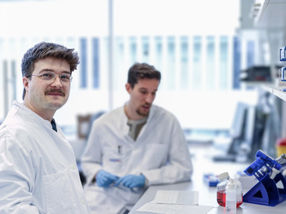
Behind this success lies close collaboration across various disciplines at Marburg University and a willingness to thoroughly investigate even unexpected results. The starting point was earlier findings by Prof. Bauer’s research group on the role of various PRMT family members in tumor development, including the PRMT1 enzyme, which can act as a tumor suppressor in pancreatic cancer. In Prof. Kolb’s laboratory, computer-aided methods were used to discover not only many non-selective inhibitors but, by chance, also a promising activating compound. This surprising discovery was then taken up in Prof. Diederich’s laboratory. Dr. Christian Iking synthesized the molecule, developed numerous variants, and thereby significantly advanced its chemical development. Research conducted in Prof. Bauer’s laboratory provided the crucial insights into the effects of TR-07 and its derivatives. Dr. Sepideh Salehipour-Bavarsad, together with Dr. Caroline Bouchard and Dr. Marion Meixner, succeeded in demonstrating how this new class of compounds influences enzyme activity in vitro and what biological effects result from this in cell cultures and in animal models. Structural biology analyses conducted by the research group of Prof. Dr. Gert Bange helped clarify how and why TR-07 might activate the enzyme. Ms. Salehipour-Bavarsad and Mr. Iking are co-first authors of this study. This collaborative project was primarily funded by the German Research Foundation (DFG) as part of the SFB TRR81 “Chromatin Changes in Differentiation and Malignancy” and the KFO325 “Clinical Relevance of Tumor-Stroma Interactions in Pancreatic Cancer.”
A Long Road from Basic Research to Therapy
There is still a long way to go before a drug can be developed. First, the researchers want to further refine TR-07 and determine which types of cancer would benefit most from this approach. In the future, this principle could help enhance existing chemotherapies through targeted combination treatments. At the same time, the study highlights the opportunities that arise when the fields of pharmacy, chemistry, and cancer research collaborate closely at Marburg University —from the computer-aided search for a molecule to the demonstration of its effect on the organism.
Original publication


Other news from the department science