Food may help maintain diversity in the gut
A mathematical model shows how ingested microorganisms can influence gut microbiome diversity
Advertisement


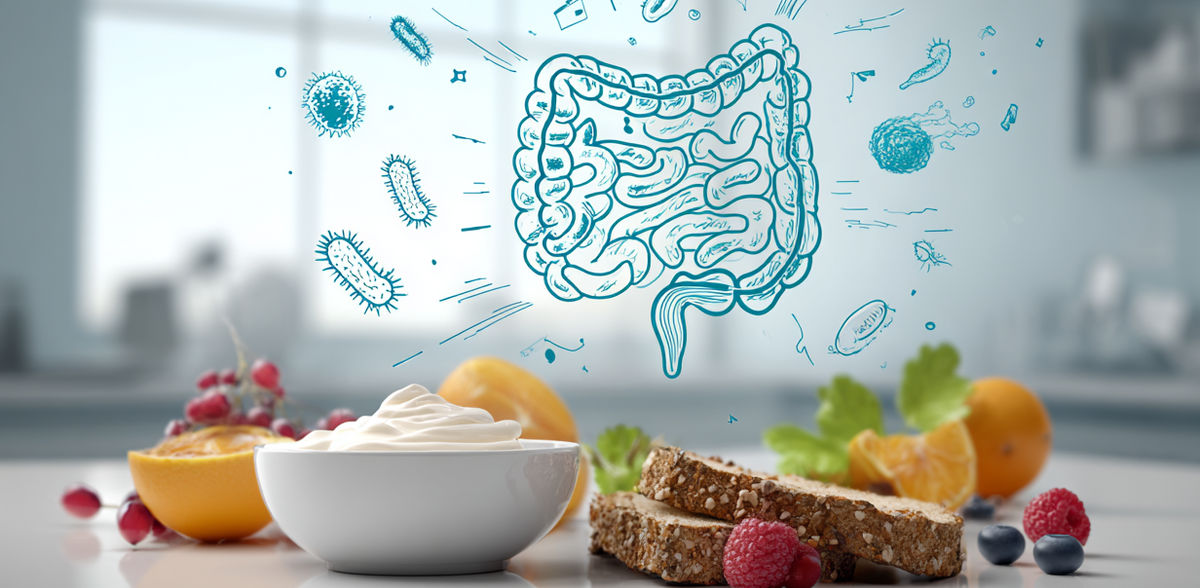
An international research team led by Florence Bansept in cooperation with the Max Planck Institute for Evolutionary Biology has shown how microbes ingested through food may help maintain gut microbiome diversity. The study was first-authored by Vitor M. Marquioni and provides a mathematical framework for understanding how dietary microbial intake can shape microbial communities in the gut.
The gut microbiome plays a key role in animal physiology, contributing to essential biochemical processes in the digestive tract. Lower microbial diversity is often associated with poorer health outcomes. While diet is widely known to influence the gut microbiome through nutrients, food also contains living microorganisms that can survive passage through the digestive system and interact with resident microbial communities.
This raises an important question: can microbial intake through food be optimized to support a more diverse gut microbiome?
To address this question, the researchers developed a mathematical model that captures the main processes shaping microbial communities in the gut: microbial growth, competition, death, inflow through ingestion, and outflow through excretion. Using a model parametrized with data from the scientific literature, they explored how these processes interact with different levels and patterns of microbial intake.
Key findings
- The timing of microbial intake has relatively little effect on average microbiome diversity. In other words, ingesting many microbes once a day can have a similar effect to ingesting smaller amounts several times a day. What matters most is the total number of microbes consumed each day.
- Once the number of microbial types in the system exceeds a dozen, there is typically an optimal feeding strategy — a daily quantity of ingested microbes that maximizes diversity in the host.
- When the number of microbial types becomes very large, this optimal intake approaches the number of microbes lost daily through feces. Under these conditions, the maximum diversity reached in the host mirrors the diversity present in the food itself.
The authors show that these findings are robust across several versions of the model and that the predicted orders of magnitude for optimal intake are consistent with small, experimentally tractable animals such as the fruit fly Drosophila and the nematode C. elegans.
Translation to humans
The researchers caution that further model development will be needed before these findings can be translated to humans, where host–microbe interactions are considerably more complex. Even so, the study marks an important first step toward a better quantitative understanding of how dietary microbes may be used to support the gut microbiome in non-invasive ways.
With this work, Florence Bansept’s International Partner Group at the Max Planck Institute for Evolutionary Biology contributes to a growing effort to understand the ecological principles that govern host-associated microbial communities — and how these principles might one day inform new therapeutic strategies.
Original publication



Other news from the department science