Cell factory for the immune system: New method makes macrophages scalable for research
Researchers are developing bioreactors to produce millions of human immune cells
Advertisement


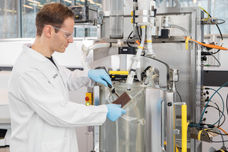
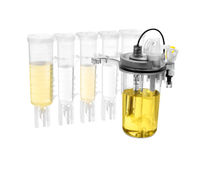
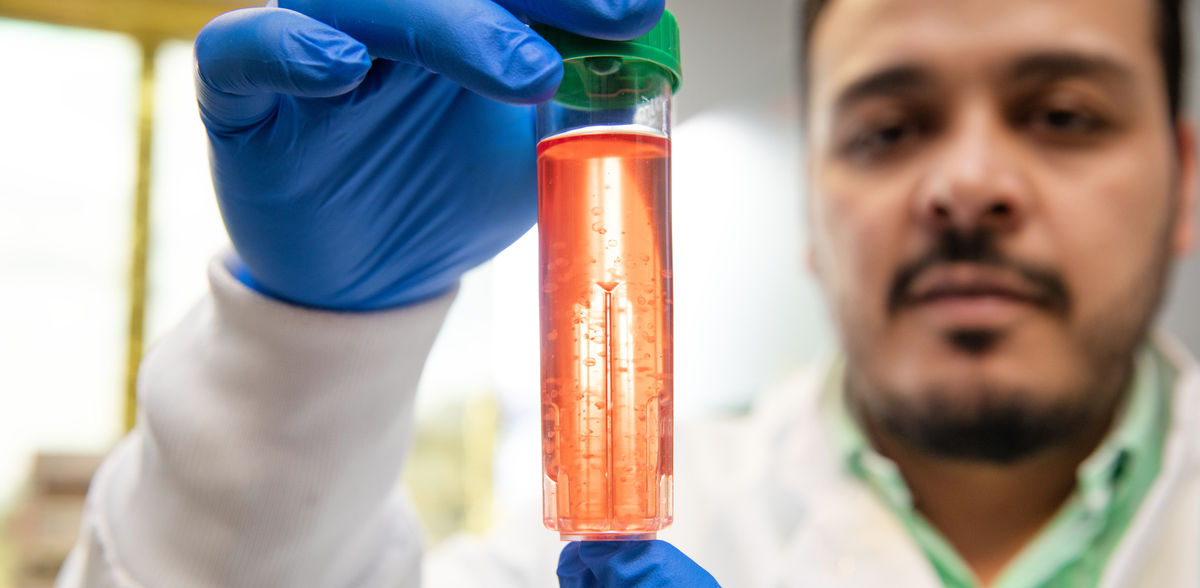
Researchers at Hannover Medical School (MHH) have developed a method for efficiently producing human immune cells, such as macrophages, in medium-sized bioreactors. The immune cells can be derived from induced pluripotent stem cells and are important for disease research as well as for new therapeutic approaches.
Macrophages—also known as “scavenger cells”—play a central role in the human immune system. They are indispensable for defending against pathogens and for repairing damaged tissue. Furthermore, they are already being used in clinical therapy, for example in the treatment of liver diseases. Scientists are also exploring other potential applications—including the treatment of infectious diseases, inflammation, fibrosis, and cancer, as well as neurodegenerative diseases such as Alzheimer’s. Macrophages are also suitable for testing drugs for purity, safety, and efficacy.
Efficient, cost-effective, and easy to use: the new bioreactors
For research purposes, macrophages can be produced from so-called induced pluripotent stem cells (iPS cells). These are somatic cells that have been “reprogrammed” using biotechnology and from which, in principle, any cell type in the body can develop. Until now, macrophages have mostly been produced either on a small scale for laboratory studies or on a large scale for industrial applications. Medium-sized bioreactors, which are particularly well-suited for preclinical research projects because they are efficient, cost-effective, and easy to handle, have been virtually nonexistent until now.
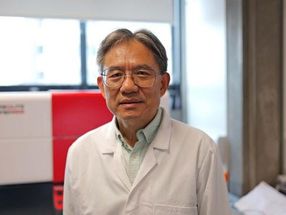
A team led by Prof. Dr. Nico Lachmann from the Clinical Department of Paediatric Pneumology, Allergology and Neonatology at Hannover Medical School (MHH) has now developed a technique for such bioreactors. The corresponding publication appeared in the journal Nature Protocols. The first author is Dr. Fawaz Saleh.
A Valuable Tool for Science
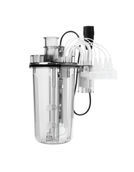
Using the new method, iPS cells continue to differentiate in a nutrient solution and form cell aggregates, known as organoids, within 14 days. These structures, which resemble hematopoietic bone marrow, subsequently release macrophages continuously: “We can harvest up to 40 million immune cells per bioreactor weekly over a period of ten weeks,” says Professor Lachmann. Four bioreactors are combined in a single device. The developed technology thus offers a valuable tool for research into human immune cells and their medical applications.
Prof. Lachmann conducts research in the RESIST Cluster of Excellence and at the Research Center for Translational Regenerative Medicine, among other places. For his work, he has been awarded an ERC Starting Grant and two Proof-of-Concept Grants by the European Union.
Original publication
Fawaz Saleh, Edwin Emilio Valdivia Malqui, Ingrid Gensch, Maximilian Schinke, Malene Kappelhøj, Eirini Nikolouli, Ariane Hai Ha Nguyen, Mi-Sun Jang, Débora Basílio-Queirós, Nico Lachmann; "Harnessing intermediate-scale bioreactors for next-generation macrophage production and application"; Nature Protocols, 2026-2-18


Other news from the department science













These products might interest you